
Review · JAPAN FOOD TOURS
Tokyo: Night Foodie Tour in Shinjuku
The best part of this Shinjuku food tour is the combination of serious Japanese food and street-level exploring. You begin with chef-selected sushi, grill Wagyu beef yourself at a yakiniku restaurant, then walk through Kabukicho and Golden Gai before finishing with dessert or a drink. It gives you a useful first look at Tokyo after dark without asking you to decode every menu alone.
I like the way the tour links food with place. Your guide can explain why the restaurant is worth entering, how to eat the dish, and what you are seeing between stops. I also like the small-group format, since guides such as Yuki, Fuji, Max, Amy, and Hiro have been praised for friendly conversation and clear English. The main consideration is price: at $127 per person, this is not a bargain meal, and portions are refined rather than huge.
Key points at a glance
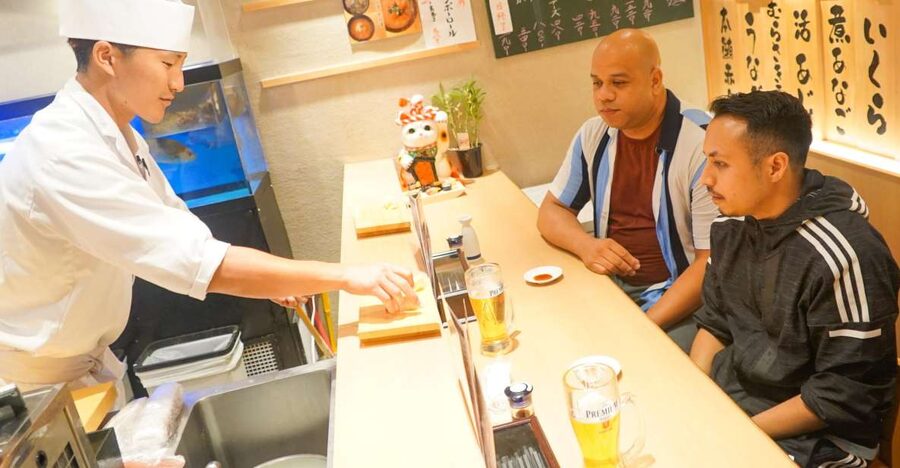
- Chef-selected sushi first: Begin at a local sushi restaurant with seasonal omakase-style pieces prepared by an itamae in front of you.
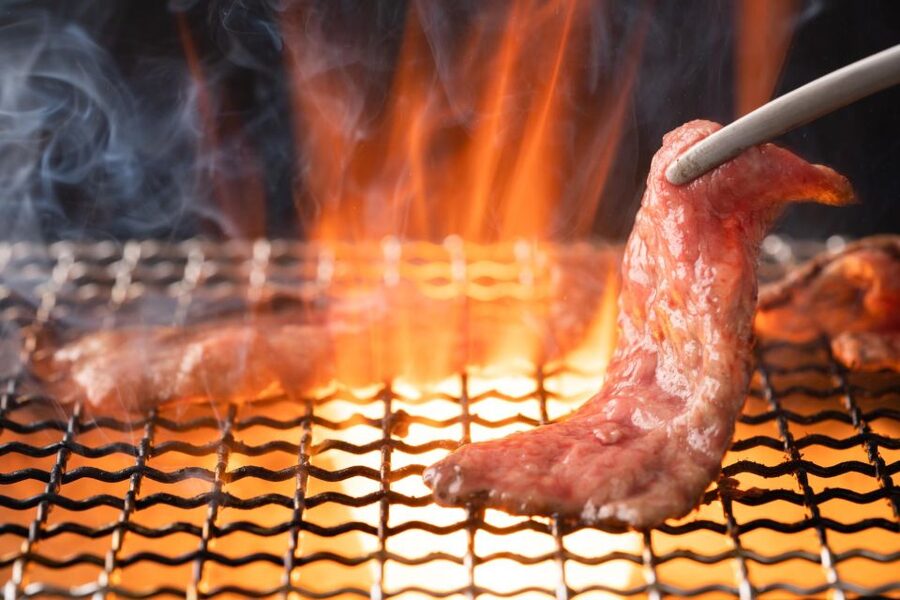
- Wagyu you cook yourself: Grill thin slices of Japanese beef at a yakiniku restaurant using a traditional table grill.
- Shinjuku after dark: Walk through Kabukicho and near Golden Gai while your guide explains the area and points out places you might miss alone.
- A flexible final stop: Finish with Japanese sweets, nostalgic snacks, or an alcoholic drink, depending on the group and venue.
- Good for a first Tokyo evening: The food, walking, and neighborhood orientation make this a useful early-trip activity.
- Know the limits: Allergies cannot be guaranteed, some stops are not stroller or wheelchair accessible, and extra food or drinks cost more.
Why this tour works in Shinjuku
Shinjuku can feel like several cities packed into one district. The station is huge, the signs compete for your attention, and Kabukicho changes character from one block to the next. You can certainly eat well on your own, but finding a good sushi counter or yakiniku restaurant at night takes time and some confidence with Japanese menus.
This tour solves that first-night problem. You meet your guide near the black pillar beside the Uniqlo Shinjuku Nishiguchi shop, about a seven to eight minute walk from the JR Shinjuku Station West Exit. An orange MagicalTrip sign identifies the meeting point. From there, you spend the evening on foot, moving between three food stops with short neighborhood walks in between.
I see the tour as part meal, part orientation. You are not just taken from restaurant to restaurant. Guides have pointed out shrines, small stalls, landmarks, and the changing character of Kabukicho along the way. That extra context matters because Shinjuku is much easier to enjoy once you understand how its districts fit together.
The experience is offered for private or small groups, and the guide speaks English. A compact group is especially helpful in narrow streets and small eating places. It also gives you more room to ask about sake, shochu, sushi customs, or the neighborhood without competing with a large crowd.
More after-dark experiences in Japan:
- Kyoto Night Foodie Tour in Gion (9+ dishes + 6 Sake tastings)
★ 5.0 · 1,762 reviews - Tokyo Night Foodie Tour in Shinjuku – Seasonal Sushi, Wagyu Beef
★ 5.0 · 1,161 reviews - Kyoto Night All-Inclusive Eats and Streets, Gion and Beyond
★ 4.6 · 576 reviews
The sushi stop: a polished start
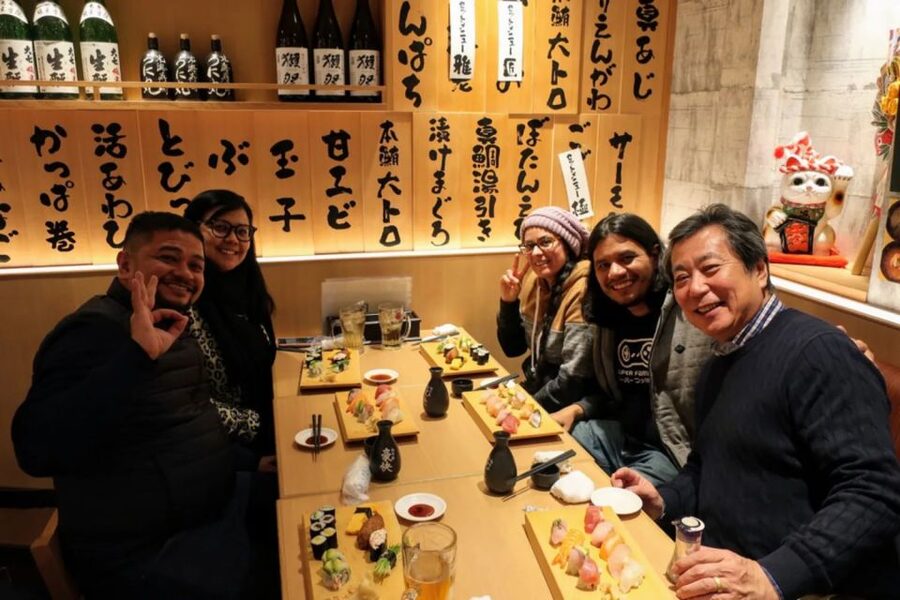
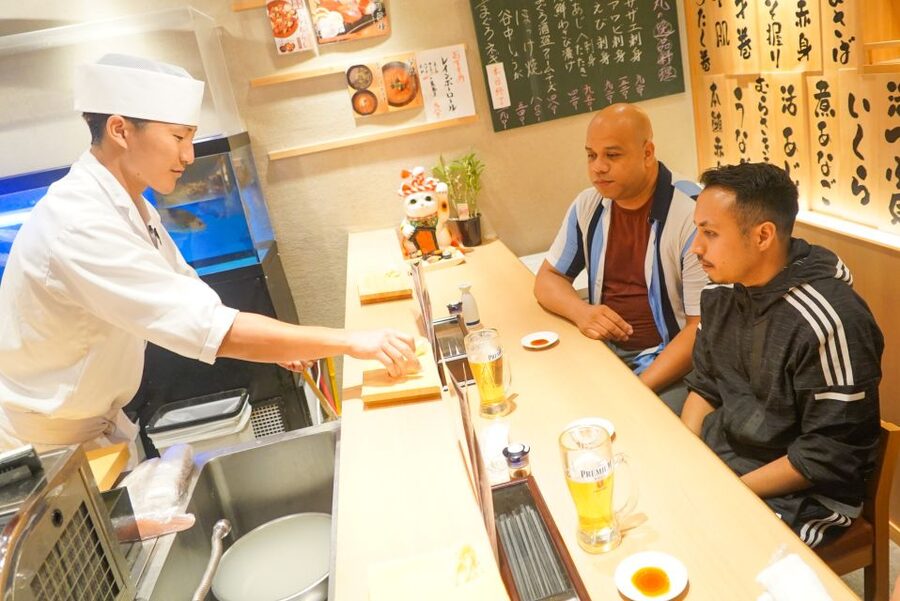
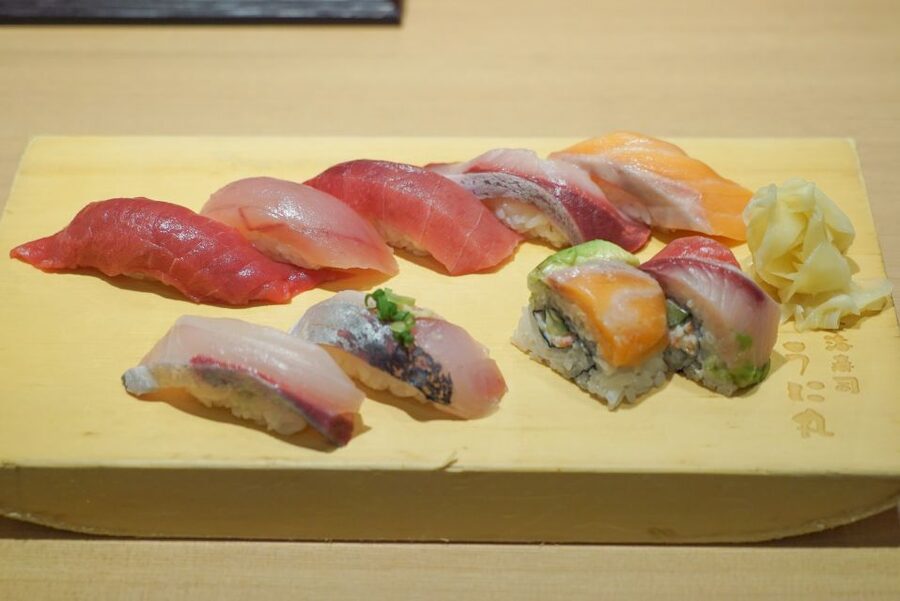
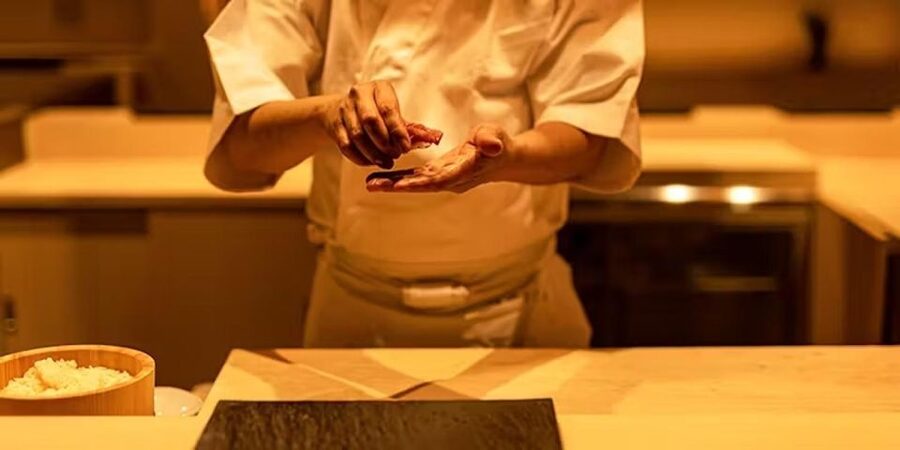
The first restaurant is the culinary centerpiece for many people. Here, an itamae prepares fresh nigiri in front of you, with the exact selection guided by the chef and the season. The course is described as omakase, meaning you place some trust in the chef’s choices rather than selecting every piece yourself.
That can be a pleasant way to eat sushi in Japan. You do not need to know the names of every fish before sitting down, and the guide can help explain what arrives and how to enjoy it. The focus is on carefully made pieces rather than a large pile of food.
Vegetarian options are available, but you should discuss them when booking and again with the guide. The operator cannot guarantee an allergy-free meal because the food is prepared in kitchens it does not control. Substitutions may not always be possible at each stop, though the guide will try to adjust the food elsewhere.
This stop is also where the tour can be most useful for families. One guide, Amy, arranged a more suitable sushi plate for an 11-year-old who mainly liked salmon. That does not promise a custom plate for every child, but it shows why it helps to explain preferences early.
If you already eat premium sushi often, the meal may feel familiar rather than revolutionary. Still, the live preparation and guidance add value. One practical warning comes from the format itself: this is not a stop for eating as much as possible. The portions are modest, and the emphasis is on quality and presentation.
Kabukicho on foot: neon, history, and orientation
After sushi, you walk through Kabukicho for about ten minutes before the next restaurant. This is a short segment, but it helps break up the meal and gives the night a sense of movement.
Kabukicho is famous for its bright signs, nightlife, restaurants, bars, and complicated reputation. You will be moving through a working entertainment district, not a museum. The area can feel loud and crowded, and smoking rules vary by venue. Your guide helps you keep track of the group while explaining what you are seeing.
Several guides have also included a shrine or small local streets during the route, though the exact path can vary. That flexibility is worth keeping in mind. This is not a fixed sightseeing walk with a long list of monuments. It is a food-focused evening that uses the streets between restaurants to give you a better sense of Shinjuku.
I especially like this part for first-time visitors. You get a practical introduction to the district, then you can return later with a better idea of where the restaurant streets, nightlife zones, and quieter corners are located.
The Wagyu yakiniku meal: your turn at the grill
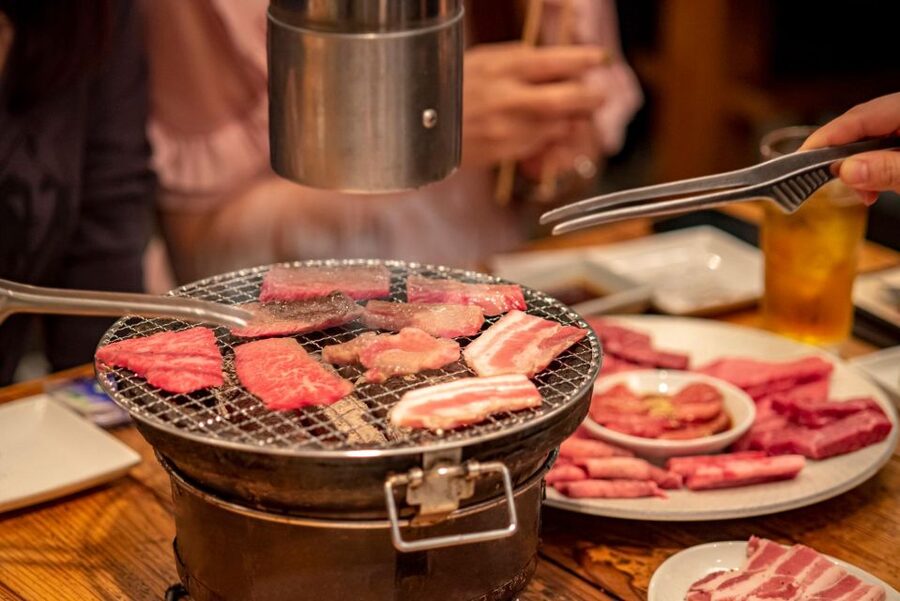
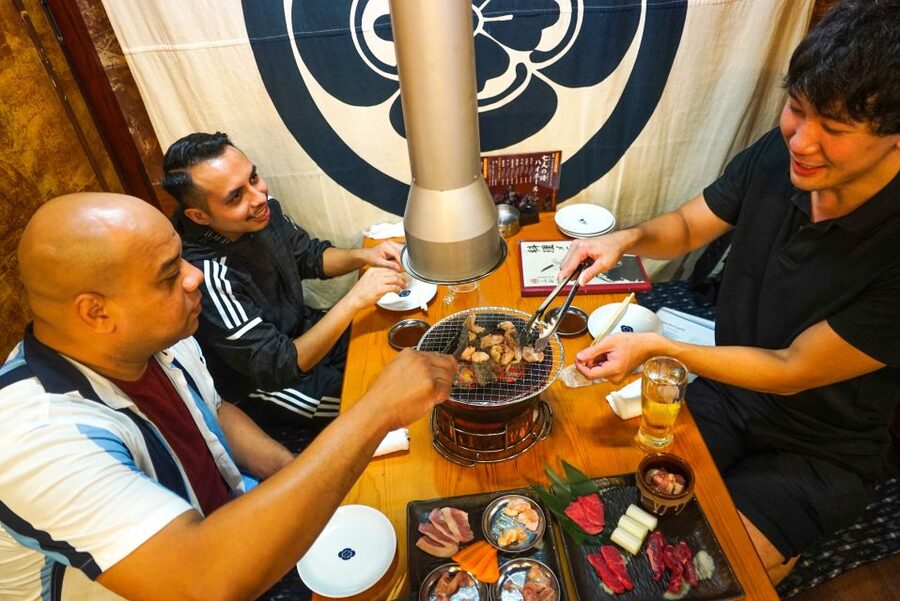
The second full meal is Japanese yakiniku, or tabletop barbecue. You receive thinly sliced Wagyu beef and grill it yourself over a Japanese BBQ stove. This changes the rhythm of the evening. Sushi asks you to watch the chef work, while yakiniku asks you to take part.
Your guide explains how to cook the meat and how to eat it. That help is useful because thin slices can cook quickly, and it is easy to overdo expensive beef if you are distracted by conversation. Some versions of the experience have included a salt block, where the beef is briefly rubbed after cooking. Details can differ by restaurant, but the general idea is the same: premium meat, a hot grill, and a hands-on meal.
The restaurant may be near Shinjuku West or Kabukicho, depending on the evening. You should expect a proper dinner here, not just one sample. The included Wagyu course is one of the strongest reasons for the price, particularly if you would otherwise feel unsure about choosing a yakiniku restaurant or ordering cuts on your own.
The food is filling, but the tour is not designed for a huge appetite. One useful way to think about it is three carefully chosen stops, not an all-night eating contest. If you want additional dishes or drinks, they are available for purchase, but they are not included.
Vegetarian food is available in principle, yet the tour cannot guarantee that every dish can be replaced. If you do not eat meat, confirm the arrangements before booking. The tour can provide vegetarian menus, but the two headline foods are sushi and Wagyu, so the experience is naturally best suited to people who want to try Japanese seafood and beef.
More food tours in Japan:
- Tokyo: Shinjuku Food Tour (13 Dishes at 4 Local Eateries)
★ 5.0 · 6,603 reviews - Sushi Making Tokyo Roll and Authentic Japanese Sushi Class
★ 5.0 · 3,971 reviews - Tokyo Tsukiji Fish Market Food and Culture Walking Tour
★ 5.0 · 3,184 reviews - Osaka: Shinsekai Food Tour with 13-15 Dishes at 5 Eateries
★ 4.8 · 2,204 reviews
The final snack or drink stop
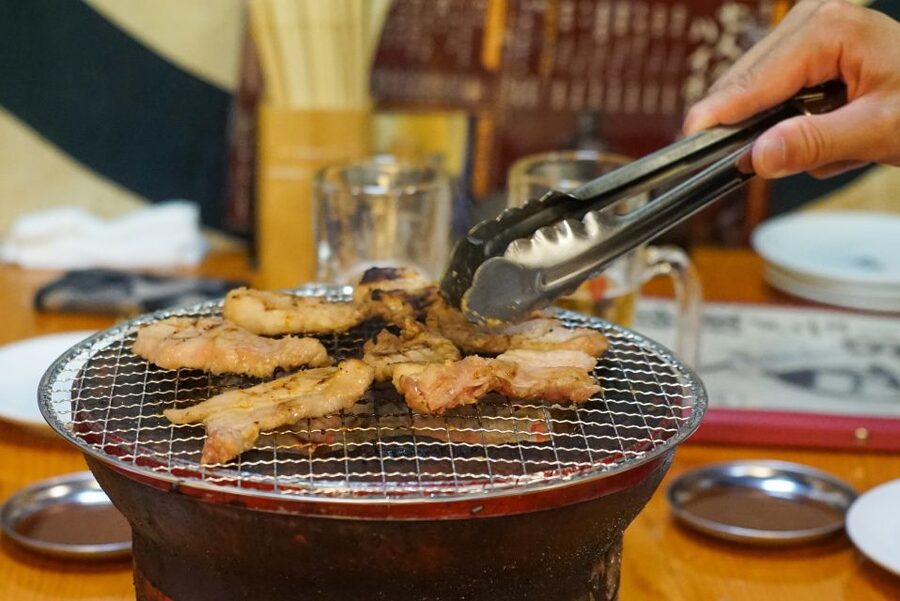
The evening closes at a local snack restaurant or cozy bar. Families with children are directed to a Japanese snack restaurant, while adult groups may finish with an alcoholic drink. The included package lists two drinks, along with dessert or an alcoholic drink, so check with your guide how the final stop is being handled for your group.
This last stop is less formal than the sushi and Wagyu meals. You might sample Japanese sweets, candy, crackers, or other nostalgic snacks. One particularly memorable format described by guests involved a help-yourself selection of packaged chocolates, crisps, and savory treats for about thirty minutes.
That kind of ending will not impress everyone equally. Some people will prefer another serious food course, and one account found the dessert stop weaker than the sushi and beef. I see its value differently: it gives the evening a relaxed finish and lets you talk with the guide and other members of the group without another elaborate meal.
For adults, the final drink can be a chance to ask about sake or shochu. For families, the snack stop gives children something approachable after two more traditional meals. The exact venue matters, so think of this as a flexible finale rather than a guaranteed signature restaurant.
Golden Gai and the walk back
The route includes a short guided look at Golden Gai before returning to the starting area. Golden Gai is known for its dense collection of tiny bars and narrow lanes. Even a ten-minute introduction can help you understand why the area feels so different from the broad streets around Shinjuku Station.
Do not expect a long bar crawl. The tour is not designed around drinking, and the legal drinking age in Japan is 20. Instead, Golden Gai works as a final neighborhood note, showing you one of Shinjuku’s most distinctive pockets before the tour ends back near the black pillar.
The walking is manageable for most people, but you should wear comfortable shoes. The itinerary includes streets and venues that are not accessible to wheelchair users or strollers, so this is not a suitable choice if step-free access is essential.
Is $127 a fair price?
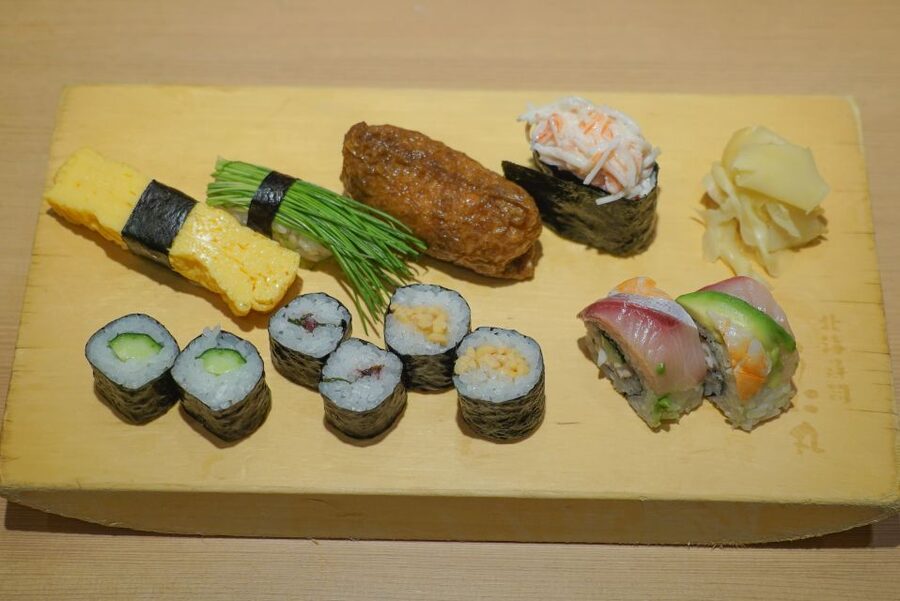
At $127 per person, this tour sits in the expensive category for a three-hour evening. The price includes a seasonal sushi course, a full Wagyu dinner, two drinks, dessert or another alcoholic drink, a certified MagicalTrip guide, and tour photos.
The value depends on how you would otherwise spend the night. If you are comfortable choosing restaurants, ordering in Japanese, and finding your way through Shinjuku, you could spend less on your own. You would also have more control over the menu and pace.
I think the price makes more sense for a first or second night in Tokyo. You are paying for food, but also for restaurant selection, translation help, neighborhood context, and a structured route. Guides such as Saki, Ken, Rai, Yosh Aida, and Molly have been praised for answering questions, taking photos, and helping people order. That personal help can prevent an expensive meal from becoming a confusing one.
The tour is also a good value for solo visitors. A solo dinner can feel awkward in unfamiliar restaurants, while a small group gives you company and a guide to keep the evening moving. Couples and families can benefit in the same way, especially if this is your first visit to Japan.
Who should book this Shinjuku evening?
I would choose this tour if you want to:
- Try premium sushi and Wagyu without guessing where to go.
- Learn how to handle a Japanese menu and restaurant customs.
- See Kabukicho and Golden Gai with a local guide.
- Meet other people in a small group or have a private evening.
- Start your Tokyo trip with a clear sense of Shinjuku.
- Enjoy quality food in moderate portions rather than chase the lowest price.
I would think twice if you need guaranteed allergy-free food, strict dietary substitutions, wheelchair or stroller access, or a very large dinner. I would also skip it if you mainly want casual street food. The restaurants are local and approachable, but the menu leans toward polished sushi and premium beef, not a long list of inexpensive bites.
Summer can be very hot, with temperatures reported as high as 40°C, while winter can fall to about -5°C. The tour includes outdoor walking, so dress for the season. Carry some cash as requested, even though the included meals and drinks are arranged for you.
Cancellation is free up to 24 hours before the tour for a full refund, and you can reserve now and pay later. Those policies are useful if your Tokyo plans are still shifting.
Should you book this tour?
Book it if you want an easy, well-organized introduction to Shinjuku that combines excellent sushi, hands-on Wagyu, and local orientation. The strongest parts are the food quality, the guides’ personal help, and the chance to enter restaurants you might not choose on your own.
Skip it if $127 feels too high for a three-hour meal, or if you want a loose evening built around cheap snacks and spontaneous stops. For everyone else, especially first-time visitors, this is a smart way to get your bearings, eat very well, and learn how Shinjuku works after dark.
FAQ
Where does the Tokyo night food tour meet?
You meet in front of the black pillar beside the Uniqlo Shinjuku Nishiguchi shop. It is about a seven to eight minute walk from the JR Shinjuku Station West Exit. Your guide holds an orange MagicalTrip sign.
How long does the tour last?
The activity is listed as three hours, while the included guide service is described as three and a half hours. Check the available start times when booking.
What food is included?
The tour includes a seasonal chef-selected sushi course, a full Wagyu beef dinner, two drinks, and dessert or an alcoholic drink at the final stop.
Is vegetarian food available?
Vegetarian menus are available at the sushi and Wagyu stops. Allergy-free meals and all dietary substitutions cannot be guaranteed because the food is prepared in outside restaurant kitchens.
Is alcohol included?
Two drinks are included, and alcohol is available for adults. The legal drinking age in Japan is 20. Families with children are taken to a Japanese snack restaurant for the final stop.
Is the tour suitable for children?
Yes. The tour is open to all ages. Families may visit a Japanese snack restaurant instead of a bar for the final stop.
Is the tour wheelchair accessible?
No. The itinerary includes locations that are not accessible to wheelchair users or strollers, and the tour is not suitable for wheelchair users.
Can I cancel the booking?
You can cancel up to 24 hours in advance for a full refund. The reserve-now, pay-later option lets you hold a place without paying immediately.
New food tours we have reviewed in Japan
- Tokyo : Asakusa Food Tour – 12 Dishes & 3 Drinks★ 5.0 · 44 reviews
- Asakusa Highlights: Street Food Crawl Tour (7+ Local Bites)★ 5.0 · 206 reviews
- Tokyo: West-Side Cycling and Food Tour with Guide★ 5.0 · 37 reviews
- Tokyo Tsukiji Food & Culture Private Tour Licensed Guide★ 4.9 · 28 reviews
- Tokyo: Allstar Food Tour★ 4.7 · 29 reviews
- Tokyo: Wagyu and Sushi Gastronomic Journey★ 4.3 · 24 reviews
- Tokyo: Togoshi Ginza Street Food Tour★ 5.0 · 34 reviews
- Tokyo: Sushi Making Class★ 4.9 · 390 reviews
Japan Food Tours, compared.
Tokyo: Shinjuku Food Tour (13 Dishes at 4 Local Eateries)
Read our review →
Sushi Making Tokyo Roll and Authentic Japanese Sushi Class
Read our review →
Tokyo Tsukiji Fish Market Food and Culture Walking Tour
Read our review →
Osaka: Shinsekai Food Tour with 13-15 Dishes at 5 Eateries
Read our review →
Osaka Food Tour: 13 Dishes at 5 Local Eateries
Read our review →
Tokyo: Shinjuku Food Tour (15 Dishes and 4 Eateries)
Read our review →
Tokyo: Roll and Authentic Sushi Making Class in Asakusa
Read our review →
Ramen Cooking Class at Ramen Factory in Kyoto
Read our review →Browse the lists this tour appears in