
Review · MARKET FOOD TOURS
Kyoto: Local Food Tasting Tour at the Nishiki Market
Nishiki Market is easy to enjoy badly: walk in, stare at dozens of unfamiliar foods, buy the safest-looking snack, and miss the good stuff. This small-group tour gives you a local guide and a plan, leading you through Kyoto’s Kitchen while you sample five local specialties, including yuba, obanzai, hamo tempura, and wagyu steak skewers.
I like two things here. First, the group is limited to six, so you can ask questions and keep moving through the narrow market. Second, the tour links food with Kyoto customs and shrine history, rather than treating the market as one long snack counter. The drawback is clear: this is not suitable for strict dietary needs, and the tastings are spread across a walk rather than served as a full meal.
Key points at a glance
- Five substantial food tastings: Try yuba, obanzai, hamo tempura, wagyu steak skewers, and other small bites.
- A 400-year-old food market: Nishiki’s 130 stalls can be confusing, especially at busy times.
- A six-person maximum: Small groups make it easier to hear the guide and ask about unfamiliar dishes.
- More than food: The route includes Nishiki-Tenmangu Shrine, Shinkyogoku, Teramachi, and another local stop.
- Tea ceremony add-on: Choose the extra option for kimono dressing, a 90-minute ceremony, and photographs.
- Important limits: The walk is not wheelchair accessible and cannot accommodate vegetarian, halal, kosher, gluten-free, or allergy-related requests.
Why Nishiki Market works best with a guide
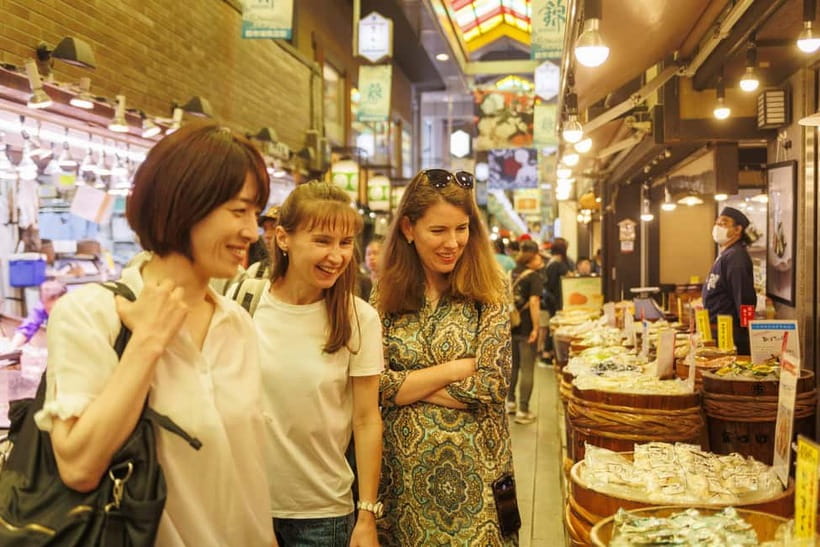
Nishiki Market is a long, covered shopping street packed with food stalls and specialty shops. Its age gives it character, but age does not make a place easy to read. Signs and menus may be unfamiliar, portions vary, and some foods are best understood in context.
That is where this tour earns its keep. Your English-speaking guide points out what each item is, how it fits into Kyoto cooking, and why a particular shop is worth your attention. Guides such as Ayu, Takuma, Toshi, Annie, and Miho have been praised for explaining food clearly, answering questions, and helping people find their way through crowded sections.
I especially like the practical side of this arrangement. You do not need to spend your first hour deciding what to order. You can taste a selection chosen for the group, then return later to buy anything that catches your fancy.
The market itself is not a quiet place for a slow lunch. You will be walking, pausing at shops, tasting small portions, and moving on. That rhythm suits curious eaters who want variety. If you want one large meal at a table, this is the wrong format.
More Market Food Tours in Japan
- Nishiki Market Brunch Walking Tour (7 Tastings + Brunch)
★ 5.0 · 1,355 reviews - Kyoto Nishiki Market Food and Culture Walking Tour
★ 5.0 · 412 reviews - Kyoto: Nishiki Market and Depachika Food Tour with a Local
★ 4.7 · 76 reviews
The food: five Kyoto specialties with local context
The central tasting includes five special foods, with the exact selection subject to what is available. The listed examples give you a good sense of the range.
Yuba is tofu skin, made from the delicate layer that forms on the surface of heated soy milk. It is closely associated with Kyoto’s refined vegetarian cooking, though this tour cannot accept vegetarian requests. Yuba can be mild and subtle, which makes the guide’s explanation useful.
Obanzai means home-style Kyoto cooking. These are everyday dishes rather than grand restaurant showpieces, often built around seasonal vegetables and simple seasoning. This is one of the most worthwhile parts of the tasting because it gives you a sense of what local comfort food can be.
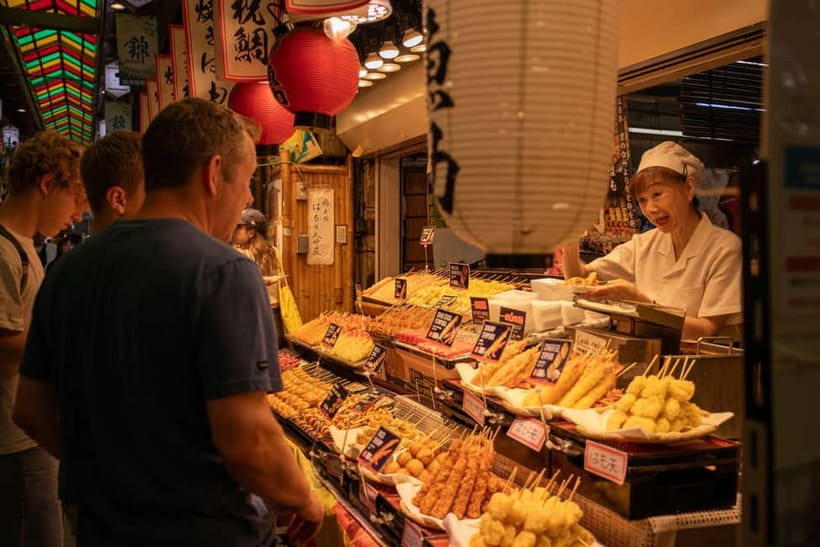
Hamo tempura is another strong reason to book. Hamo is a long, fine-boned fish that requires careful preparation. In Kyoto, it is a traditional summer food, and the tempura treatment makes it approachable even if the fish is new to you.
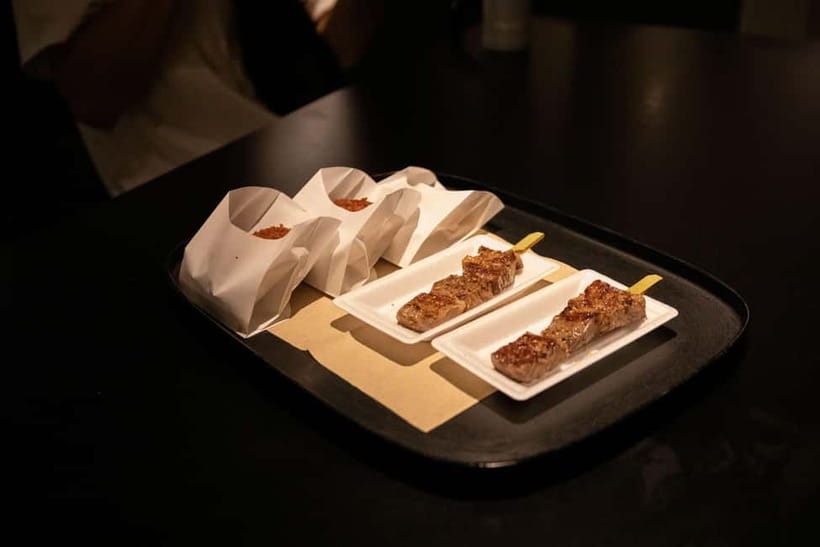
Wagyu steak skewers bring a more immediately familiar pleasure. The small portion lets you try premium beef without turning the whole experience into a meat-heavy meal. The contrast between wagyu and lighter Kyoto dishes helps show how broad the local food scene can be.
The tour also includes other tastings such as Kyoto seasonings, crackers, and Japanese-flavored honey. These smaller samples matter because they add texture and seasoning to the main stops. They also give you more chances to ask what you are eating instead of simply accepting a dish without context.
The quantity can add up. One past participant advised having a light breakfast and skipping a large lunch, and that is sensible advice. You are not getting a sit-down banquet, but five food stops plus extra samples can leave you comfortably full.
Walking through Nishiki Market for 90 minutes
The main market portion lasts about an hour and a half. Your guide leads you along the food stalls, stopping at selected shops for tastings and explanations.
The best part is the filtering. Nishiki has many places to eat, but not every attractive snack tells you much about Kyoto. A guide can steer you toward foods you might pass by, explain how they are prepared, and point out the difference between a local specialty and a generic Japanese souvenir snack.
The market can also be tight and crowded. Comfortable shoes are essential, and you should leave large bags and luggage behind. Rain gear is worth packing because the broader walking route continues beyond the covered market.
Keep your expectations realistic. You will not stop at every interesting shop, and the guide cannot control queues or market crowds. The reward is a focused introduction rather than an attempt to see everything.
One useful feature is the small group. With no more than six participants, the guide can usually adjust the pace, answer individual questions, and notice if someone is unsure about a dish. Several people have enjoyed the tour as a private or near-private outing when bookings were light.
Nishiki-Tenmangu Shrine adds a quiet pause
After the main food section, the route visits Nishiki-Tenmangu Shrine for about 10 minutes. This gives the walk a welcome change of pace.
The shrine is not treated as a separate temple tour. Instead, your guide explains its place in the area and connects the stop to Kyoto’s religious customs and daily life. That short explanation helps prevent the market from feeling like an isolated attraction.
Ten minutes is enough for an introduction, not an in-depth visit. If shrine architecture is your main interest, plan to return independently with more time. As part of a food walk, though, this is a useful pause and a chance to ask questions while standing somewhere calmer.
More Market Food Tours in Kyoto
- Kyoto: Nishiki Market Tour with a Local Foodie & Tastings
★ 4.5 · 67 reviews - Nishiki Market Food Tour with Cooking Class
★ 4.9 · 42 reviews - Kyoto: Nishiki Market Food Tour
★ 4.9 · 21 reviews
Shinkyogoku and Teramachi: food gives way to shopping
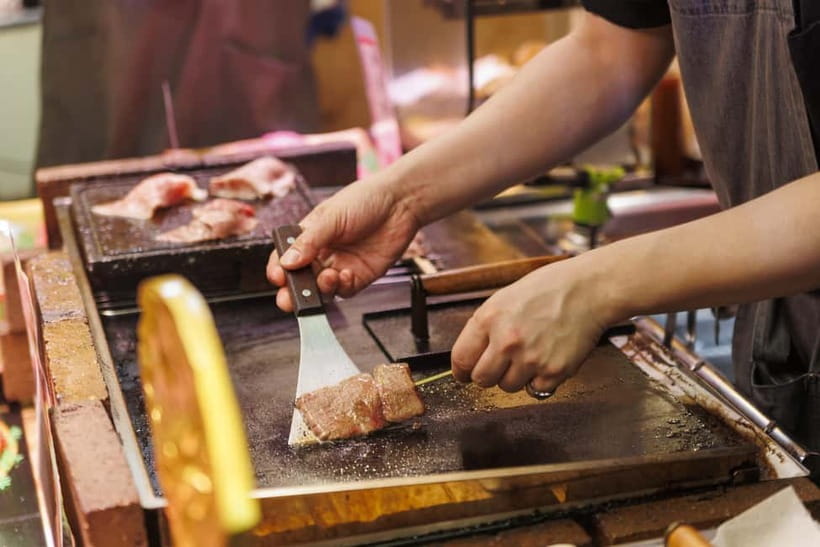
The route continues into Shinkyogoku Shopping Arcade for about 45 minutes. Here, the focus broadens from food to shops, local products, and the everyday commercial side of central Kyoto.
This section is useful if you want to understand how the market fits into the surrounding city. It also gives you time to browse after the tasting stops. Several people have found themselves buying more than planned, so keep some room in your bag and budget for purchases.
Teramachi Street Shopping District follows with roughly 30 minutes. The covered arcade setting makes it a practical addition in uncertain weather, though you still need to be ready for plenty of walking.
The shopping portions will appeal most to you if you enjoy browsing small stores and comparing local goods. If you are interested only in food, they may feel long. The tour is not a straight march from one snack to another. It uses the market as an entry point into the wider neighborhood.
There is also a short stop described as a local hidden spot. Details vary, so you should think of it as a brief discovery along the route rather than a major attraction. The value comes from having a guide identify something you might otherwise walk past.
What the guide adds to the experience
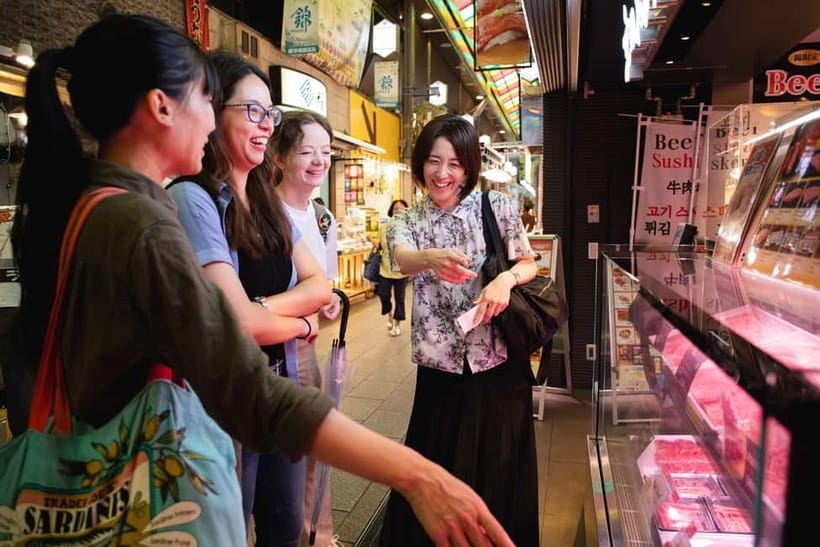
The guide is the heart of this tour. Food samples alone would not justify the price as well. The explanations and local navigation are what turn a collection of bites into a useful introduction to Kyoto.
The strongest guide qualities reported across the experience are clear English, patience, warmth, and a willingness to answer questions. Takuma has helped families with children try unfamiliar foods and has shared suggestions for later sightseeing. Miho has been especially good at keeping people comfortable in crowded market lanes. Saki has adjusted food choices around individual preferences while also explaining the shrines.
Names can change depending on the date and assignment, but you may be guided by people such as Ayu, Toshi, Annie, Yume, Hide, or Takuma. Do not book around one particular name, since the provider assigns guides by schedule. Book for the format and small group instead.
A good guide also helps with the rest of your day. Some have suggested nearby sights, eating ideas, and ways to use the afternoon. That informal advice is a bonus, not a guaranteed part of the itinerary, but it can be valuable early in a Kyoto visit.
Timing, meeting points, and the tea ceremony option
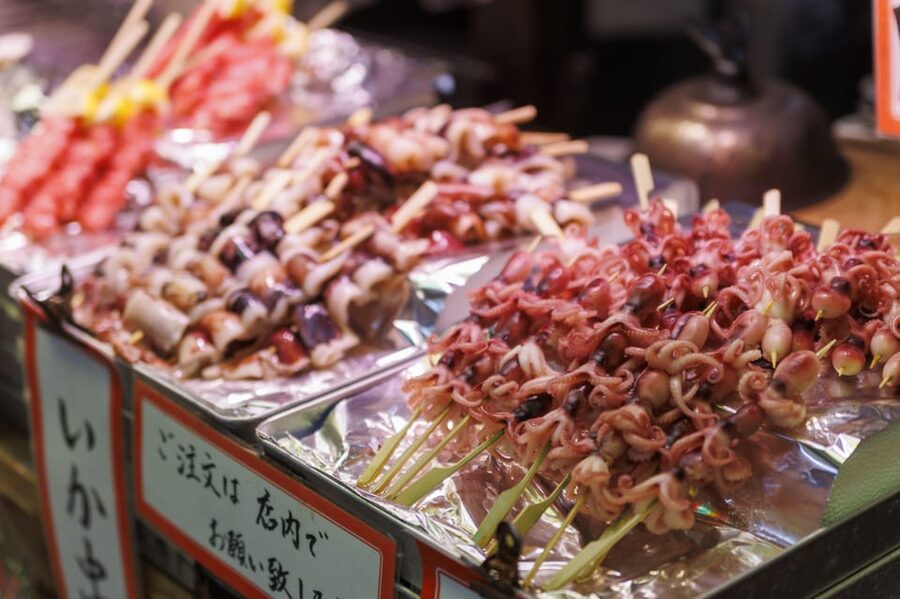
The activity is advertised as about three hours, while the duration information also gives 270 minutes. Past outings have sometimes lasted around three and a half hours or longer. Check the exact start time and meeting point attached to your chosen option.
There are three possible starting locations around Shijo Street and the former imperial site area. The meeting point can change with the option you book, so read the confirmation carefully. One person had trouble finding the correct spot, although the guide waited and helped them connect. Arriving early is still the safest plan.
The tour ends at one of three possible locations, including the starting area, Nishiki Orizuruya, or Kyoto Takashimaya S.C. That gives you useful access to central Kyoto, but do not assume the exact drop-off until you check your booking.
The tea ceremony option is separate from the market walking experience. After the food tour, you make your own way to a venue near Nishiki Market. The ceremony begins at 2:00 PM and lasts 90 minutes.
The tea experience starts with professional kimono dressing. You then join a traditional ceremony led by a tea master, with explanations of the meaning behind the movements and gestures. Time is set aside for commemorative photographs in a traditional setting.
This add-on suits you if you want a more formal cultural activity after the casual market walk. Watch the timing carefully, since the market tour and tea ceremony are not simply one continuous stop. You are responsible for reaching the tea venue after the food tour.
Is $78 a fair price?
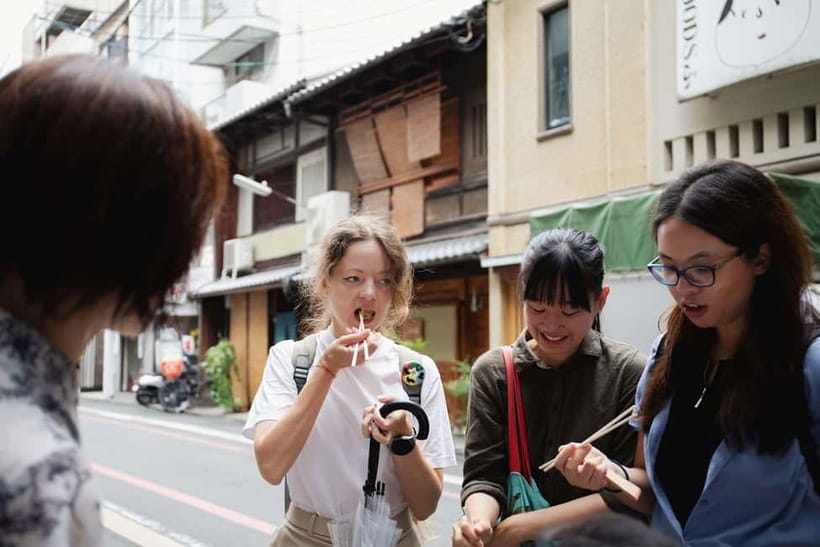
At $78 per person, the tour is not the cheapest way to eat at Nishiki Market. You could buy individual snacks on your own for less.
The value comes from the combination of food, translation, route planning, cultural explanation, and a six-person maximum. If you are new to Kyoto cuisine and likely to hesitate over unfamiliar dishes, the guide can save time and help you sample foods you might otherwise skip.
The price looks stronger when you treat the tour as a first-day orientation. You learn how the market works, get a list of foods you like, and can return later with more confidence. One participant specifically enjoyed coming back after the tour to explore independently.
The value is weaker for confident eaters who read Japanese menus, know what they want, and are happy to make their own choices. It is also a poor match if you need dietary accommodations, since the provider cannot handle vegetarian, halal, kosher, gluten-free, or allergy-related requests.
Who should book this Kyoto food walk?
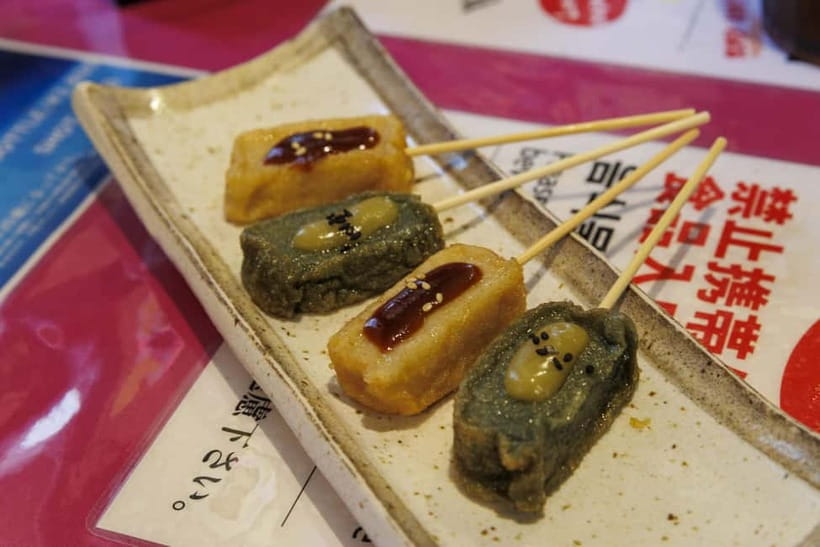
I would recommend it most to first-time visitors, solo visitors, couples, families with older children, and anyone who wants food explained rather than simply consumed.
Families can benefit from the small group and flexible conversation. One guide successfully kept an 11-year-old interested, while another family enjoyed the walk with three tweens. Children still need to manage the walking and unfamiliar flavors, but the variety helps.
Solo visitors also get good value because the guide provides company without the cost of a private tour. If you are traveling alone, this is an easy way to ask questions and get a first feel for Kyoto food culture.
You should think twice if you use a wheelchair, have significant mobility limits, or dislike walking and standing. The experience is not suitable for wheelchair users or people with mobility impairments.
Wear comfortable shoes. Do not bring a suitcase or large bag. Bring rain gear if the forecast is uncertain.
My verdict: book it for an introduction, not a full meal
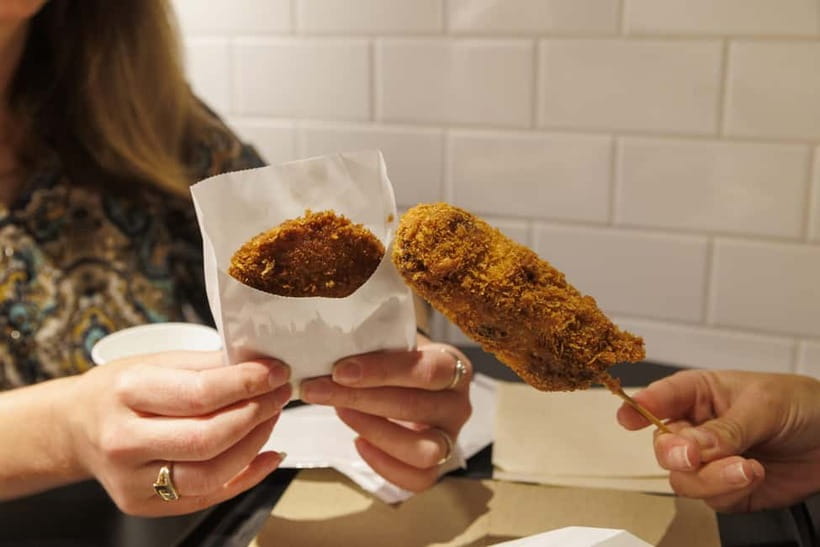
Book this tour if you want a friendly guide to make Nishiki Market less confusing, and if you enjoy trying several small portions while learning the story behind them. The combination of yuba, obanzai, hamo, wagyu, seasonings, shrines, and shopping gives you a broad first look at Kyoto.
Skip it if you have strict food restrictions, want a quiet restaurant meal, or prefer to choose every dish yourself. For everyone else, $78 is a reasonable price for a small-group orientation that can make the rest of your Kyoto eating much more confident and adventurous.
FAQ
How long does the Nishiki Market food tour last?
The activity is advertised as about three hours, with the duration also listed as 270 minutes. Some past outings have lasted around three and a half hours, so check the exact timing for your selected option.
What foods are included?
The included tastings feature five special foods, including yuba, obanzai, hamo tempura, and wagyu steak skewers. Additional samples can include Kyoto seasonings, crackers, and Japanese-flavored honey.
Is this a full meal?
No. It is a walking food-tasting experience with several small stops, not a sit-down meal. You may want a light breakfast because the samples can add up.
How large is the group?
The group is limited to six participants, plus the English-speaking guide. The small size allows more time for questions and makes it easier to move through the market.
Can the tour accommodate vegetarian or allergy-related diets?
No. The provider states that it cannot accommodate vegetarian, halal, kosher, gluten-free, or allergy-related requests.
Is the tea ceremony included?
The tea ceremony is included only if you select the tea ceremony option. It begins at 2:00 PM near Nishiki Market, lasts 90 minutes, and includes kimono dressing, a guided tea ceremony, and time for photographs.
What should I bring, and is the tour wheelchair accessible?
Bring comfortable shoes and rain gear. Pets, luggage, and large bags are not allowed. The experience is not suitable for wheelchair users or people with mobility impairments.
New food tours we have reviewed in Kyoto
- Kyoto: Sushi Making Class with Sushi Chef★ 4.8 · 64 reviews
- Nishiki Market Food Tour with Cooking Class★ 4.9 · 42 reviews
- Kyoto: Sake Brewery and Tasting Tour in Fushimi★ 4.8 · 55 reviews
- Kyoto: Small-Group Authentic Sushi Making Workshop★ 5.0 · 137 reviews
- Kyoto: Foodie Night Tour in Gion with 9 dishes + 6 Sake★ 4.4 · 26 reviews
- Kyoto Evening Gion Food Tour★ 4.9 · 35 reviews
- Kyoto: Nishiki Market Tour with a Local Foodie & Tastings★ 4.5 · 67 reviews
- Kyoto: Nishiki Market Food Tour★ 4.9 · 21 reviews
Market Food Tours, compared.
Tokyo Tsukiji Fish Market Food and Culture Walking Tour
Read our review →
London Bridge & Borough Market Food Tour with 7 Authentic Dishes
Read our review →
Small Group Cooking Class & Market Food Tour in Florence
Read our review →
Nishiki Market Brunch Walking Tour (7 Tastings + Brunch)
Read our review →
Bologna Food & Market Tour with 6 Tastings, Pasta, Wines & More
Read our review →
Browse the lists this tour appears in