
Review · SUSHI AND RAMEN TOURS
Kyoto: Small-Group Authentic Sushi Making Workshop
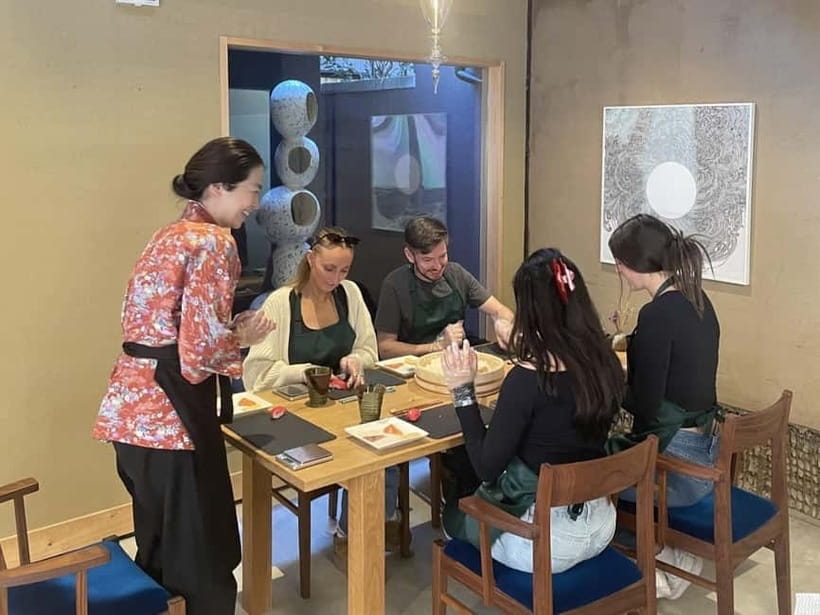
Kyoto’s original small-group sushi workshop puts you at the counter with rice, fish, and a bamboo mat, not behind a glass window watching someone else work. Kana leads the English class with a calm hand, showing you how to shape nigiri and maki before you sit down to eat what you made.
I like the tiny class size, capped at eight, and the setting inside a restored Kyoto townhouse. I also like the generous meal: you make enough sushi for a proper lunch, with miso soup, rather than a token sample. The main consideration is that this is not a good fit for vegetarians or wheelchair users, and you should report dietary restrictions when booking.
Key points at a glance
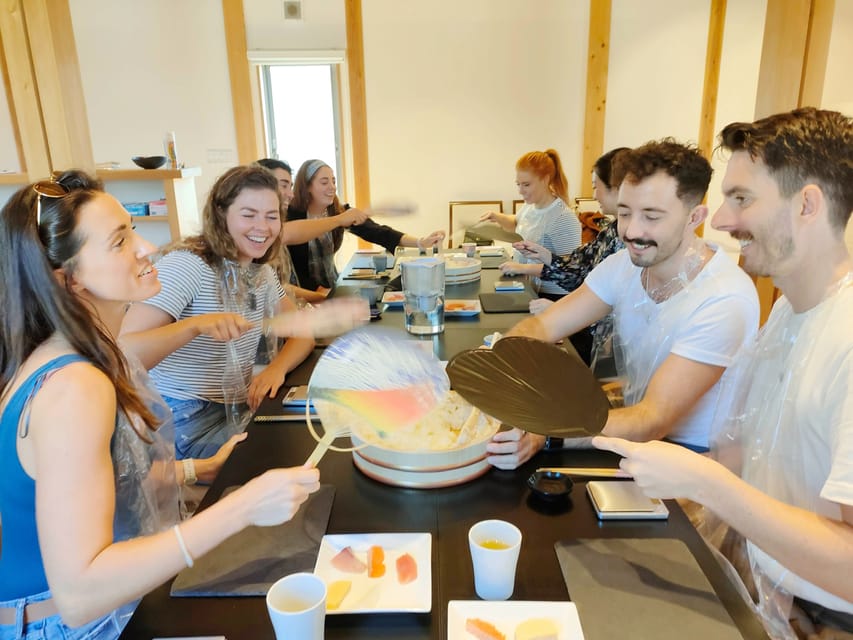
- Small class, real instruction: With no more than eight people, you have time to ask questions and correct your technique.
- Fresh local ingredients: Fish has been sourced from Kyoto’s local market, including Nishiki Market for some sessions, and the rice may come from Kana’s family.
- Three kinds of sushi: Depending on the menu, you may prepare nigiri, gunkan, and maki rolls with fish, egg, vegetables, or seafood fillings.
- A thoughtful souvenir: The gift bag includes a sushi rolling mat, chopsticks, and recipe card, so you can try again at home.
- A useful Kyoto break: The 90-minute class offers a quiet change of pace near Kiyomizu-dera, Gion, and the Keihan railway.
- A warm cultural exchange: Kana and her team are happy to discuss food, Kyoto, Japanese culture, and local places to eat.
A Kyoto sushi class with room to slow down
Many food activities in Japan are quick demonstrations followed by a few minutes of handling ingredients. This one gives you the workbench. You season the rice, handle the fish, shape the sushi, and eat the finished plate yourself.
That distinction matters. Sushi looks simple, but the small movements are not automatic. Rice must hold together without becoming a sticky lump. Nigiri needs enough pressure to stay intact, but not so much that the grains lose their shape. Maki rolls need an even spread of rice and a controlled turn of the bamboo mat.
Kana explains these steps slowly in English and repeats demonstrations as needed. You can ask about the food in front of you, or shift into broader questions about Japanese culture, Kyoto, and local customs. The class is structured, but it does not have the stiff feel of a formal cooking school.
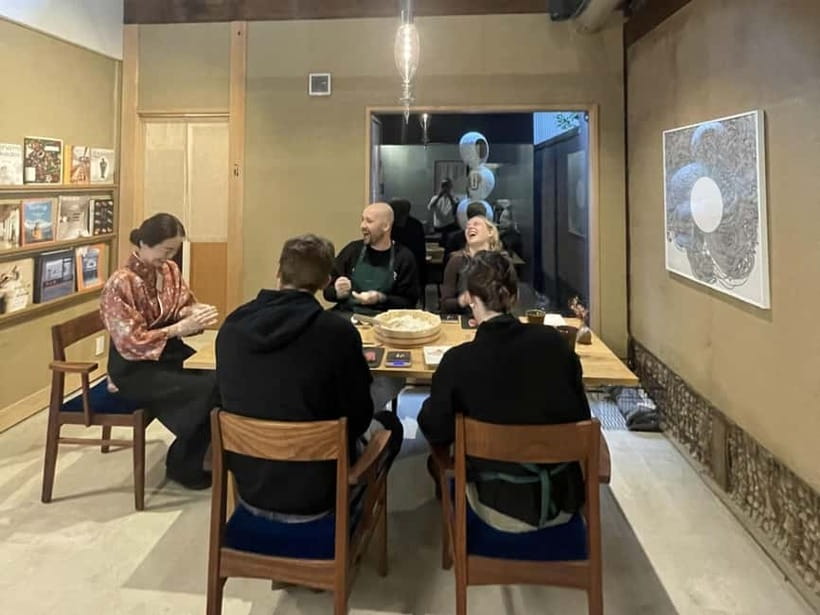
The setting helps. The workshop takes place in the Kyoto Wand building, a traditional townhouse that has been restored for modern use. You are still close to central Kyoto, yet the class offers a calm indoor pause after a morning of temples and busy streets.
More Sushi and Ramen Tours in Kyoto
- Ramen Cooking Class at Ramen Factory in Kyoto
★ 5.0 · 1,937 reviews - Sushi Making in Kyoto! Same-day bookings welcome!
★ 5.0 · 713 reviews - Kyoto: Ramen Cooking Class at a Ramen Factory with Souvenir
★ 4.9 · 532 reviews
What happens during the 90-minute workshop
The exact order can vary, but the experience follows a clear rhythm.
First, settle into the townhouse
The meeting point is within walking distance of several major Kyoto sights, including Kiyomizu-dera and Gion. Kyoto Wand is only a few minutes on foot from Kiyomizu-Gojō Station on the Keihan Main Line, making the train the simplest way to reach it.
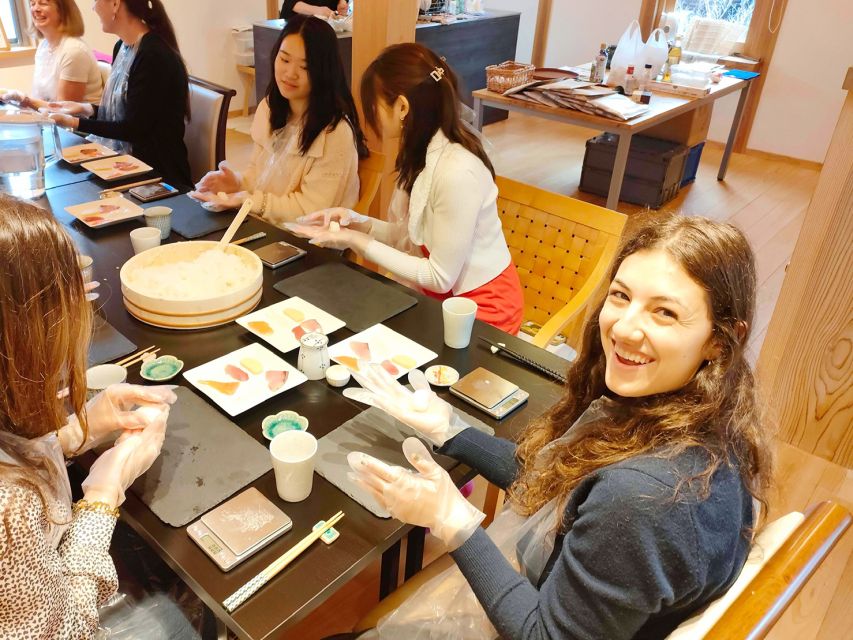
Once inside, you receive an apron and disposable gloves. The atmosphere is tidy and welcoming, with the hosts taking time to greet people and help everyone settle before the cooking begins.
The small group makes a real difference here. Eight people is the maximum, but sessions may be smaller. One couple had a class with only two participants, while another family filled most of the group with seven people. A smaller turnout can mean even more individual attention, though you should not book expecting a private lesson.
Season the rice and learn the basics
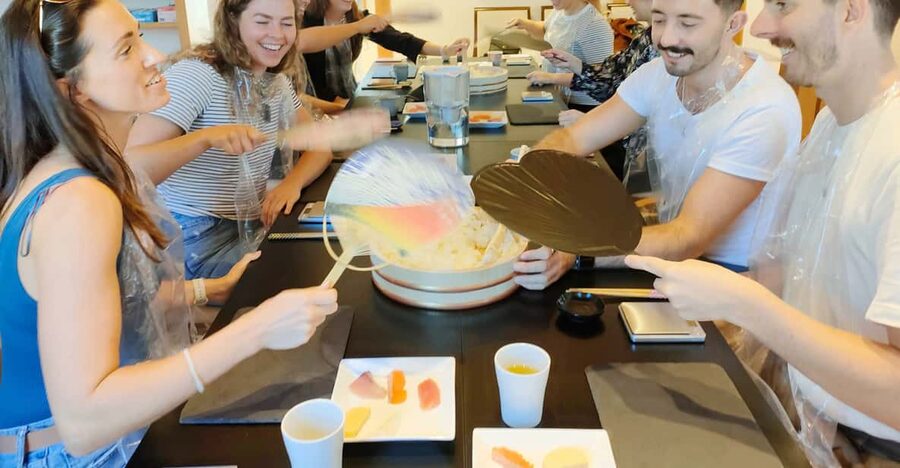
The rice is not treated as a side dish. It is the base of the meal and one of the most important parts of the lesson. You learn how it is seasoned and how to handle it without crushing the grains.
One especially personal detail is the rice used in some sessions. Kana’s family grows it, giving the class a direct link to Japanese food production rather than relying only on a generic ingredient. That does not turn the workshop into a farm visit, but it adds context to a food you may normally take for granted.
You then prepare the rice for different sushi styles. The lesson is designed for beginners, so you do not need kitchen experience. If you already make sushi at home, you can focus on more traditional shaping methods and improve the details you may have been skipping.
Same appetite, a different neighbourhood:
- Kyoto Night Foodie Tour in Gion (9+ dishes + 6 Sake tastings)
★ 5.0 · 1,762 reviews - Nishiki Market Brunch Walking Tour (7 Tastings + Brunch)
★ 5.0 · 1,355 reviews - Kyoto Sake Brewery & Tasting Walking Tour
★ 5.0 · 623 reviews - Kyoto Night All-Inclusive Eats and Streets, Gion and Beyond
★ 4.6 · 576 reviews
Shape nigiri and gunkan
Nigiri is the test of touch. You place a portion of rice in your hand, add a slice of fish, and shape the two together. The goal is a neat piece that holds its form while remaining pleasant to eat.
The fish selection can vary, but examples from the class have included salmon, tuna, squid, yellowtail, and egg omelet. That mix gives you more than one texture and shows how the same rice technique works with different toppings.
Gunkan sushi adds another lesson. Its seaweed band forms a small vessel for softer fillings, such as corn or tuna salad. It is an approachable style for beginners and a good contrast to nigiri, since the ingredients are held differently.
Roll maki with the bamboo mat
Maki is the most familiar format for many people, but the rolling mat still takes practice. You spread rice over seaweed, place the filling, and use controlled pressure to form the roll.
Examples have included salmon and avocado, though the available ingredients can change. The point is not to reproduce one fixed menu. It is to teach you the basic method so you can adapt it later.
Your gift bag includes the same kind of sushi rolling mat used in class, along with chopsticks and a recipe card. That is one of the strongest practical touches here. You leave with tools that make a second attempt at home much more likely.
The ingredients are part of the lesson
Food quality matters in a class where you eat your own work. Several sessions have used very fresh fish from a Kyoto market, with Nishiki Market named as a source. The ingredients are prepared before class, allowing you to focus on technique rather than fish cleaning.
That is also a limitation worth understanding. You are not taking a whole fish apart or learning professional knife skills. One participant wished there had been more fish cutting, and that is a fair point. This class teaches rice preparation, shaping, filling, and rolling more than seafood butchery.
For most visitors, that is a sensible trade. Fish preparation requires different equipment, more time, and a separate level of instruction. Here, you spend the 90 minutes making sushi you can eat and repeat at home.
The food is not merely decorative. You receive enough to make a substantial lunch, with some sessions producing around 16 pieces per person. Add miso soup, soy sauce, wasabi, and ginger, and you should arrive hungry.
Kana and the teaching style
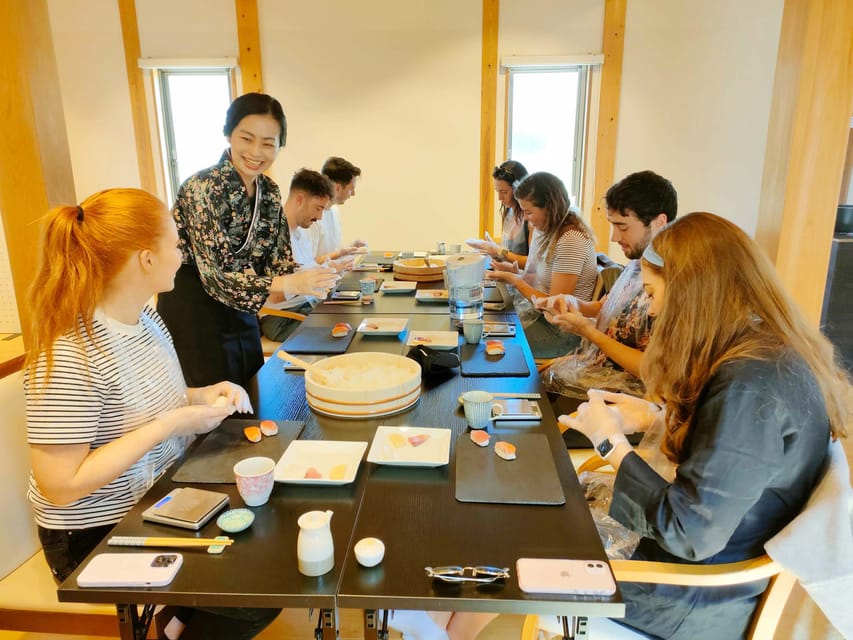
Kana is the main instructor named throughout the experience. Her teaching style is patient and personal, with demonstrations followed by hands-on practice. She also brings conversation into the class, discussing Japanese history, Kyoto, Osaka, food customs, and nearby places worth visiting.
Her husband Karim has helped during some sessions, and assistants including Aya, Ayumi, and Kenneth have also supported classes. The names vary by date, but the pattern is consistent: you have an English-speaking host who teaches the main steps and additional help available around the table.
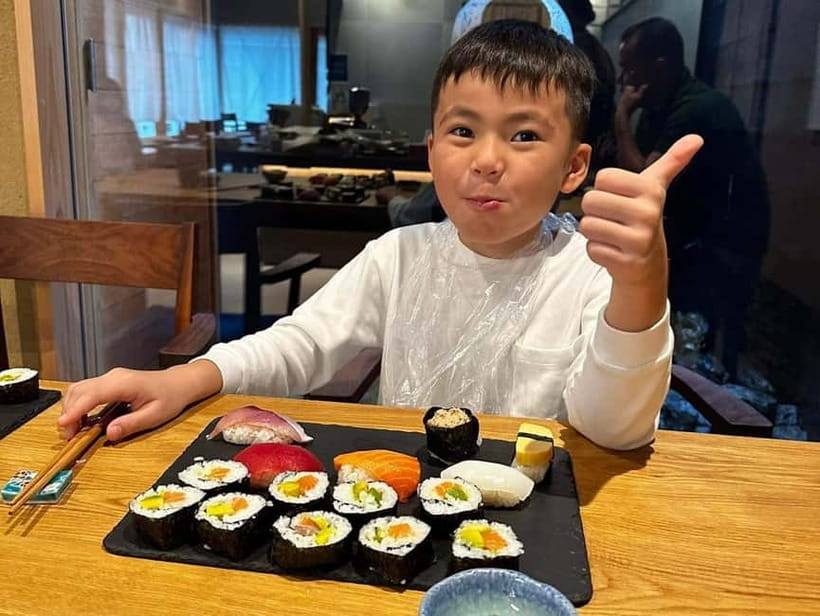
That support is useful for families. A child can need a demonstration repeated several times, while an experienced adult may want advice on shaping or presentation. The format has worked for families ranging from grandparents to young children, including a 10-year-old who made and ate his own sushi.
You also get an easy chance to talk with people from other countries. It is not a forced group exercise, but the shared table naturally creates conversation while everyone works. If you prefer a silent, technical lesson, the social side may feel more prominent than expected. If you like learning through conversation, it is a major part of the appeal.
Why the small group matters
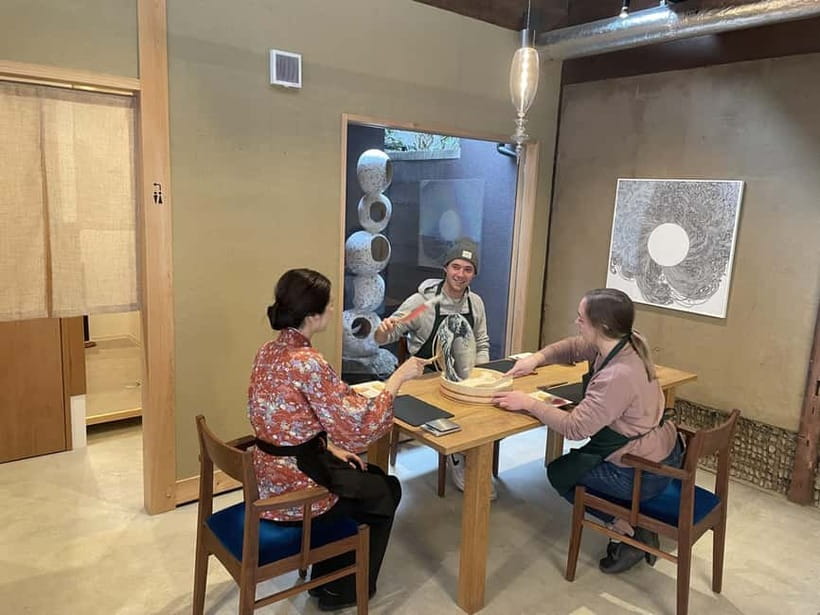
A cap of eight people is more than a marketing detail. It changes how much help you can receive.
In a large cooking demonstration, an instructor may show a technique once and move on. Here, Kana can look at your rice, adjust your hand position, or show the rolling motion again. The pace is relaxed rather than rushed, which is especially helpful if this is your first time handling sushi rice.
A smaller class also leaves room for questions. You can ask why one ingredient is used in a particular style, how Japanese sushi differs from versions abroad, or what to order at a local restaurant. The class is not a lecture on Japanese cuisine, but the informal discussion gives the food a wider setting.
The tradeoff is that the schedule is limited to small groups, so popular times may fill. The activity lasts 90 minutes, and there is no hotel pickup or drop-off. You need to reach the townhouse yourself.
Location and how to fit it into Kyoto
The workshop works well before or after sightseeing in eastern Kyoto. Kiyomizu-dera and Gion are nearby, and Kiyomizu-Gojō Station provides a clear rail connection on the Keihan Main Line.
I would pair the class with a morning around Higashiyama, then use the sushi lesson as a seated midday break. You can also schedule it after temple visits, when your feet need a rest and lunch is more appealing than another formal attraction.
Use the supplied Google Plus Code, XQVC+J7 Kyoto, if you are relying on map navigation. Kyoto’s smaller streets and traditional buildings can make addresses harder to spot than expected, so allow enough time to find the building without sprinting to the start.
The townhouse setting is a strong part of the experience, but it may not suit every need. The activity is not suitable for wheelchair users, and the information specifically excludes vegetarians. If you have allergies or other dietary restrictions, tell the operator when booking rather than waiting until you arrive.
Is $60 a fair price?
At $60 per person, this is not the cheapest lunch in Kyoto. You could eat sushi for less, especially at a supermarket or casual conveyor-belt restaurant.
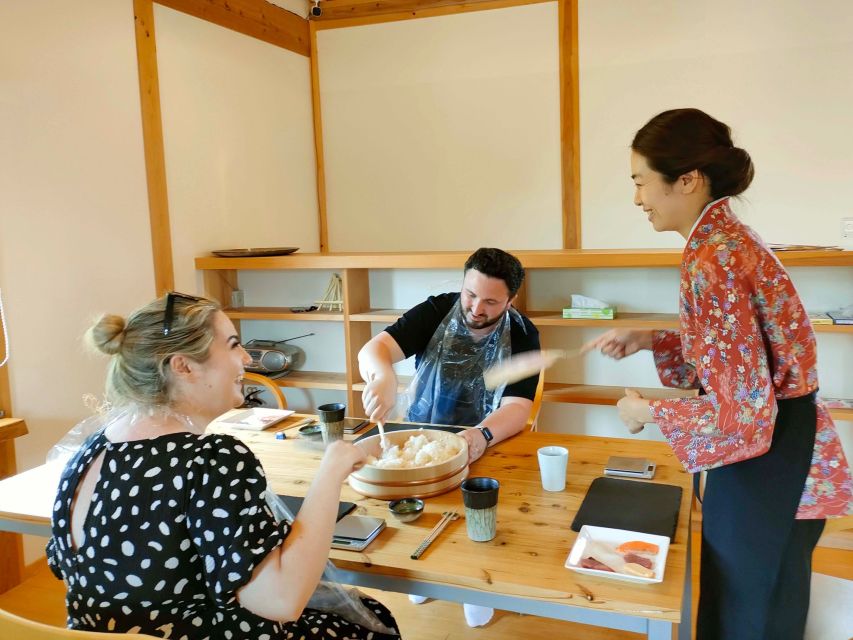
You are paying for something different: an English-speaking instructor, a small class, fresh ingredients, a full meal, a traditional setting, and equipment to take home. The instruction is the main value. If you want to understand how sushi is formed and leave able to make maki again, the price is reasonable.
The gift bag improves the calculation. A rolling mat, chopsticks, and recipe card turn the class into a skill you can use after Japan. The included miso soup also means the finished meal feels complete rather than like a tasting portion.
I would be less enthusiastic about the price if you only want to eat sushi or if you already have strong sushi-making skills and do not care about technique. In that case, a good restaurant offers better value. For a first cooking lesson, a family activity, or a food-focused Kyoto memory, the cost makes sense.
Who will enjoy this most
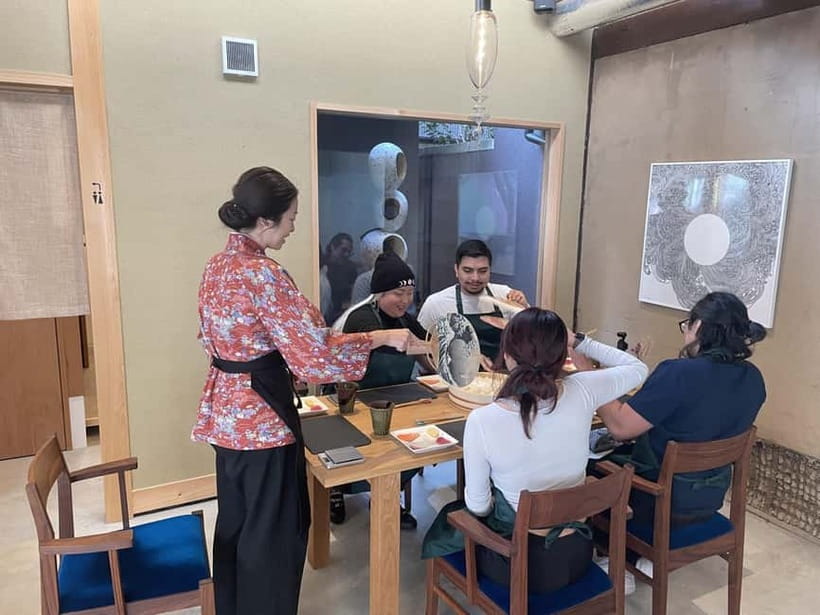
This is a good match for beginners, families, couples, and people who want a quieter cultural activity between sightseeing stops. Children can take part with adult help, and the class has enough food to satisfy a serious appetite.
It also suits people who enjoy asking questions. Kana’s conversations about Japanese culture and local history add value beyond the recipe. You may leave with restaurant suggestions or a better sense of how sushi fits into everyday Japanese food culture.
You should think twice if you are vegetarian, avoid raw fish, use a wheelchair, or want a full knife-skills course. Fish is central to the experience, and the class does not include hotel transport or a separate fish-cutting lesson.
The food quantity is another practical point. Several sessions produced a large amount of sushi, so do not schedule this immediately before another major meal. Arriving hungry is the better plan.
Booking flexibility and practical details
The activity is conducted in English and lasts 90 minutes. You can reserve now and pay later, which helps if your Kyoto schedule is still changing.
Free cancellation is available up to 24 hours before the class for a full refund. That is useful in a city where weather, train delays, and temple plans can shift your day.
The workshop is offered at set start times, so check availability for your date. Bring any dietary information at booking, and remember that the class does not include hotel pickup or drop-off.
Should you book the Kyoto sushi workshop?
I would book this if you want more than another meal and like the idea of learning with your hands. The strongest reasons are the eight-person limit, Kana’s patient English instruction, the traditional townhouse, and the fact that you eat a proper lunch made by you.
The workshop is especially useful on a busy Kyoto itinerary. After temples and crowded lanes, 90 minutes of seated food preparation gives you a different view of the city, one built around rice, fish, conversation, and craft.
Skip it if your priority is professional fish preparation, vegetarian cooking, or a wheelchair-accessible activity. Otherwise, the combination of practical skills, fresh local ingredients, and a take-home kit makes this one of the more useful food experiences in Kyoto.
FAQ
How long does the sushi-making workshop last?
The workshop lasts 90 minutes. Check the available start times when booking.
Is the class taught in English?
Yes. The workshop includes an English-speaking host and instruction in English.
How many people can join the class?
The class is limited to eight participants. Some sessions may have fewer people, but you should not assume the class will be private.
What types of sushi will I make?
You will learn to prepare sushi including nigiri and maki rolls. Sessions may also include gunkan sushi, with ingredients such as fresh fish, egg omelet, corn, tuna salad, salmon, or avocado.
What is included in the price?
The price includes the sushi-making workshop, the sushi you prepare for lunch, miso soup, disposable gloves, an apron, and a gift bag with a sushi rolling mat, chopsticks, and recipe card.
Is the class suitable for vegetarians or wheelchair users?
No. The activity is listed as unsuitable for vegetarians and wheelchair users. You should advise the operator about dietary restrictions when booking.
More hands-on workshops in Kyoto
- Kyoto: Ramen, Gyoza, and Onigiri Cooking Class
★ 5.0 · 445 reviews - The Original Small-Group Sushi Making Class in Kyoto
★ 5.0 · 436 reviews - Gyoza Cooking Class in Kyoto: Traditional Japanese Dumplings
★ 5.0 · 210 reviews - Kyoto Michelin Ramen Workshop or Painting Ramen Essentials
★ 4.9 · 100 reviews
New food tours we have reviewed in Kyoto
- Kyoto: Sushi Making Class with Sushi Chef★ 4.8 · 64 reviews
- Nishiki Market Food Tour with Cooking Class★ 4.9 · 42 reviews
- Kyoto: Sake Brewery and Tasting Tour in Fushimi★ 4.8 · 55 reviews
- Kyoto: Foodie Night Tour in Gion with 9 dishes + 6 Sake★ 4.4 · 26 reviews
- Kyoto Evening Gion Food Tour★ 4.9 · 35 reviews
- Kyoto: Nishiki Market Tour with a Local Foodie & Tastings★ 4.5 · 67 reviews
- Kyoto: Gion & Pontocho Food Tour with 13 Dishes★ 4.9 · 235 reviews
- Kyoto: Nishiki Market Food Tour★ 4.9 · 21 reviews
Sushi and Ramen Tours, compared.
Sushi Making Tokyo Roll and Authentic Japanese Sushi Class
Read our review →
Tokyo: Roll and Authentic Sushi Making Class in Asakusa
Read our review →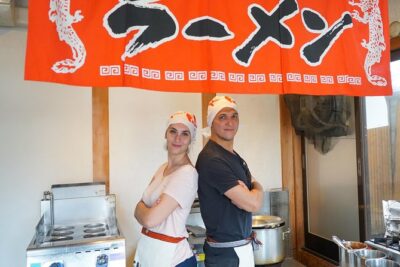
Ramen Cooking Class at Ramen Factory in Kyoto
Read our review →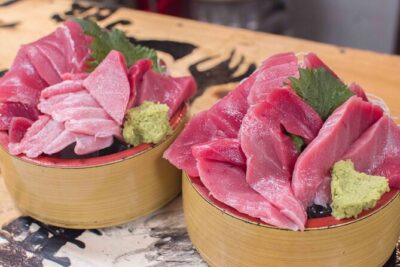
Best of Shinjuku: Izakaya Food Tour (4 Stops, 14+ Tastings)
Read our review →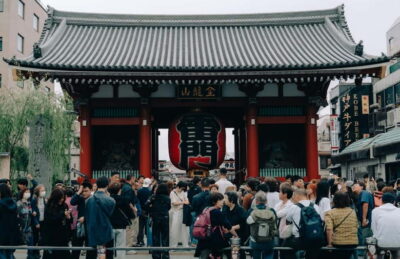
Tokyo: Sushi Making Class in a Happi Coat near a Famous Spot
Read our review →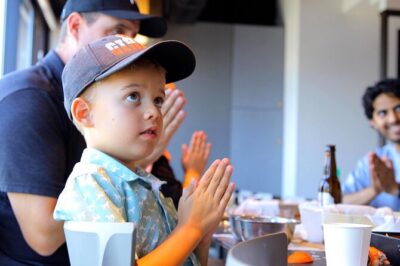
Sushi Making Tokyo! Popular Maki Sushi & Japanese Sushi(+Recipe!)
Read our review →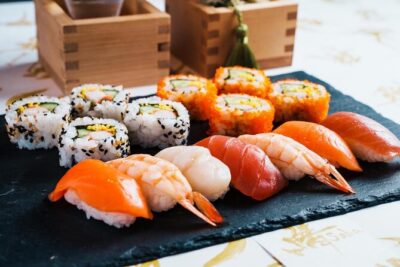
Sushi Making Osaka Roll and Authentic Japanese Sushi Class
Read our review →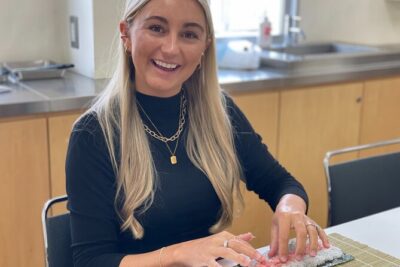
Tokyo Sushi Making Class in Tsukiji with Professional Chef
Read our review →Browse the lists this tour appears in