Review · SUSHI AND RAMEN TOURS
Kyoto Michelin Ramen Workshop or Painting Ramen Essentials
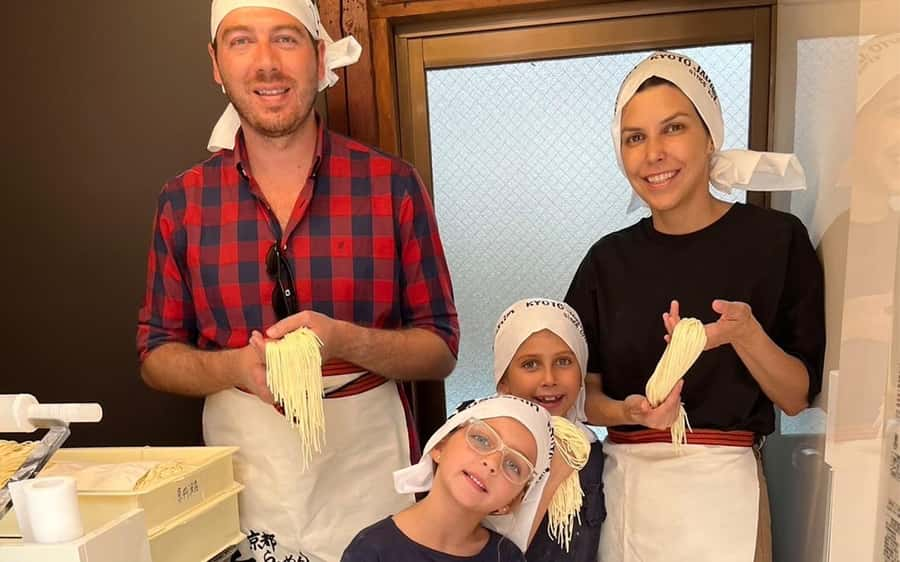
Kyoto’s Musoshin Ramen workshop turns a simple bowl of noodles into a hands-on food lesson. You’ll mix ingredients, work the dough through several stages, and learn how the restaurant makes its soup, soy sauce, noodles, and roast pork. The noodles you make need to rest overnight, so your meal afterward comes from the restaurant’s prepared kitchen rather than from your own batch.
I like the friendly, patient teaching, especially for families, and the chance to eat at the same Musoshin restaurant linked to a Michelin-nominated Toronto branch. I also like the creative option of painting a spoon or designing a bowl that can be fired in a kiln for free. The main drawback is space: one family found the workshop cramped when a group of six shared the room.
Key points to know before booking
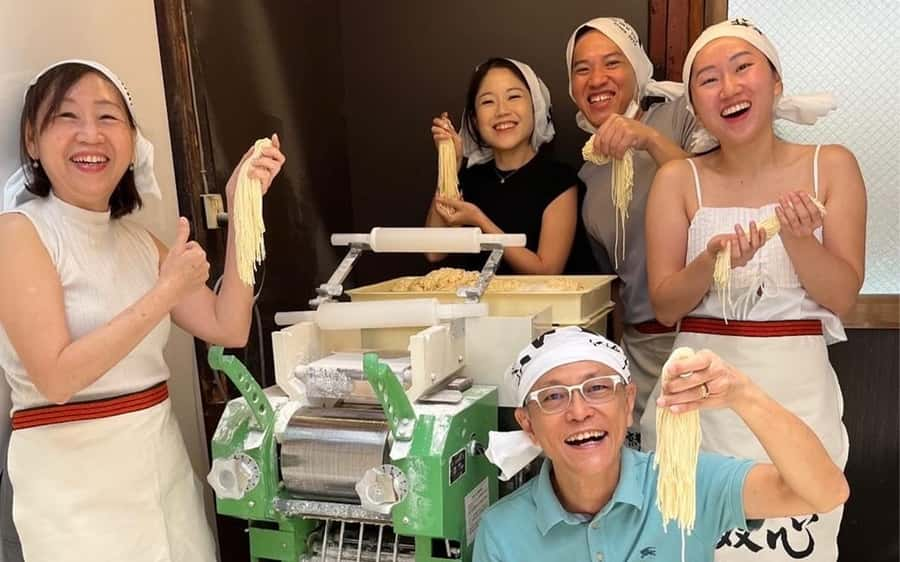
- Hands-on noodle making: Mix, knead, roll, and shape the dough through the real production process.
- Restaurant-quality meal afterward: Enjoy ramen and a drink at Musoshin once the workshop ends.
- Good for children: Kids as young as four have taken part, with adults enjoying the practical work too.
- Creative pottery option: Paint a ramen bowl or spoon, with a custom bowl available for free kiln firing and next-day pickup.
- Dietary choices: Vegetarian and vegan ramen are available, with special requests worth discussing before arrival.
- Price and flexibility: The experience costs $54 per person and can be reserved with payment later, with free cancellation up to 24 hours ahead.
Making ramen with a Michelin-linked Kyoto kitchen
Musoshin Ramen began in Kyoto in 2022 and now has six restaurants across Kyoto and Toronto. Its Toronto branch has been nominated for Michelin recognition for three consecutive years, and the workshop uses the same recipe.
That connection matters because this is not simply a generic cooking class held in a rented studio. The workshop comes from an operating ramen business with a clear focus on making its own ingredients. Musoshin prepares noodles every morning for use the following day, cooks its soup for 12 hours, and makes its ramen soy sauce and roast pork in-house.
I find that detail useful when judging the $54 price. You are paying for more than an hour of dough work. The fee also includes the restaurant meal and a drink, along with the chance to see how a working ramen shop approaches flavor, preparation, and timing.
The workshop is also presented as the only ramen class in Kyoto that is directly connected to a ramen restaurant. That gives the experience a practical finish. You learn the process, then sit down nearby to taste the finished style of ramen that inspired the lesson.
More Gourmet Food Tours in Japan
- Kyoto: Ramen Bowl Painting and Michelin Cooking Class
★ 4.9 · 96 reviews - Tokyo: Toyosu Tuna Auction &Tsukiji Market Gourmet Adventure
★ 4.8 · 187 reviews - Kanazawa Gourmet Experience Omicho Market Tour
★ 5.0 · 50 reviews
What happens during the noodle session
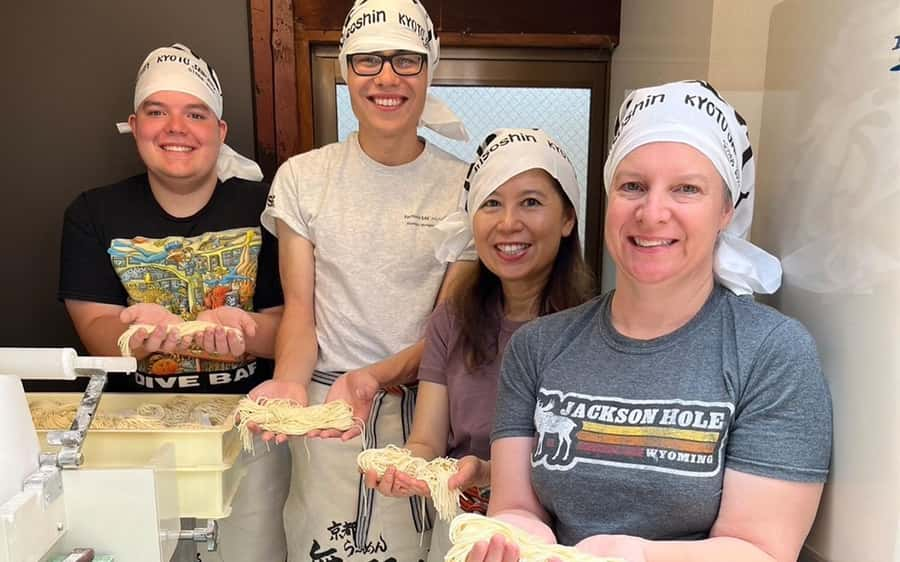
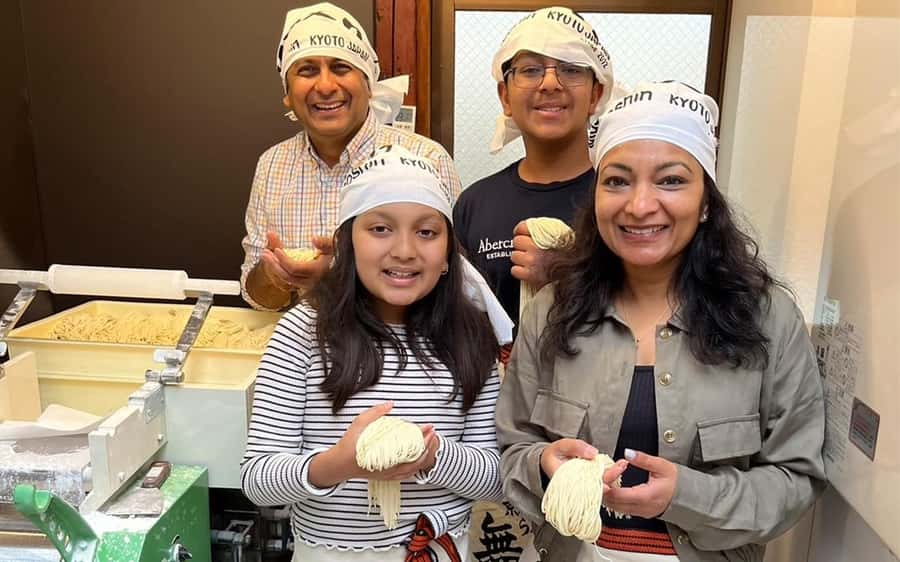
The core workshop lasts about an hour. Your instructor guides you through mixing the ingredients and handling the dough, rather than simply demonstrating the process while you watch.
You can expect to work through several stages of noodle making. That includes mixing, rolling, and using the noodle machine. The hands-on nature is a major strength for children because there is always something physical to do. Younger participants can use their hands, help with the dough, and take part in the machine work with guidance.
The instructors use English and Japanese. Specific instructors named by participants include Shin, Koki, Makoto, Momo, Shima, Yaya, Pati, Patty, Rose, and Pati in different sessions. The teaching style is friendly and light, with plenty of help for first-time cooks. Shin is also the owner and is sometimes involved directly in the class.
You should expect explanations as you work, not a technical chef’s course. The emphasis is on understanding the stages and enjoying the process. If you want exact measurements and a practical starting point for making ramen at home, the class provides the basic recipe and ingredient information.
There is one important detail: the noodles made in class need to rest overnight. That is why your meal afterward is not usually the exact noodles you just prepared. Instead, you move to the Musoshin restaurant and eat a bowl prepared by the kitchen.
Painting a bowl or spoon before dinner
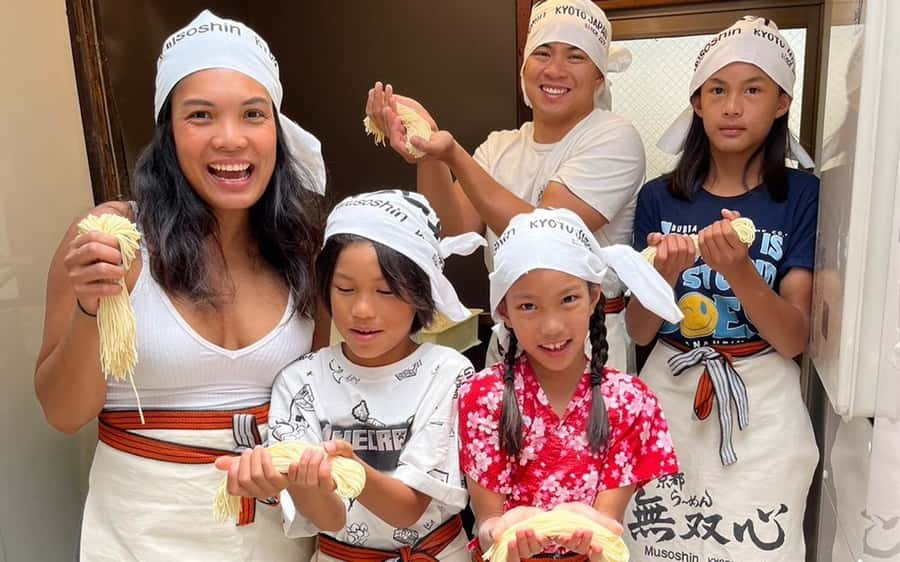
The creative portion changes according to the option you book. Some sessions include painting a ramen spoon, while others focus on a bowl or offer both choices.
Painting adds a quieter counterpoint to the messy, hands-on noodle work. One family spent about an hour painting ramen bowls before moving on to roughly 30 minutes of preparation, while other sessions split the time more evenly between painting and noodle making. Check the exact option and meeting point when booking, because the timing can differ.
A custom-designed bowl can be baked in a kiln free of charge. You pick it up the following day, so this option works best if you have another day in Kyoto. It is not a same-day souvenir.
The painting has a small practical catch. One child’s bowl design used pink paint, and the color needed to be applied thickly to show clearly after firing. If you choose a light color, especially pink, use enough paint to make the design visible.
Depending on your booking, you may also receive or be able to add Musoshin items such as a ramen spoon, bowl, or apron. The bandana used during the workshop is included. An apron may be available as an add-on, and one participant noted a price of ¥3,000 for that item.
Finishing at the Musoshin restaurant
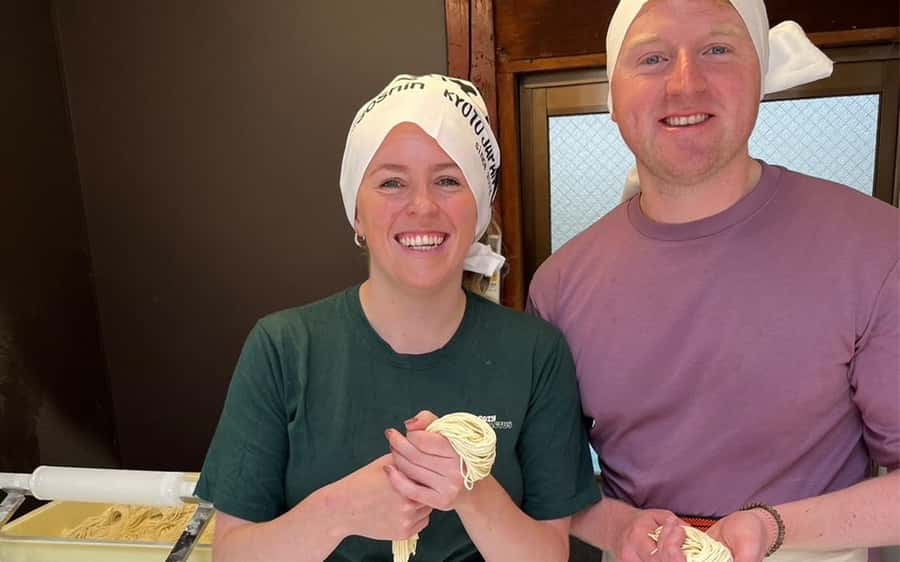
After the class, you return to the Musoshin ramen restaurant for the food portion. A drink is included, and the ramen meal is one of the strongest reasons to choose this workshop over a basic noodle demonstration.
The restaurant makes several elements in-house, including the noodles, soup, soy sauce, and roast pork. The soup is cooked for 12 hours, so the meal gives you a clear sense of why ramen shops need such careful preparation behind the scenes.
You can arrange the toppings and other elements of your bowl yourself, which fits the workshop’s central idea: ramen tastes more personal when you have helped shape part of the process. The restaurant’s black ramen and house specialties have received particular praise, and fried chicken is also available as an additional food choice.
I would not book this experience expecting to eat the exact noodles made during class. Book it because the class teaches the process and the restaurant serves you a finished bowl using Musoshin’s established recipe. That distinction avoids a common misunderstanding about the overnight resting period.
More Sushi and Ramen Tours in Kyoto
- Ramen Cooking Class at Ramen Factory in Kyoto
★ 5.0 · 1,937 reviews - Sushi Making in Kyoto! Same-day bookings welcome!
★ 5.0 · 713 reviews - Kyoto: Ramen Cooking Class at a Ramen Factory with Souvenir
★ 4.9 · 532 reviews - Kyoto: Ramen, Gyoza, and Onigiri Cooking Class
★ 5.0 · 445 reviews
Why families tend to enjoy it
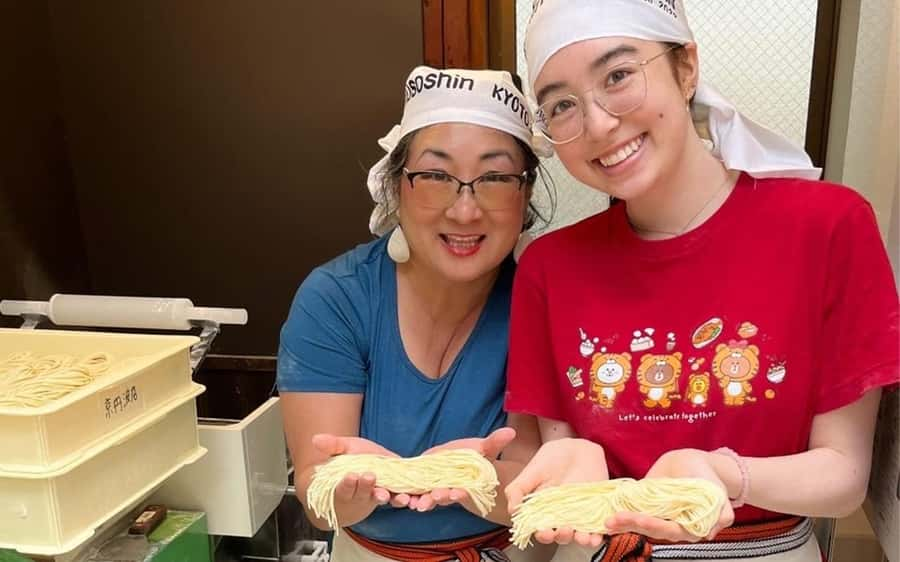
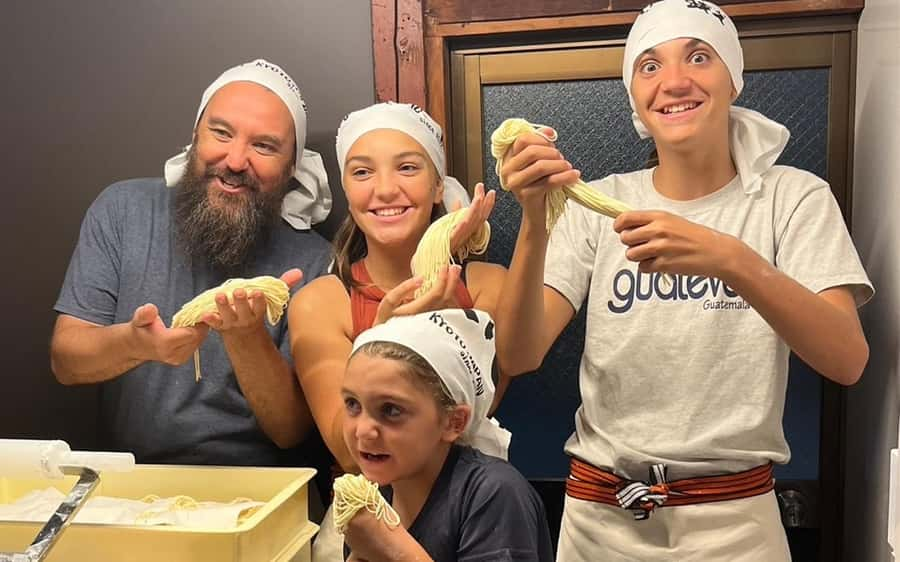
This is one of the better Kyoto food activities for families because it gives children real jobs without requiring them to sit through a long lecture. A four-year-old has taken part, and older children and teenagers have enjoyed both the dough work and the painting.
The instructors are patient with different ages and skill levels. They also take photos during the activity, which is useful when your hands are covered in dough and nobody in your group wants to miss the moment.
The class has enough structure to keep children focused, but it is not presented as a formal culinary exam. You can ask questions, work at a relaxed pace, and still finish with a proper restaurant meal.
Adults are not left with a children’s activity, either. The noodle process has enough detail to interest anyone who cooks, especially if you want to understand why ramen shops prepare noodles in advance and build soup over many hours.
The space is the main family consideration. The workshop room is small, and one group of six found it tight when another pair joined them. If personal space matters to you, ask about the group arrangement or consider booking a smaller session if that option is available.
Vegetarian, vegan, and special dietary needs
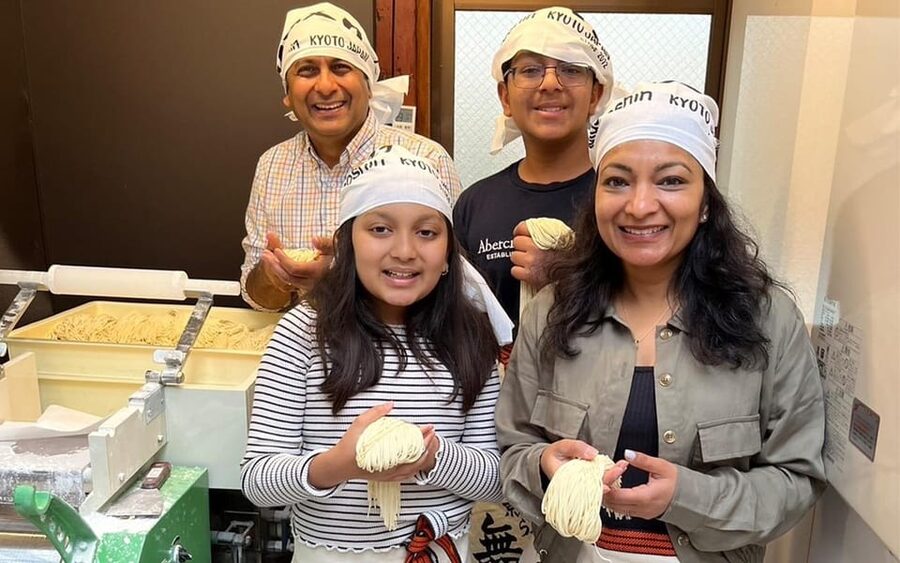
Vegetarian and vegan ramen options are available. If your group has mixed dietary needs, that makes this experience easier to arrange than many traditional ramen stops.
One family discovered shortly before the activity that their son had celiac disease. The staff obtained special gluten-free noodles and prepared a separate gluten-free soup so he could take part. That is an encouraging example of the team trying to help, but you should not assume gluten-free ingredients are always on hand.
Contact Musoshin before booking or as early as possible if you need gluten-free food or another strict dietary arrangement. Ask what can be provided for your date and how cross-contact will be handled.
English support and the teaching style
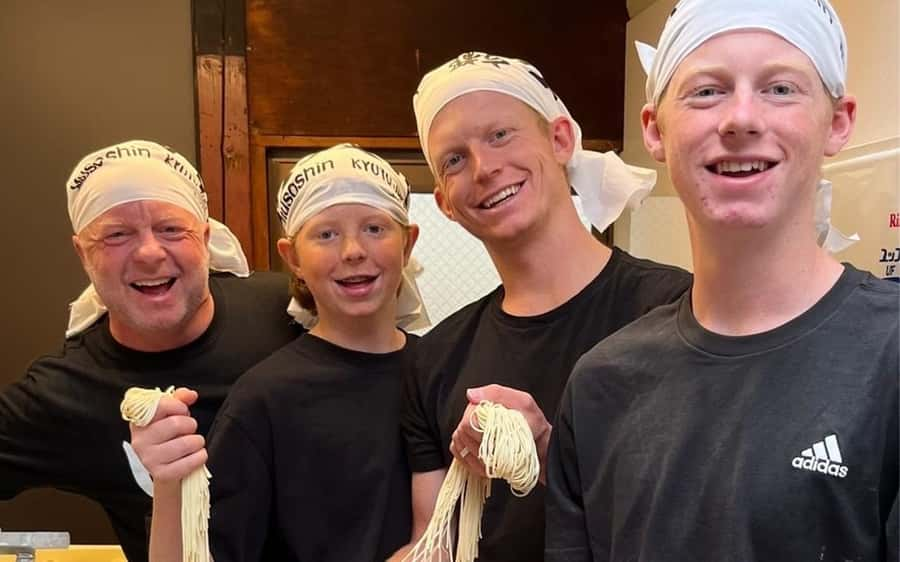
The activity is offered in English and Japanese. English ability varies by instructor, but the teaching team includes staff who explain the steps clearly and keep conversation flowing.
Shin is described as funny and comfortable in English, while Yaya and Pati have been praised for their energy and humor. Koki, Makoto, Momo, Shima, Rose, and the other instructors are part of a wider team, so the exact teaching style depends on the day.
That variety is part of the charm, but it also means you should not book solely to meet one named instructor. Shin may lead or join a session, but the assigned guides can change.
The class includes instruction, conversation, and photos. If you enjoy asking about Japanese food culture, this is a better fit than a silent demonstration. The workshop connects the practical steps to the restaurant’s wider goal of sharing ramen with people from different countries.
Is $54 a fair price?
At $54 per person, this is not the cheapest way to eat ramen in Kyoto. A restaurant meal alone would cost less, and a simple noodle-making class without the meal or pottery would likely be cheaper.
The value comes from combining several parts:
- About an hour of hands-on noodle work
- Basic ramen instructions and ingredient information
- Guidance from Musoshin staff
- A meal at the restaurant
- A drink
- A Musoshin bandana
- Optional bowl or spoon painting, depending on the booking
- Free kiln firing for a designed bowl, with next-day pickup
For a family, the price covers an activity and dinner in one booking. That can make the cost easier to justify, especially since children are actively involved rather than simply watching adults cook.
For a solo visitor who only wants a good bowl of ramen, the value is weaker. You can eat at the restaurant without taking the class. For someone interested in Japanese food, cooking, or a hands-on souvenir, the price is more reasonable.
The free bowl firing is a nice extra, but remember that you need to remain in Kyoto long enough to collect it the next day. If your schedule is tight, choose the spoon or another option you can take with you.
Timing, meeting points, and booking details
The workshop ends back at the meeting point, but the exact starting point can vary with the option you choose. Read the meeting instructions carefully rather than assuming every version begins in the same room.
The noodle-making portion is about one hour. Some combinations that include painting run longer, with one reported format lasting about 90 minutes in total. The restaurant meal follows the activity.
You can reserve now and pay later, which helps if you are still arranging your Kyoto schedule. Cancellation is free up to 24 hours in advance. Those terms are useful for families, since illness, weather, or a packed sightseeing day can force a change of plan.
The activity is based in Kyoto on Honshu. It is best placed on a day when you are already exploring the city and can spare enough time for the class, meal, and any next-day bowl pickup.
Who should book this ramen workshop?
I would recommend it most strongly to families with children, couples who want a shared activity, and food-focused visitors who prefer doing something practical to simply sitting at a restaurant.
It also works well for friends, teenagers, and first-time visitors who want an experience with a clear beginning and end. You get instruction, hands-on work, a creative option, and dinner without needing to plan each part separately.
You may want to skip it if you have very little time in Kyoto, dislike group activities, or only want to taste ramen. The small workshop space can feel cramped, and the noodles you make are not served immediately because they must rest overnight.
For everyone else, the combination is strong: learn the craft, paint something personal if you choose, then eat the restaurant’s finished ramen. The class gives you a better understanding of what sits behind a bowl that looks simple but takes hours of preparation.
FAQ
Where does the ramen workshop take place?
The workshop takes place in Kyoto on Honshu, Japan, and is run by Musoshin Ramen. The exact meeting point may vary depending on the option booked.
How long does the activity last?
The noodle-making portion lasts about one hour. Options that include painting may take longer, with one format lasting about 90 minutes in total.
Is a meal included?
Yes. The experience includes ramen at the Musoshin restaurant and a drink.
Do I eat the noodles I make?
Usually, no. Musoshin lets its freshly made noodles rest overnight, so the ramen served after the class is prepared by the restaurant.
Are vegetarian and vegan ramen options available?
Yes. Vegetarian and vegan ramen options are available.
Is the class offered in English?
Yes. The activity is offered in English and Japanese.
Can I make and keep a custom ramen bowl?
You can design a bowl and have it baked in a kiln free of charge. It can be picked up the next day.
Can I cancel the booking?
You can cancel up to 24 hours in advance for a full refund. You can also reserve and pay later.
Should you book it?
Book this workshop if you want more than a ramen meal. The best reasons are the patient instruction, the real noodle-making process, the included restaurant dinner, and the chance to create a bowl or spoon. Families should ask about group size because the room is small, and anyone with serious dietary needs should contact Musoshin ahead of time.
At $54, it is a food activity rather than a cheap lunch. For a first Kyoto visit, a family trip, or a food-centered itinerary, that combination makes it a sound choice.
More hands-on workshops in Kyoto
- The Original Small-Group Sushi Making Class in Kyoto
★ 5.0 · 436 reviews - Gyoza Cooking Class in Kyoto: Traditional Japanese Dumplings
★ 5.0 · 210 reviews - Kyoto: Small-Group Authentic Sushi Making Workshop
★ 5.0 · 137 reviews - Kyoto: Sushi Making Class with Sushi Chef
★ 4.8 · 64 reviews
More Gourmet Food Tours in Kyoto
- Montserrat Half-Day Tour with Tapas and Gourmet Wines
★ 5.0 · 7,359 reviews - Bateaux Parisiens Seine River Gourmet Dinner & Sightseeing Cruise
★ 4.5 · 6,930 reviews - Authentic Parisian Gourmet Food Tour with 10 Local Dishes & Wines
★ 5.0 · 4,754 reviews - Queenstown: Walter Peak Gourmet BBQ & Lake Whakatipu Cruise
★ 4.8 · 2,713 reviews
New food tours we have reviewed in Kyoto
- Kyoto: Sushi Making Class with Sushi Chef★ 4.8 · 64 reviews
- Nishiki Market Food Tour with Cooking Class★ 4.9 · 42 reviews
- Kyoto: Small-Group Authentic Sushi Making Workshop★ 5.0 · 137 reviews
- Kyoto: Sake Brewery and Tasting Tour in Fushimi★ 4.8 · 55 reviews
- Kyoto: Nishiki Market Tour with a Local Foodie & Tastings★ 4.5 · 67 reviews
- Kyoto: Foodie Night Tour in Gion with 9 dishes + 6 Sake★ 4.4 · 26 reviews
- Kyoto Evening Gion Food Tour★ 4.9 · 35 reviews
- Kyoto: Nishiki Market Food Tour★ 4.9 · 21 reviews
Sushi and Ramen Tours, compared.
Sushi Making Tokyo Roll and Authentic Japanese Sushi Class
Read our review →
Tokyo: Roll and Authentic Sushi Making Class in Asakusa
Read our review →
Ramen Cooking Class at Ramen Factory in Kyoto
Read our review →
Best of Shinjuku: Izakaya Food Tour (4 Stops, 14+ Tastings)
Read our review →
Tokyo: Sushi Making Class in a Happi Coat near a Famous Spot
Read our review →
Sushi Making Tokyo! Popular Maki Sushi & Japanese Sushi(+Recipe!)
Read our review →
Sushi Making Osaka Roll and Authentic Japanese Sushi Class
Read our review →