Review · COOKING CLASSES
Kyoto: Ramen Cooking Class at a Ramen Factory with Souvenir
Making ramen from a packet is easy. Making the noodles from flour, choosing your soup, seasoning the chicken, and building the finished bowl is a different sort of Kyoto experience. At the Ramen Factory, instructors such as Sakura, Fuku, and Akemi keep the 90-minute class moving with clear instructions, jokes, and plenty of help.
I like the hands-on noodle work and the freedom to mix miso, salt, and soy flavors to suit your taste. I also like that you leave with a recipe, a selected souvenir, and a full meal. The main drawback is the price: at $127 per person, this is far more costly than eating ramen in a restaurant, so you should book it for the activity rather than the meal alone.
Key points at a glance
- Knead, punch, fold, and shake your own noodles, starting with flour and dough.
- Choose from miso, salt, and soy flavors, then build a bowl with toppings, egg, and condiments.
- Season your own chicken and learn how the different parts of ramen come together.
- English and Japanese instruction makes the class easy to follow for beginners.
- Take home a selected souvenir and the full recipe, delivered by email or QR code.
- Five minutes from Demachiyanagi Keihan station, though the basement entrance can be easy to miss.
Why this short Kyoto cooking class works
Kyoto has no shortage of temples, gardens, and famous streets. This class gives you a useful break from sightseeing without taking half a day. The work is active enough to feel like a real lesson, but the 90-minute schedule leaves room for other plans.
The school was established by Menbaka Fire Ramen, a well-known Kyoto ramen restaurant. That connection gives the class a clear purpose: you are not simply assembling instant noodles with a few toppings. You learn the basic chain from flour to dough, noodles, soup, and final bowl.
I especially like the balance between instruction and entertainment. The teachers keep the mood lively, but the class still covers practical steps. Fuku has been praised for his humor and energy, while Sakura, Akemi, Moeka, Kazuma, and other instructors have guided classes with a friendly, patient manner. Your instructor will depend on the day, but the teaching style is designed for beginners.
This is also a good choice if your group has mixed interests. A teenager can enjoy punching and shaping dough, a parent can focus on the cooking, and a ramen fan can pay attention to the soup and sauce combinations. Solo visitors are not left on the sidelines. One solo participant received a private lesson, while staff members helped another solo visitor capture photos and videos during the process.
More Cooking Classes in Japan
- Ramen Cooking Class at Ramen Factory in Kyoto
★ 5.0 · 1,937 reviews - Kyoto: Ramen, Gyoza, and Onigiri Cooking Class
★ 5.0 · 445 reviews - The Original Small-Group Sushi Making Class in Kyoto
★ 5.0 · 436 reviews
Finding the Ramen Factory near Demachiyanagi
The school is about a five-minute walk from Demachiyanagi station on the Keihan Line. The location is useful if you are visiting northern Kyoto or planning time around the Kamo River, but do not expect a large street-front restaurant.
The class takes place on the basement floor. When you arrive, look for the supermarket and take the staircase to its right. Several people have found the entrance confusing because it may not match the position shown on Google Maps. Another useful clue is a set of stairs on the street side behind the bus stop.
Give yourself a few extra minutes to find the stairs. This is a small practical detail, but arriving late to a timed cooking class is an avoidable nuisance. Transportation is not included, so you make your own way to the station and venue.
From apron and video to flour and dough
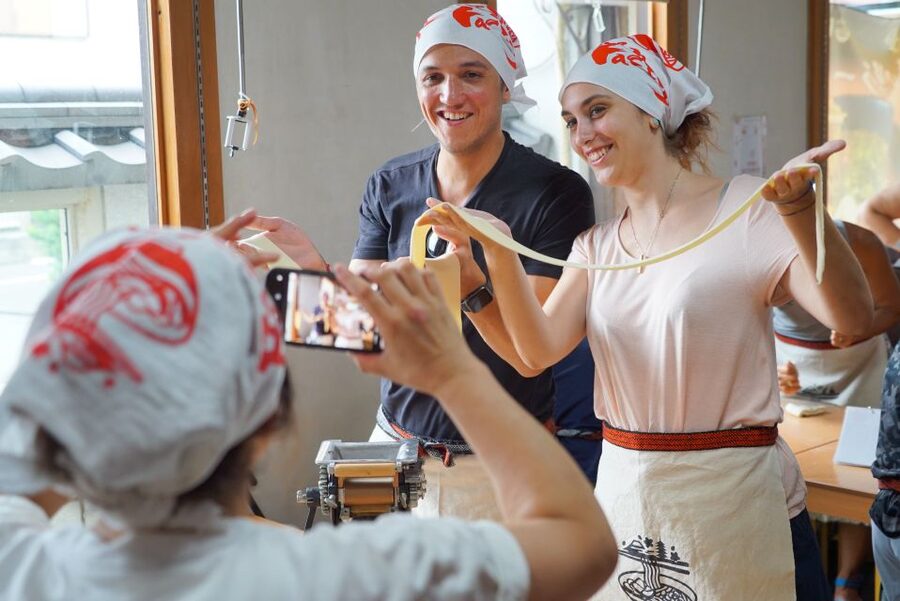
The session starts with a Ramen apron and headscarf. You then watch a short overview video that shows the process before you begin. This is helpful because ramen has several stages, and the quick preview gives you a sense of where the class is heading.
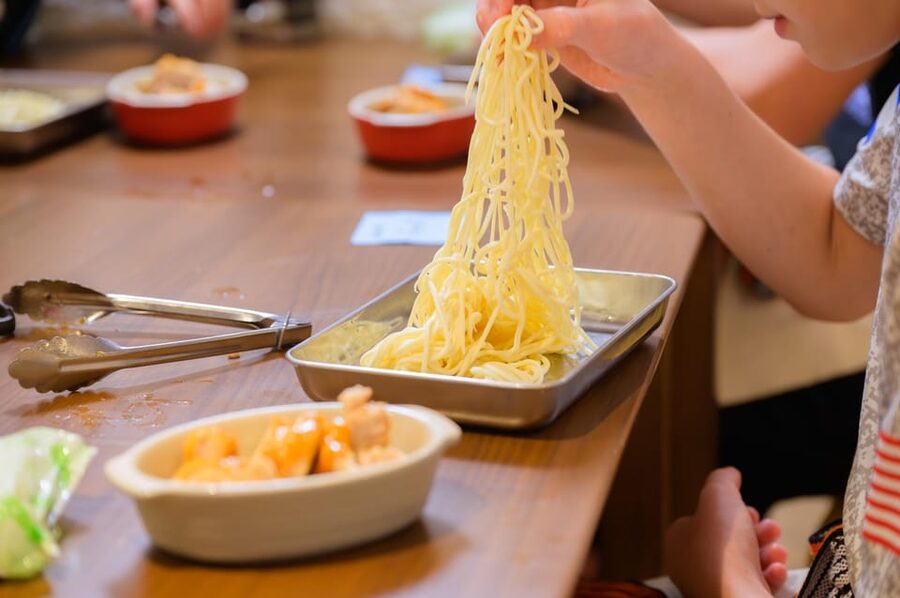
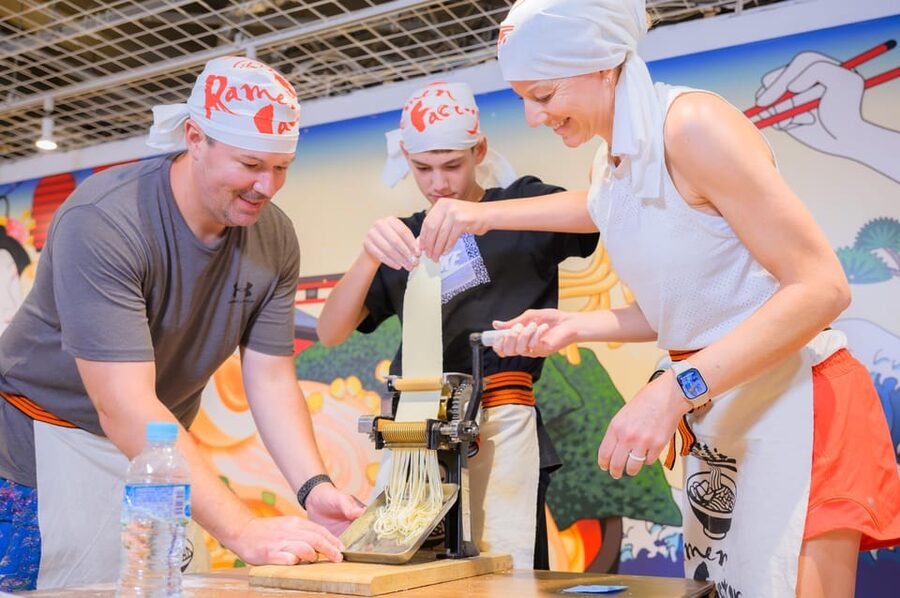
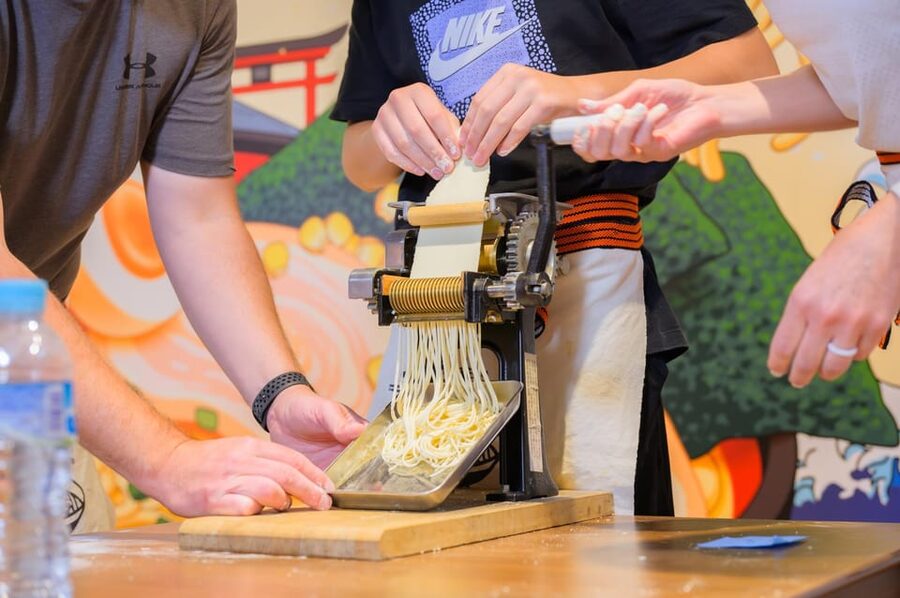
The central task is making noodles from flour. You mix the dough, punch it, knead it, and fold it more than 100 times. You then work it into noodles, drain them, and shake them ready for the bowl. The process is physical, but not advanced. You do not need prior cooking skills, and the instructors guide you through each movement.
The noodle section is the part I would value most. It turns an ordinary meal into something you helped create from the start. You also see why fresh noodles have a different feel from dried noodles bought at a shop.
The class is not a slow, traditional noodle apprenticeship. Much of the preparation is arranged in advance so that the full meal can be completed within 90 minutes. That is a sensible trade-off. You get to perform the key hands-on steps without waiting days for broth or spending hours on one bowl.
Seasoning chicken and choosing your soup
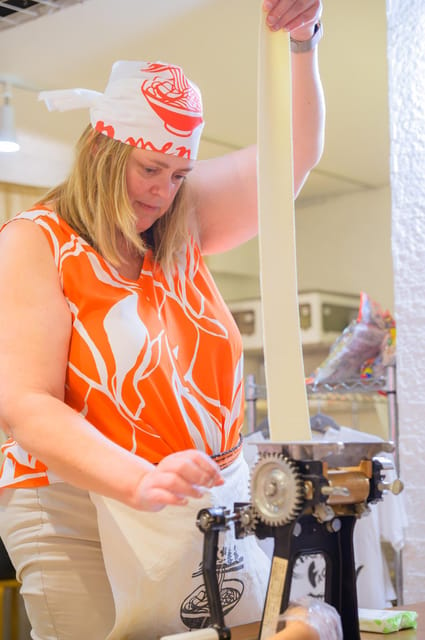
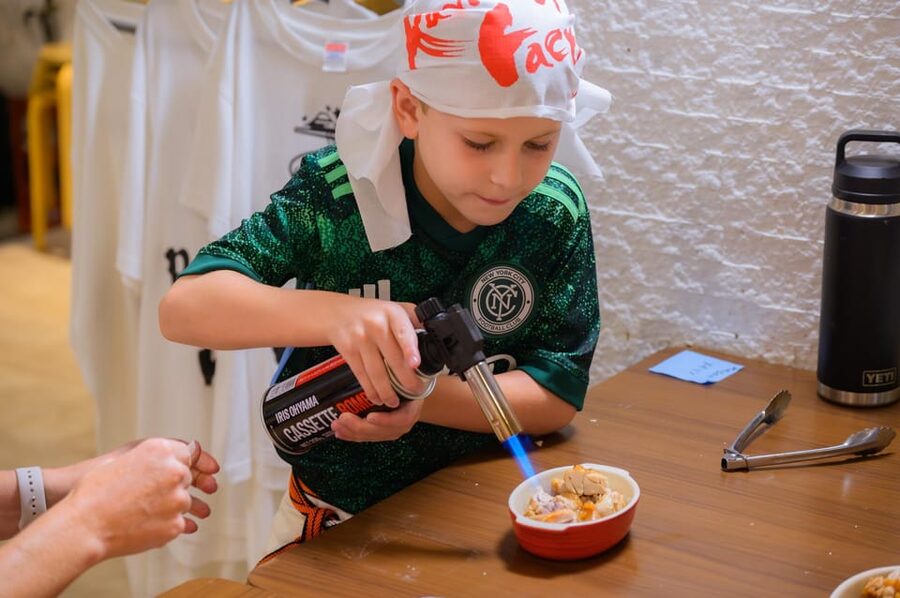
After working with the dough, you flavor the chicken with seasonings. The class uses chicken chashu rather than pork, which allows the dish to be prepared quickly. The chicken gives you a substantial topping while fitting the tight schedule.
You then choose a soup and sauce combination. The featured sauce choices are miso, salt, and soy, each giving the bowl a different direction. This is more useful than receiving one fixed recipe because you can compare flavors and decide what suits you.
The class also lets you add toppings, an egg, and condiments according to your preference. You display the finished bowl yourself, so presentation becomes part of the fun. Do not worry if your bowl does not look like a restaurant chef’s version. The point is to understand how the ingredients work together and to make a bowl you want to eat.
Dietary needs should be discussed with the local supplier after booking. Individual accommodations have included tofu and fish broth for a pescatarian participant, as well as options for people who do not eat meat. Vegan adjustments have also been handled individually. Since the available choice can depend on your request and the day, contact the supplier early rather than relying on an assumption.
More Cooking Classes in Kyoto
- Gyoza Cooking Class in Kyoto: Traditional Japanese Dumplings
★ 5.0 · 210 reviews - Kyoto: Ramen Bowl Painting and Michelin Cooking Class
★ 4.9 · 96 reviews - Kyoto: Sushi Making Class with Sushi Chef
★ 4.8 · 64 reviews - Nishiki Market Food Tour with Cooking Class
★ 4.9 · 42 reviews
The meal is part of the lesson
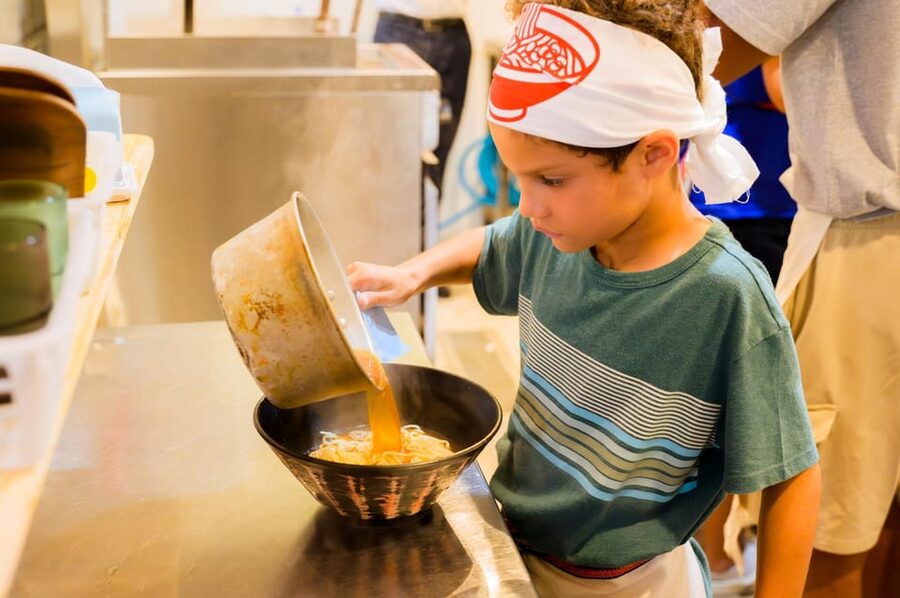
At the end, you eat the ramen you made while looking back at the preparation. This closing meal matters. You can taste the effect of your noodle work, your soup choice, your sauce mix, and your toppings in one bowl.
The food is not treated as a token result. People have found the ramen surprisingly good, including participants who expected the entertainment to matter more than the cooking. The ingredients are described as high quality, and the chicken chashu gives the finished dish plenty of flavor.
I would still keep expectations sensible. This is a cooking class that ends in a meal, not a tasting course at a fine-dining restaurant. You are paying for instruction, participation, the setting, the meal, and the take-home items. If you only want lunch, a Kyoto ramen shop will be much cheaper. If you want to learn a process and eat what you made, the calculation changes.
The meal also makes this a practical lunch option. The class is filling, and it can replace one restaurant stop in your day. Drinks are not included, so plan to buy those separately if you want one with the meal.
Souvenirs that extend the experience
Each participant chooses from four souvenir types. The exact selection can vary, but the souvenirs are one reason this feels more substantial than a standard food demonstration. Some sessions have included a ramen bowl, and other take-home items have included the apron or headscarf, a printed photo, a certificate, or a small gift.
The most useful extra is the recipe. You receive the full recipe by email or through a QR code, so you can try the dish at home. That makes the class more valuable for anyone who enjoys cooking and wants to repeat the experience after returning home.
Be realistic about what you can reproduce. Good ramen broth can take days, while this class is designed to fit into 90 minutes. You will have the instructions and the core method, but your home kitchen, ingredients, and available time may produce a different result. Even so, learning how to make and handle the noodles is a skill you can use again.
A lively class, not a quiet demonstration
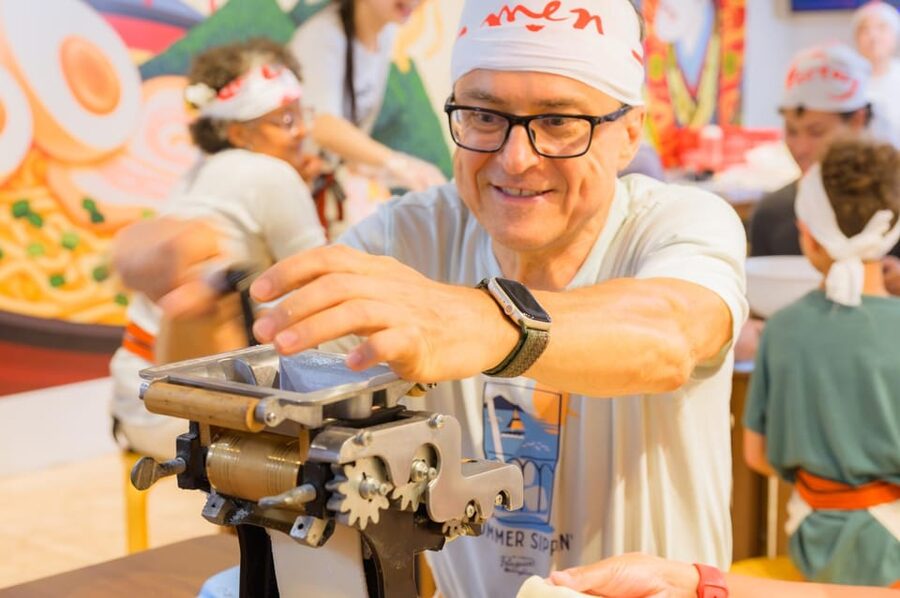
The instructors bring plenty of energy. That is a strength for families and groups that want a social activity, and it helps keep the pace brisk. Teachers have used humor, history about ramen and Japan, and hands-on encouragement to make each step easy to follow.
The tone may be more lively than some people expect from a cooking lesson. If you want a calm, silent workshop with long explanations about regional ramen styles, this may not be the right fit. The class focuses on doing the work, getting the sequence right, and having a good time.
Photos and videos are part of the atmosphere. Staff members have helped participants capture noodle-making, bowl assembly, and group moments. You should know that professional filming, photography, and 360-degree recording may also take place, with images possibly used for media, websites, advertising, and promotion worldwide. If that concerns you, ask the supplier about it before booking.
What the $127 price really buys
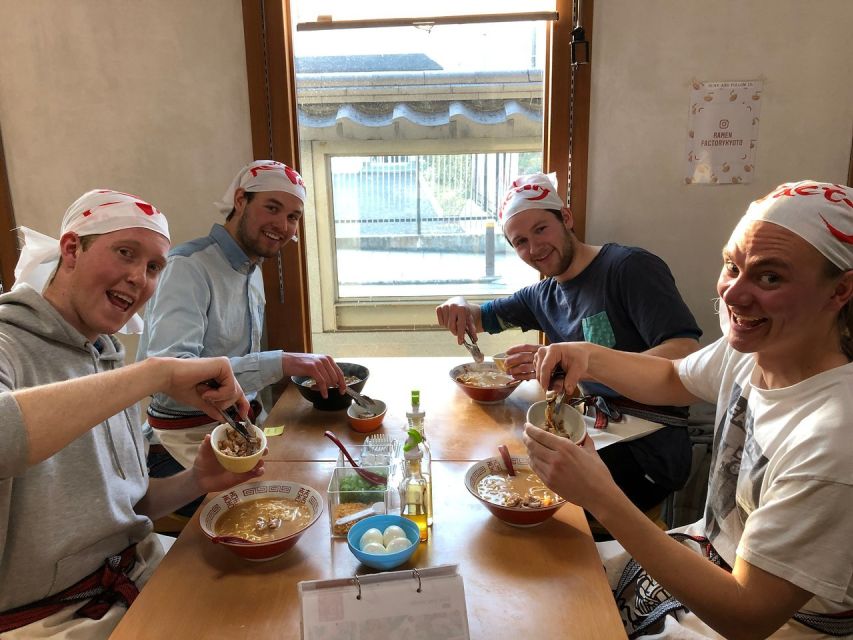
At $127 per person, the class is expensive compared with a bowl of ramen. You should not book it as a budget meal. The food itself cannot justify the entire cost.
The value comes from the combination of instruction, ingredients, staff assistance, a structured activity, the finished meal, a recipe, and a selected souvenir. You are also paying for a convenient format that turns a complex dish into a manageable 90-minute session.
I see the strongest value for families, couples, first-time visitors who want a break from temples, and ramen fans who like to understand how food is made. It is also a good option for a rainy day or for a group that needs an activity everyone can share.
Solo visitors can enjoy it, too, especially if you like meeting instructors and taking part in a guided activity. The price may feel harder to justify alone, but a private or small-group lesson can make the personal instruction especially useful if you want to repeat the recipe at home.
Who should book this class
I would recommend it to you if you:
- Want a hands-on activity rather than a food tour where you only eat.
- Are visiting Kyoto with children or teenagers.
- Love ramen and want to learn the basics behind the bowl.
- Need a compact activity that fits between sightseeing stops.
- Want a souvenir that is more useful than a key ring.
- Have dietary needs and are willing to contact the supplier in advance.
I would think twice if you only want the cheapest possible meal, dislike group entertainment, or expect to make every element of a long-simmered ramen broth from scratch. The class is carefully shortened to fit its 90-minute format, so some preparation happens before your hands get involved.
The class is taught in English and Japanese. Cancellation is free up to 24 hours before the activity, and you can reserve now and pay later, which helps if your Kyoto schedule is still changing. Starting times vary, so check availability when you choose your date.
Should you book the Ramen Factory?
Book it if you want to make something, not simply see something. The strongest parts are the noodle work, the choice of miso, salt, or soy flavors, the friendly instruction, and the chance to eat a bowl built with your own hands.
At $127, this is a special activity rather than an everyday lunch. For a family, couple, ramen enthusiast, or solo visitor who values a memorable skill and a useful recipe, it can earn its place in a Kyoto itinerary. If your budget is tight, eat ramen at a restaurant and spend the difference elsewhere. If you want a short, cheerful cooking lesson with a satisfying finish, this is a solid choice.
FAQ
How long does the ramen cooking class last?
The class lasts 90 minutes. Check the available starting times when booking.
Where is the Ramen Factory located?
It is about a five-minute walk from Demachiyanagi station on the Keihan Line in Kyoto. The school is on the basement floor. Use the stairs to the right of the supermarket, and note that the entrance may not appear in the exact place shown on Google Maps.
What languages are used during the class?
Instruction is available in English and Japanese.
What types of ramen flavors can I choose?
You can taste and mix three featured sauce styles: miso, salt, and soy. You also choose a soup and sauce combination for your bowl.
Do I make the noodles from scratch?
Yes. You work with flour and dough, then mix, punch, knead, fold, drain, and shake the dough to produce the noodles.
Are dietary options available?
You should contact the local supplier after booking if you need a dietary option. Individual accommodations have included tofu and fish broth for pescatarians, along with adjustments for people who do not eat meat and some vegan requests.
What is included in the price?
The price includes the 90-minute chef-course ramen-making class and one selected souvenir. Transportation and drinks are not included.
More hands-on workshops in Kyoto
- Sushi Making Tokyo Roll and Authentic Japanese Sushi Class
★ 5.0 · 3,971 reviews - Authentic Pizza Making Class in Naples with Appetizers and Drink
★ 5.0 · 3,178 reviews - Tokyo: Roll and Authentic Sushi Making Class in Asakusa
★ 4.9 · 1,957 reviews - Small Group Cooking Class & Market Food Tour in Florence
★ 5.0 · 1,574 reviews
More Sushi and Ramen Tours in Kyoto
- Sushi Making in Kyoto! Same-day bookings welcome!
★ 5.0 · 713 reviews - Kyoto: Small-Group Authentic Sushi Making Workshop
★ 5.0 · 137 reviews - Kyoto Michelin Ramen Workshop or Painting Ramen Essentials
★ 4.9 · 100 reviews
New food tours we have reviewed in Kyoto
- Kyoto: Sushi Making Class with Sushi Chef★ 4.8 · 64 reviews
- Nishiki Market Food Tour with Cooking Class★ 4.9 · 42 reviews
- Kyoto: Sake Brewery and Tasting Tour in Fushimi★ 4.8 · 55 reviews
- Kyoto: Small-Group Authentic Sushi Making Workshop★ 5.0 · 137 reviews
- Kyoto: Foodie Night Tour in Gion with 9 dishes + 6 Sake★ 4.4 · 26 reviews
- Kyoto Evening Gion Food Tour★ 4.9 · 35 reviews
- Kyoto: Nishiki Market Tour with a Local Foodie & Tastings★ 4.5 · 67 reviews
- Kyoto: Nishiki Market Food Tour★ 4.9 · 21 reviews
Cooking Classes, compared.
Authentic Pizza Making Class in Naples with Appetizers and Drink
Read our review →
Tokyo: Roll and Authentic Sushi Making Class in Asakusa
Read our review →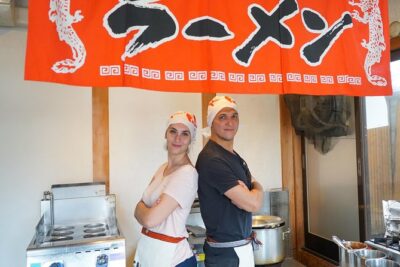
Ramen Cooking Class at Ramen Factory in Kyoto
Read our review →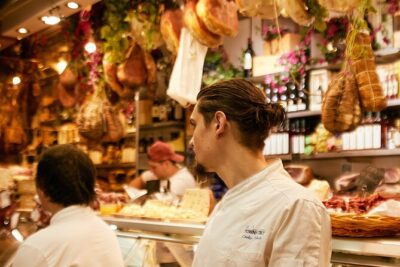
Small Group Cooking Class & Market Food Tour in Florence
Read our review →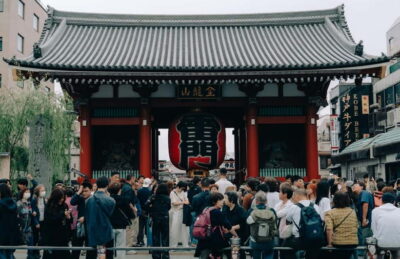
Tokyo: Sushi Making Class in a Happi Coat near a Famous Spot
Read our review →
Tokyo Sushi Making Class in Tsukiji with Professional Chef
Read our review →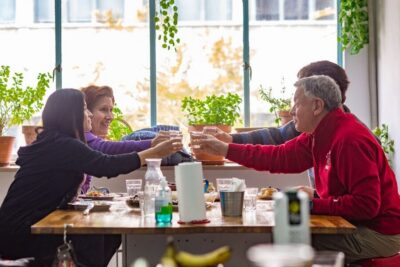
Food Market Visit and Cooking Class with Wine
Read our review →