Review · MARKET FOOD TOURS
Nishiki Market Food Tour with Cooking Class
Nishiki Market is easy to rush through, but this private tour gives you a reason to slow down. Your guide explains the food, customs, and older shops, helps translate with vendors, and then takes you to a kitchen where you cook a donburi bowl using ingredients selected during the walk. I especially like the market-to-table setup and the choice of seafood, tempura, or chicken and egg.
I also like the personal pace. Guides such as Chie, Momo, and Mio have helped visitors understand sauces, dashi, pickles, and market etiquette, with substitutions possible in some cases. The main consideration is time: the market walk lasts about an hour, so you may want to return later for serious shopping or extra snacks.
Key points at a glance
- A market walk with meaning: Learn why particular Nishiki stalls are known for pickles, spices, seafood, meat, and other Kyoto foods.
- Cook what you just encountered: Prepare your own seafood, tempura, or chicken and egg donburi with included ingredients.
- Private and flexible: Ask questions freely, request some substitutions, and move at a pace that suits your group.
- Useful local manners: Your guide explains customs such as not eating while walking through the market.
- A hands-on Kyoto lunch: The cooking class takes place in a dedicated studio, with a recipe to take home.
- Optional sake tasting: You may taste three different kinds of sake, depending on the tour arrangement.
Why Nishiki Market is better with a guide
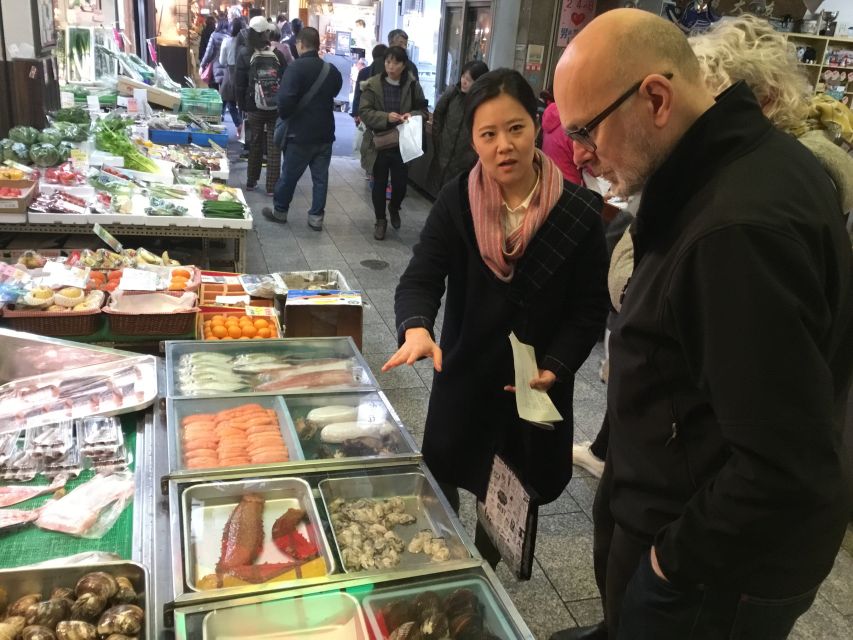
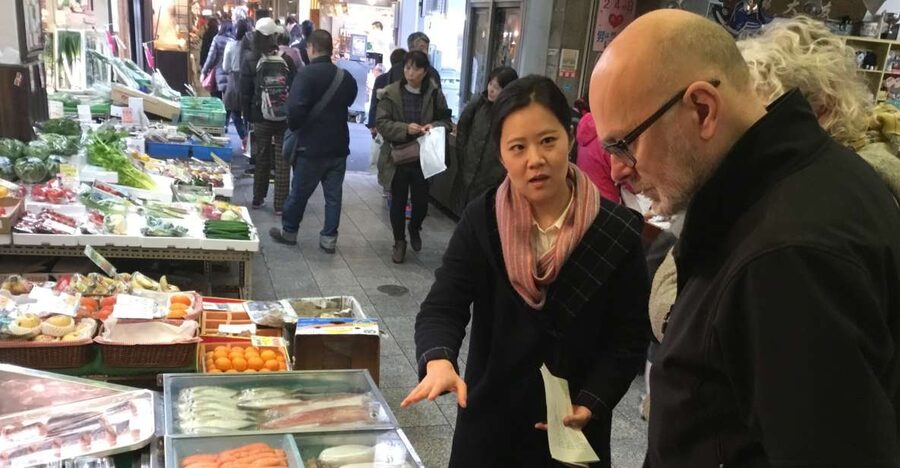
Nishiki Market can look like a narrow corridor of food stalls, but it is not simply a place to wander and point at unfamiliar items. Without context, you could walk through it in 15 minutes. With an English-speaking local guide, the same stretch can fill an hour with questions, samples, shop stories, and practical advice.
This is the strongest part of the experience for anyone who wants to understand Kyoto food rather than simply photograph it. Your guide can explain what you are seeing, point out shops with long local connections, and help you speak with staff when language gets in the way.
The market includes many tourist-focused stalls now, so the guide’s judgment matters. You get help sorting out what is worth your attention, from Japanese pickles and spices to seafood, meat, side dishes, and sauces. You can also ask about foods you have never seen before instead of guessing from appearance.
I would treat the market walk as an introduction, not a full shopping trip. The planned time is about one hour, and the tour then moves to the cooking studio. If you want to buy gifts or return to a stall, make a note of the location and come back after the class.
More Cooking Classes in Japan
- Ramen Cooking Class at Ramen Factory in Kyoto
★ 5.0 · 1,937 reviews - Kyoto: Ramen Cooking Class at a Ramen Factory with Souvenir
★ 4.9 · 532 reviews - Kyoto: Ramen, Gyoza, and Onigiri Cooking Class
★ 5.0 · 445 reviews
What you taste before cooking
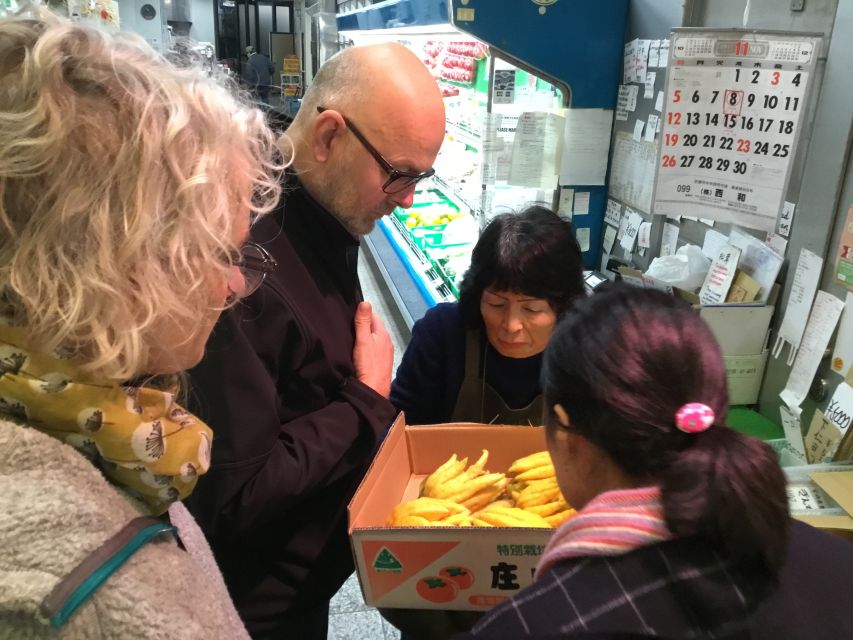
Small tastings help turn the market from a display into a meal. Japanese pickles are available to sample for free during the walk, and the guide may arrange other sample foods as part of the tour.
These tastes are useful because Japanese food often depends on small differences in seasoning, texture, and preparation. A pickle may look simple, but your guide can explain how it fits into a meal. You can also ask about the sauces and brands you see, a detail especially useful if you cook at home.
Some groups have had additional Japanese side dishes bought for the meal. This can add variety to the final lunch, though the exact selection depends on the guide and the ingredients available that day. Ingredients for the chosen donburi are included in the price, while anything you decide to eat or buy privately is extra.
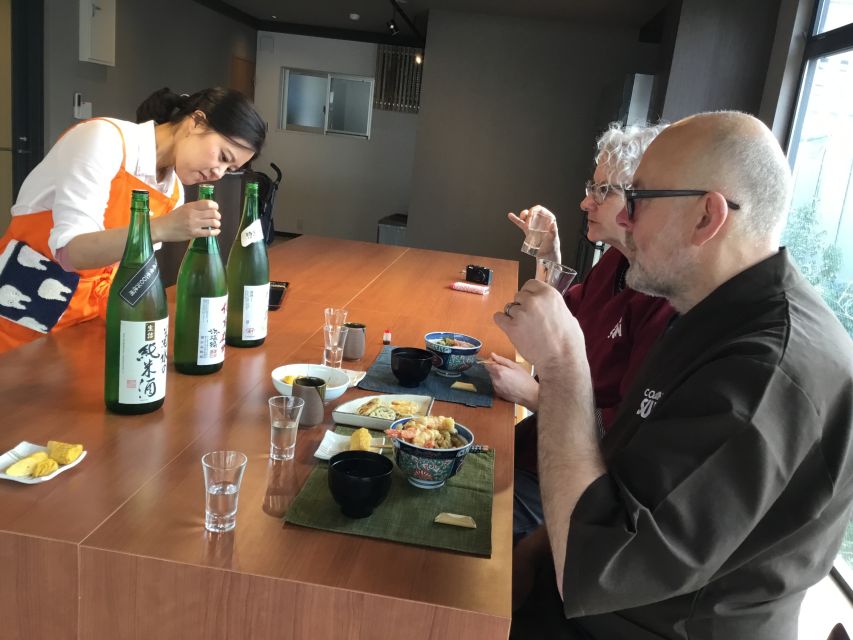
An optional sake tasting of three types is another possible part of the food experience. Since it is described as optional, confirm the details when booking if sake is important to you.
Choosing your donburi bowl
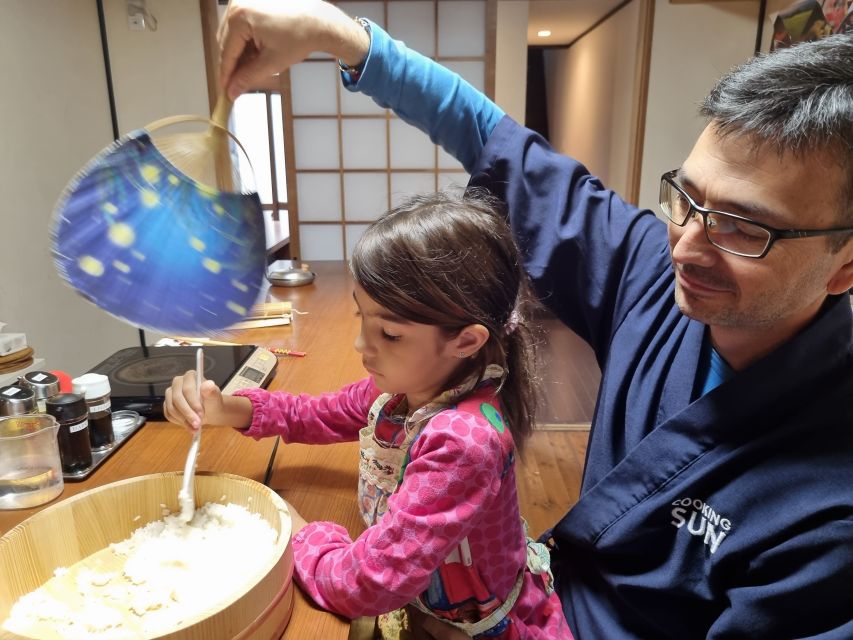
The cooking class centers on donburi, a Japanese meal served over rice in a bowl. You choose one of three versions:
- Kaisen-don: A seafood bowl, generally the best pick if fresh fish is your main reason for visiting Nishiki Market.
- Ten-don: A tempura bowl, suited to anyone who enjoys crisp fried vegetables or seafood with rice.
- Oyako-don: Chicken and egg over rice, a familiar and approachable choice with a comforting texture.
Each person in a private group may be able to choose a different dish. That is handy for families and couples who want to compare the results rather than eat the same lunch.
Substitutions may also be possible. One group arranged tofu instead of chicken, and other guides have adjusted small extras to suit personal tastes. I would make any dietary request clear when booking or as early as possible, since the available change depends on the ingredients and class plan.
The seafood option deserves a little caution. One visitor found the fatty tuna disappointing, which is a reminder that market ingredients can vary. The class still offers a useful way to learn how the dish is assembled, but food quality is not entirely under the instructor’s control.
From market stall to cooking studio
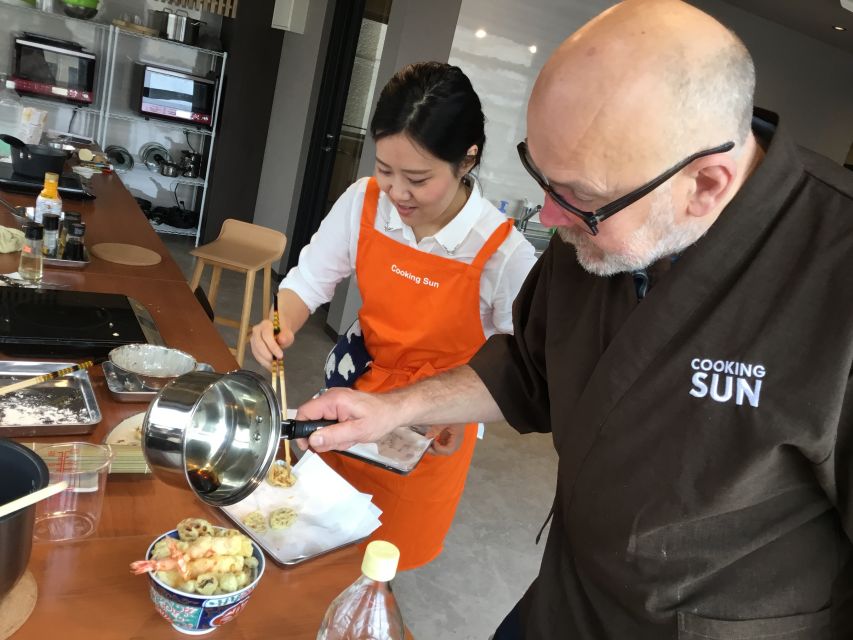
After about an hour at Nishiki Market, the tour includes taxi transportation to the cooking studio. That transfer is covered, so you do not need to work out the route between the market and kitchen yourself.
The studio is described as clean, well-stocked, cozy, and set up specifically for cooking classes. That matters because the second half is not a quick demonstration in a crowded restaurant. You have a proper space to prepare food, ask questions, and sit down to eat what you have made.
The class usually takes about an hour. Your instructor guides you through the steps, including preparation, cooking, seasoning, and presentation. Expect practical tips on making food taste good and look attractive, along with explanations of different sauces and how to use them.
Dashi is one of the useful take-home lessons. You can learn how it is made and why it matters in Japanese cooking, then use the supplied recipe to try the method at home. The recipe is included, so the class has value beyond the one meal in Kyoto.
The pace is personal because the group is private. You can ask why a step matters, check a technique, or request clarification without worrying about holding up a large class. Children can also take part, with reports of the cooking methods keeping younger participants involved.
More Cooking Classes in Kyoto
- The Original Small-Group Sushi Making Class in Kyoto
★ 5.0 · 436 reviews - Gyoza Cooking Class in Kyoto: Traditional Japanese Dumplings
★ 5.0 · 210 reviews - Kyoto: Ramen Bowl Painting and Michelin Cooking Class
★ 4.9 · 96 reviews - Kyoto: Sushi Making Class with Sushi Chef
★ 4.8 · 64 reviews
What the private format really adds
A private group costs more than joining a large market walk, but the comparison is not quite apples to apples. The $109 per person price includes the guided market visit, ingredients, food samples, recipe, taxi to the studio, and the cooking class.
The larger benefit is attention. You can ask about a strange-looking ingredient, have your guide help translate with a shop employee, and adjust the conversation to your interests. If you are a serious home cook, spend the market time asking about sauces, seasonings, brands, and preparation methods. If you are traveling with children, focus on manageable tastes and hands-on cooking.
The private arrangement also lets different people choose different donburi bowls. That makes the price easier to justify for a family or small group with mixed tastes.
Still, I would not book this only for a large market haul. The schedule is built around learning and cooking. You have time to notice shops and make a list, but you may need to return later to complete your purchases.
A closer look at the guide’s role
The guide is the key variable in an experience like this. The English-speaking instructors named in past bookings include Chie, also written as Chia in one account, Momo, and Mio. The strongest praise has focused on clear English, patience, warmth, and an ability to answer detailed food questions.
Chie has been praised for explaining Kyoto specialties, shop backgrounds, sauces, cooking methods, and presentation. Momo has provided useful market recommendations that visitors later returned to buy. Mio has been described as an excellent English speaker with a clear interest in cooking.
You should expect more than a memorized list of ingredients. The guide explains market etiquette too. One especially useful point is that eating while walking is not considered appropriate in the market, something easy to miss if you are visiting independently.
Guide quality can vary from person to person, but the private structure gives you a good way to shape the time. Ask questions early. Tell the guide if you want more detail on food culture, home cooking, shopping, or restaurant ideas.
Who will get the most from this experience
I would recommend this tour most strongly to:
- First-time visitors to Kyoto who want an introduction to Japanese ingredients.
- Home cooks who want practical instruction rather than a demonstration only.
- Families looking for a food activity with a hands-on section.
- Couples or friends who enjoy comparing different dishes.
- Anyone who finds Japanese markets confusing without English explanation.
- Visitors who prefer a private experience and plenty of time for questions.
It is less suitable if you want an unhurried shopping morning, a full meal crawl, or a long sake tasting. The market portion is structured around the cooking class, and private food purchases are not included.
People with very specific dietary restrictions should ask about accommodation before reserving. The available information confirms that at least some substitutions can be made, including tofu for chicken, but it does not promise that every request can be handled.
Timing, meeting point, and practical details
The tour starts at the western entrance of Nishiki Market. Plan to arrive knowing that the meeting point is on the market’s western side, not at the cooking studio.
The full experience lasts 150 minutes. In broad terms, allow about one hour for Nishiki Market, a taxi transfer, and about one hour in the kitchen. The taxi cost is included, as are the cooking ingredients, sample foods, and recipe.
The $109 price is per person. It includes the core food activity, but not anything you choose to eat independently or any shopping you do in the market. If you are comparing this with a simple guided walk, add the value of the private instruction, prepared meal, ingredients, and included transfer.
Cancellation is free up to 24 hours before the activity for a full refund. You can also reserve and pay later, which helps if your Kyoto schedule is still shifting.
My verdict: should you book it?
Book this tour if you want Nishiki Market to make sense, then want to sit down and cook a Kyoto-style meal with the ingredients you have just seen. The private format, English instruction, flexible dish choices, and recipe make it more useful than a quick tasting walk.
I would especially choose it for a small group with different food interests, since each person may be able to select a separate donburi. Families should find the cooking section engaging, while home cooks will appreciate the lessons on dashi, sauces, seasoning, and presentation.
Skip it if your main goal is independent market shopping or a long list of tastings. You will have about an hour in the market, and the class takes priority. For most visitors who want food context, practical cooking, and a proper lunch in one compact outing, the $109 price is reasonable.
FAQ
Where does the Nishiki Market tour begin?
Meet at the western entrance on the western side of Nishiki Market.
How long does the full experience last?
The activity lasts 150 minutes. About one hour is typically spent in Nishiki Market, followed by the cooking class and the transfer between locations.
What donburi dishes can I choose?
You can choose kaisen-don with seafood, ten-don with tempura, or oyako-don with chicken and egg.
Are the cooking ingredients included?
Yes. The tour includes the ingredients for the donburi cooking class, along with sample foods and a recipe.
Is the taxi from the market to the cooking studio included?
Yes. The taxi cost from Nishiki Market to the cooking studio is included.
Is the experience private?
Yes. This is a private group activity, so you can ask questions and move at a pace suited to your group.
Can I cancel for a full refund?
Yes. You can cancel up to 24 hours in advance for a full refund.
More Market Food Tours in Kyoto
- Kyoto: Nishiki Market Tour with a Local Foodie & Tastings
★ 4.5 · 67 reviews - Kyoto: Nishiki Market Food Tour
★ 4.9 · 21 reviews
More Market Food Tours in Japan
- Nishiki Market Brunch Walking Tour (7 Tastings + Brunch)
★ 5.0 · 1,355 reviews - Kyoto Nishiki Market Food and Culture Walking Tour
★ 5.0 · 412 reviews - Kyoto: Local Food Tasting Tour at the Nishiki Market
★ 4.7 · 135 reviews - Kyoto: Nishiki Market and Depachika Food Tour with a Local
★ 4.7 · 76 reviews
New food tours we have reviewed in Kyoto
- Kyoto: Sushi Making Class with Sushi Chef★ 4.8 · 64 reviews
- Kyoto: Small-Group Authentic Sushi Making Workshop★ 5.0 · 137 reviews
- Kyoto: Sake Brewery and Tasting Tour in Fushimi★ 4.8 · 55 reviews
- Kyoto: Foodie Night Tour in Gion with 9 dishes + 6 Sake★ 4.4 · 26 reviews
- Kyoto Evening Gion Food Tour★ 4.9 · 35 reviews
- Kyoto: Nishiki Market Tour with a Local Foodie & Tastings★ 4.5 · 67 reviews
- Kyoto: Gion & Pontocho Food Tour with 13 Dishes★ 4.9 · 235 reviews
- Kyoto: Nishiki Market Food Tour★ 4.9 · 21 reviews
Market Food Tours, compared.
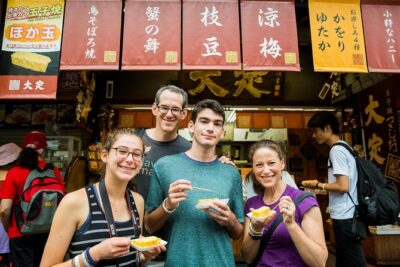
Tokyo Tsukiji Fish Market Food and Culture Walking Tour
Read our review →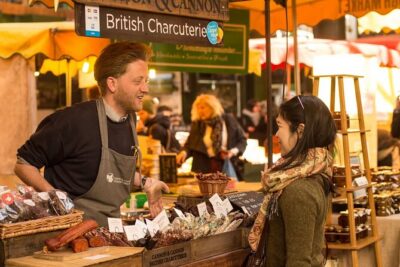
London Bridge & Borough Market Food Tour with 7 Authentic Dishes
Read our review →
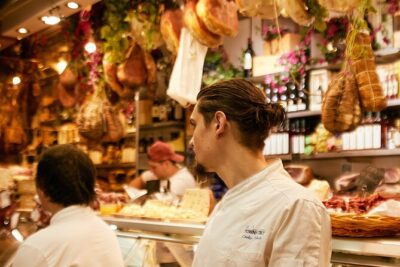
Small Group Cooking Class & Market Food Tour in Florence
Read our review →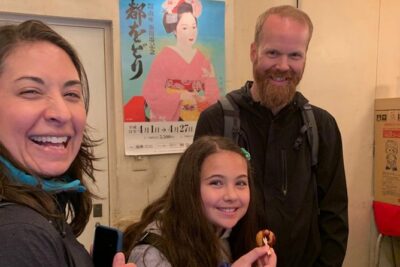
Nishiki Market Brunch Walking Tour (7 Tastings + Brunch)
Read our review →
Bologna Food & Market Tour with 6 Tastings, Pasta, Wines & More
Read our review →