
Review · COOKING CLASSES
Gyoza Cooking Class in Kyoto: Traditional Japanese Dumplings
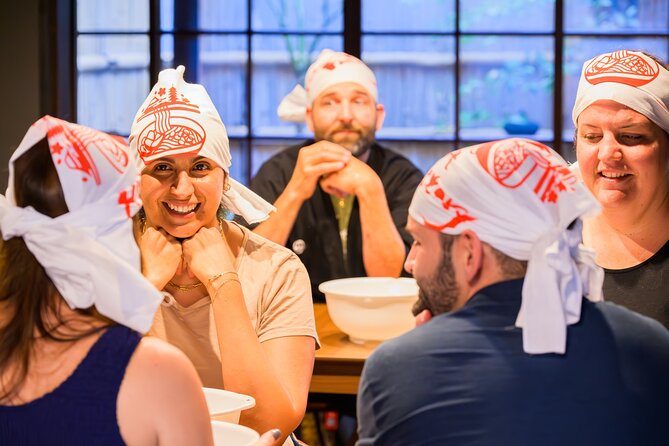
The best part of this Kyoto class is that you do not simply eat gyoza, you make the whole thing from scratch. You prepare the wrappers, select a filling, learn the folding technique, and cook roughly 10 to 12 dumplings per person. I especially like the hands-on format and the chance to take home a useful cooking skill rather than another stack of photographs.
I also like the small cultural touches, including stories about gyoza, Japanese history, and samurai life in a traditional townhouse. Hama, Maya, Ryo, and YO are all named as instructors in past sessions, and the teaching is conducted in English. The main thing to consider is the price: at $118.19 per person, this is a fairly costly 90-minute food class, though some sessions last closer to two hours and include a souvenir apron.
Key points at a glance
- Make the dumpling from the beginning: You prepare gyoza wrappers, choose a filling, fold the dumplings, and cook them yourself.
- Expect about 10 to 12 gyoza per person: That makes this a meal-sized activity for many people, so arriving hungry is sensible.
- English-speaking instructors lead the class: Hama, Maya, Ryo, and YO are among the instructors named for past sessions.
- Try samurai armor after cooking: The armor activity is optional and gives families and couples a fun photo opportunity.
- A traditional townhouse provides the setting: You get a more distinctive backdrop than a plain cooking studio.
- Allow extra time: The listed duration is about 1 hour 30 minutes, but some sessions have taken around two hours.
Making gyoza from flour, filling, and patience
Gyoza began in China, then developed into a Japanese favorite with its own styles and sizes. This class gives you a practical introduction to that evolution while keeping the main focus on the food in front of you.
You begin by preparing the gyoza wrappers from scratch. That matters because many short cooking classes hand you ready-made skins and move straight to filling and folding. Here, you get to see one of the less obvious parts of the process, and you can better understand why wrapper thickness affects the finished dumpling.
The class then lets you choose your favorite filling. The exact filling choices are not specified in the activity details, so you should not expect a fixed menu until you arrive. The useful point is that you have some control over what goes inside your dumplings, which makes the class more personal and suitable for people with different tastes.
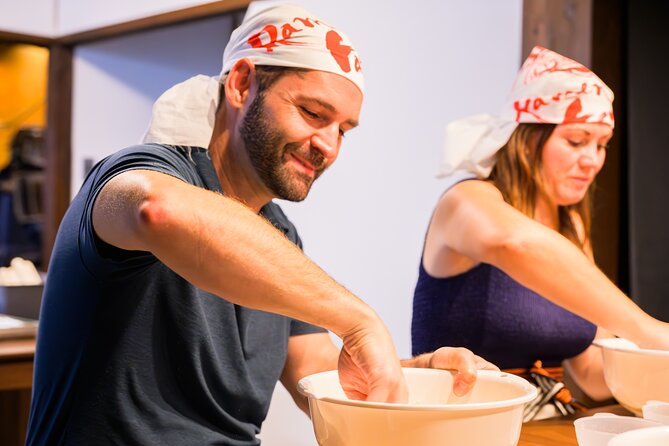
Next comes the folding lesson. Gyoza look simple when an experienced cook does the job, but neat pleats require a little practice. One instructor has used paper practice before the real dough, a smart touch for first-timers. You can learn the hand movement without wasting food, then try again with your actual wrappers.
The class is not designed as a demonstration where you watch someone else do the work. You receive cooking tools and have your own working area. That setup is especially helpful if you are visiting with children or friends, since everyone can take part instead of waiting for a turn.
More Cooking Classes in Japan
- Ramen Cooking Class at Ramen Factory in Kyoto
★ 5.0 · 1,937 reviews - Kyoto: Ramen Cooking Class at a Ramen Factory with Souvenir
★ 4.9 · 532 reviews - Kyoto: Ramen, Gyoza, and Onigiri Cooking Class
★ 5.0 · 445 reviews
Cooking your 10 to 12 dumplings
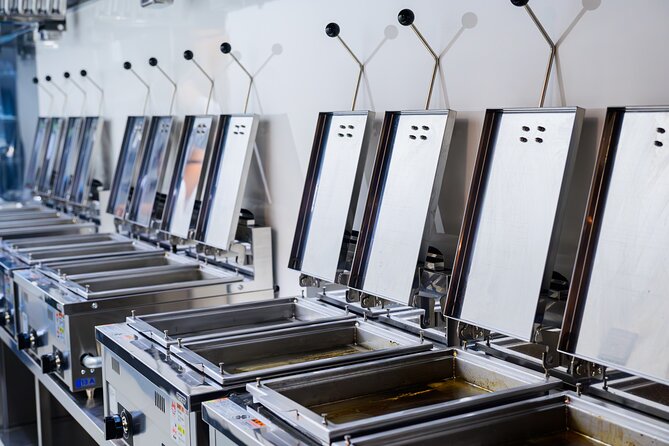
Once the dumplings are shaped, you cook them using a professional baking machine. The supplied details do not explain the machine in technical terms, but the practical benefit is clear: you are guided through the cooking stage instead of being left to guess when the wrappers are ready.
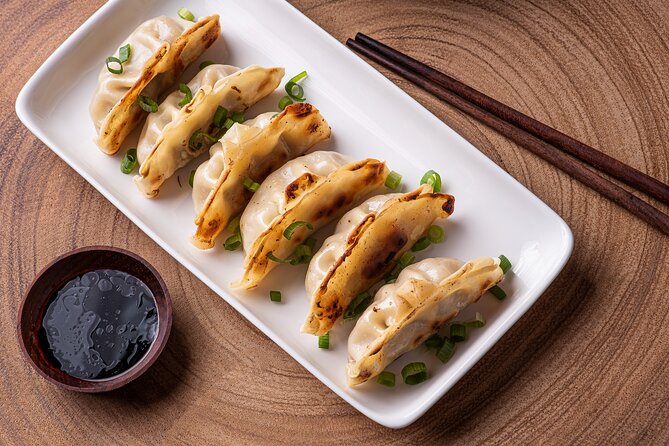
Most people make about 10 to 12 gyoza each. That is enough to turn the class into a light meal, and several comments suggest you should arrive hungry. It also gives you plenty of chances to improve your folds. If the first few look a little uneven, the later ones should give you another opportunity to get the rhythm right.
I like this part of the class because cooking provides a natural finish. You are not just practicing a recipe and packing up raw dumplings. You see the result of your work, then eat it while the process is still fresh in your mind.
The class includes tools, but private transportation is not included. You make your own way to 230-1 Kamimyōkakujichō in Nakagyo Ward, Kyoto. The site is near public transportation, and the activity ends at the same meeting point. Build in a little time to find the townhouse, especially if you are arriving for an evening session.
A Kyoto townhouse with a samurai twist
The setting adds more character than a generic cooking room. You work inside a traditional Kyoto townhouse while learning about gyoza and Japanese history. The cultural material is not a separate museum visit, so you should think of it as a conversational layer during the cooking lesson rather than a full history lecture.
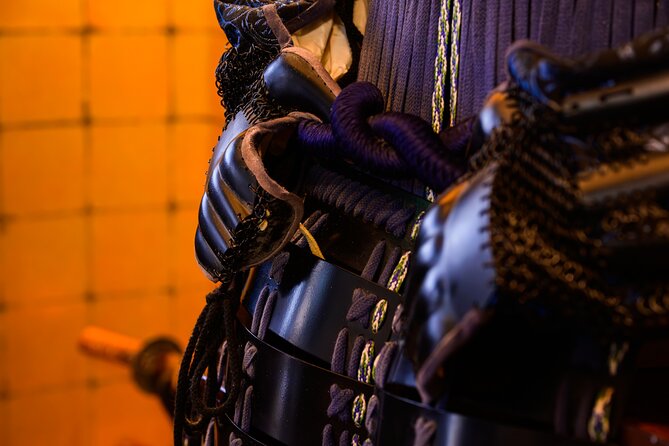
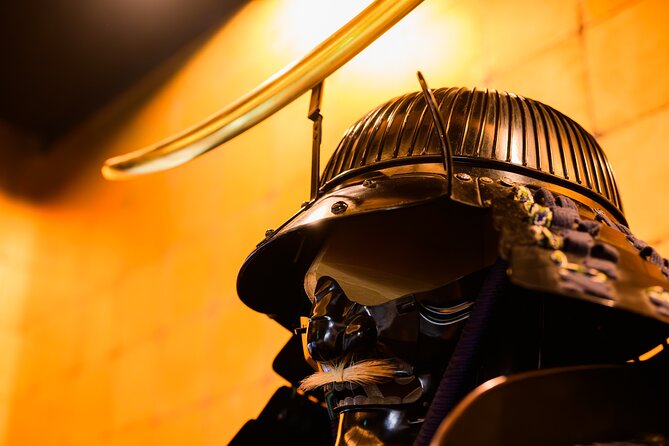
The samurai theme appears after the food is finished. You can choose to dress in samurai armor and take photographs. This part is optional, so you can skip it if you are mainly interested in cooking or if you are short on time.
For families, the armor option can give younger participants a second activity after the cooking is over. One family with a 10-year-old found the class suitable for both adults and children, and older children and teenagers are likely to get the most from the hands-on steps. Very young children may need help with the wrapper and folding work, but the available information does not set a minimum age.
The armor is also useful for a simple reason: it gives you a visual memory tied to the class. Kyoto offers no shortage of temples and photographs, but a picture in samurai armor after making your own dumplings is a more unusual souvenir.
Instructors who keep the lesson approachable
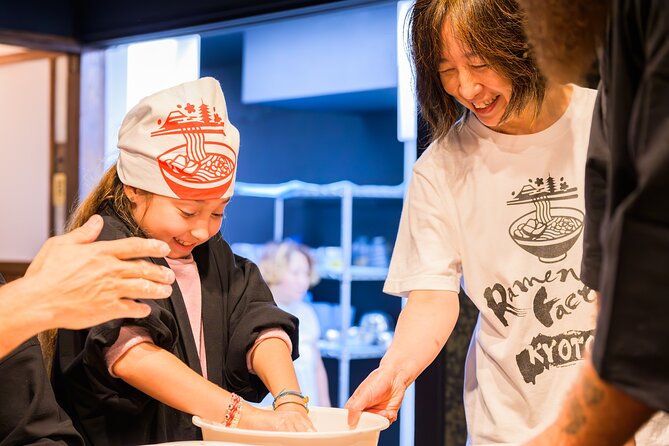
The class is conducted in English, and the named instructors include Hama, Maya, Ryo, and YO. Their teaching styles may vary from session to session, but the feedback points to clear directions and a friendly approach.
Hama is specifically praised for making the steps easy to follow and for adding historical facts along the way. Maya is noted for strong English and a relaxed teaching style. Ryo is described as personable, with a style that works well for older children and teenagers. YO is also praised for being friendly and for teaching in an ideal setting.
You should still remember that this is a group activity. The maximum group size is 20 people, so your experience may not be private. Some sessions have had only one participant or a very small group, creating a private or near-private lesson, but that is not guaranteed.
That uncertainty is worth considering when you book. A small session can give you more direct help with wrapper making and pleating. A full group may feel livelier, but you could have less individual attention. If having a private lesson matters to you, do not assume it will happen simply because it has happened before.
More Cooking Classes in Kyoto
- The Original Small-Group Sushi Making Class in Kyoto
★ 5.0 · 436 reviews - Kyoto: Ramen Bowl Painting and Michelin Cooking Class
★ 4.9 · 96 reviews - Kyoto: Sushi Making Class with Sushi Chef
★ 4.8 · 64 reviews - Nishiki Market Food Tour with Cooking Class
★ 4.9 · 42 reviews
What you take home besides a full stomach
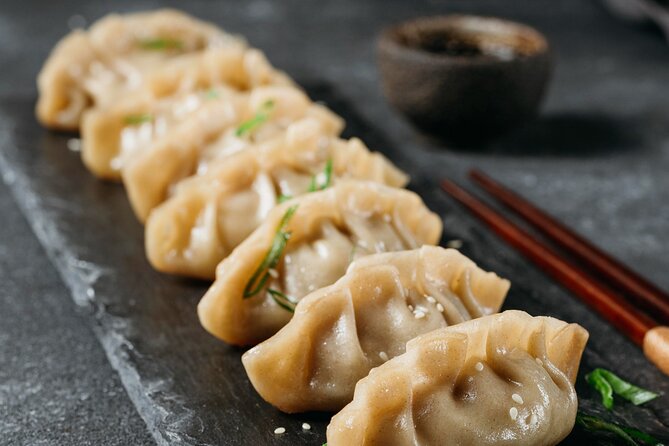
The most useful souvenir is the skill. The folding technique and basic process can be repeated at home, and several instructors provide take-home instructions or a recipe. One person forgot to ask for the recipe before leaving, so it is wise to request it before the class ends if it is not handed to you.
You also receive a cooking apron as a souvenir, and one session included a headband as well. The apron is a small extra, but it gives the activity a more complete feel and can remind you how to recreate the dish later.
The recipe matters more than the apron. If you are choosing between a food tour and a cooking class, the class offers something you can use after Kyoto. You may not reproduce every detail perfectly at home, but you will understand the sequence: prepare the wrapper, add the filling, fold the dumpling, and cook it properly.
That makes this a good choice for people who want a skill-based activity. If you only want to taste unusual food with no instruction, a restaurant or market visit will likely offer better value.
Is $118.19 a fair price?
At $118.19 per person, this is not a bargain meal. The price makes more sense if you count the instruction, cooking tools, food, townhouse setting, cultural explanation, possible recipe, and apron. You are paying for participation, not just a plate of dumplings.
The value improves if your session runs close to two hours, as some have, or if you receive a great deal of personal instruction. A private session can make the cost feel more reasonable, though you cannot count on getting one. The optional armor photographs also add a memorable activity without requiring a separate outing.
Still, you should compare this with other Kyoto cooking classes before booking. The advertised duration is only about 90 minutes, and the price is high for that length. If you are traveling on a tight budget, the class may feel expensive even if the food is delicious.
For a family, the calculation is different. The class gives everyone a task, creates a shared meal, and adds an optional samurai photo session. For a couple or solo visitor, the value depends more on how much you want to learn and how likely you are to cook gyoza again at home.
Timing, meeting point, and cancellation
The meeting point is 230-1 Kamimyōkakujichō, Nakagyo Ward, Kyoto, postal code 604-0025. The class ends back there, and no private transportation is provided. A mobile ticket is available, and confirmation is sent at booking.
The official duration is approximately 1 hour 30 minutes. Since some sessions have taken around two hours, I would avoid placing a major timed attraction immediately afterward. This is especially important if you want to try on armor and take photographs.
The activity has free cancellation if you cancel at least 24 hours before the start time. Cancellations made less than 24 hours before the start time are not refunded, and late changes are not accepted. The cut-off follows Kyoto local time, so check the clock carefully if you are booking from another country.
Who will enjoy this class most?
I would recommend it most strongly to:
- Families with older children or teenagers who like making things
- Couples looking for a shared food activity
- Solo visitors who enjoy learning practical skills
- People who want an activity that works in bad weather
- Home cooks who want to recreate a Japanese dish after returning home
- Visitors interested in a small amount of history alongside their meal
It is less suitable if you want a quiet restaurant meal, a serious chef-training session, or a low-cost way to eat gyoza. The class is friendly and practical, but the available information does not suggest advanced culinary instruction.
The 20-person maximum also means you should think about group size. If you prefer direct attention, a smaller session would be ideal, but only a few participants is not assured.
Should you book the Kyoto gyoza class?
Book it if you want to do more than look at Kyoto. You will make your own wrappers, fold a dozen dumplings, cook them, and leave with a method you can try at home. The samurai armor option gives the class a playful finish, while the townhouse and history notes keep it tied to place.
I would hesitate only if $118.19 feels high for a short activity or if your schedule cannot spare two hours. For families, food lovers, and visitors who value a shared memory over the cheapest meal, the class earns its price more easily. Arrive hungry, ask for the recipe, and leave enough time for the final photographs.
FAQ
How long does the gyoza cooking class last?
The listed duration is approximately 1 hour 30 minutes. Some sessions have lasted about two hours, so allow extra time if you plan to use the samurai armor option.
Where does the class meet?
The meeting point is 230-1 Kamimyōkakujichō, Nakagyo Ward, Kyoto, 604-0025, Japan. The activity ends back at the same location.
Is the class taught in English?
Yes. An English-speaking instructor leads the class. Instructors named for past sessions include Hama, Maya, Ryo, and YO.
How many gyoza will I make?
You can expect to make about 10 to 12 gyoza per person, based on the activity details provided by past participants.
Is samurai armor included?
Trying on samurai armor is optional. You can dress in the armor and take photographs after the cooking class.
Is transportation included?
No. Private transportation is not included. The meeting point is near public transportation, so you make your own way there.
Can I cancel for a full refund?
Yes, if you cancel at least 24 hours before the experience start time. Cancellations or changes made less than 24 hours before the start time are not accepted for a refund.
More hands-on workshops in Kyoto
- Kyoto: Small-Group Authentic Sushi Making Workshop
★ 5.0 · 137 reviews - Kyoto Michelin Ramen Workshop or Painting Ramen Essentials
★ 4.9 · 100 reviews - Sushi Making Tokyo Roll and Authentic Japanese Sushi Class
★ 5.0 · 3,971 reviews - Authentic Pizza Making Class in Naples with Appetizers and Drink
★ 5.0 · 3,178 reviews
More Dim Sum and Dumpling Tours in Kyoto
- Hong Kong: Street Food Tour with Locals – Dim Sum and Wonton
★ 4.8 · 673 reviews - Warsaw’s No 1 cooking class-Polish dumplings with liqueur tasting
★ 5.0 · 576 reviews - Hong Kong Day Tour: Priority Peak Tram, City Walk & Dim Sum
★ 4.5 · 266 reviews - Xi’an: Great Tang Dynasty Night Show & Dumpling Meal Option
★ 4.4 · 177 reviews
New food tours we have reviewed in Kyoto
- Kyoto: Sushi Making Class with Sushi Chef★ 4.8 · 64 reviews
- Nishiki Market Food Tour with Cooking Class★ 4.9 · 42 reviews
- Kyoto: Small-Group Authentic Sushi Making Workshop★ 5.0 · 137 reviews
- Kyoto: Sake Brewery and Tasting Tour in Fushimi★ 4.8 · 55 reviews
- Kyoto: Foodie Night Tour in Gion with 9 dishes + 6 Sake★ 4.4 · 26 reviews
- Kyoto Evening Gion Food Tour★ 4.9 · 35 reviews
- Kyoto: Nishiki Market Tour with a Local Foodie & Tastings★ 4.5 · 67 reviews
- Kyoto: Gion & Pontocho Food Tour with 13 Dishes★ 4.9 · 235 reviews
Cooking Classes, compared.
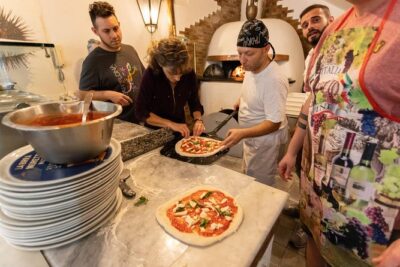
Authentic Pizza Making Class in Naples with Appetizers and Drink
Read our review →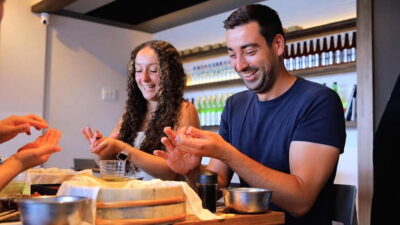
Tokyo: Roll and Authentic Sushi Making Class in Asakusa
Read our review →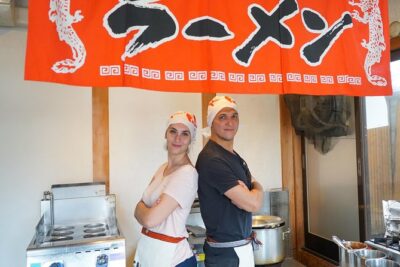
Ramen Cooking Class at Ramen Factory in Kyoto
Read our review →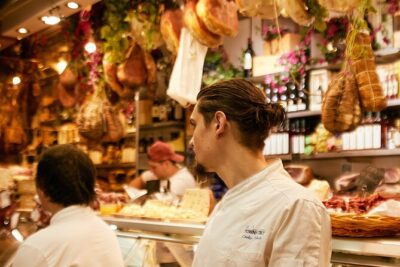
Small Group Cooking Class & Market Food Tour in Florence
Read our review →
Tokyo: Sushi Making Class in a Happi Coat near a Famous Spot
Read our review →
Tokyo Sushi Making Class in Tsukiji with Professional Chef
Read our review →
Food Market Visit and Cooking Class with Wine
Read our review →
Naples: Neapolitan Pizza and Tiramisù Making Class
Read our review →Browse the lists this tour appears in