Review · MARKET FOOD TOURS
Kyoto: Nishiki Market and Depachika Food Tour with a Local
Kyoto’s food story makes the most sense when you see it at two very different stops: Daimaru’s polished underground food hall and the noisy, tightly packed lanes of Nishiki Market. This short walk lets you taste Kyoto specialties without spending half a day figuring out what to order.
I like the small group, capped at nine, and the chance to ask questions without shouting across a crowd. I also like the tasting mix: delicate yuba sashimi, a sweet soy milk donut, Nishiki gyoza, and hamo fish tempura. The main catch is time. Two hours goes quickly, and one past booking found the tastings less structured than expected.
Key points
- Two sides of Kyoto food: Compare Daimaru’s basement food hall with the traditional stalls of Nishiki Market.
- Four included tastings: Try yuba sashimi, a soy milk donut, Nishiki gyoza, and hamo fish tempura.
- Small-group format: Groups are limited to nine, making it easier to ask about ingredients, customs, and ordering.
- A calm shrine stop: Visit Nishiki-Tenmangu Shrine after the market for a quiet change of pace.
- Helpful local guides: Guides including Mao, Ai, Boris, Kats, Jasmine, and Richard have helped guests understand unfamiliar foods and customs.
- Best for a short window: The tour fits travelers who have only a couple of hours and want guidance before exploring more on their own.
A quick taste of Kyoto’s food culture
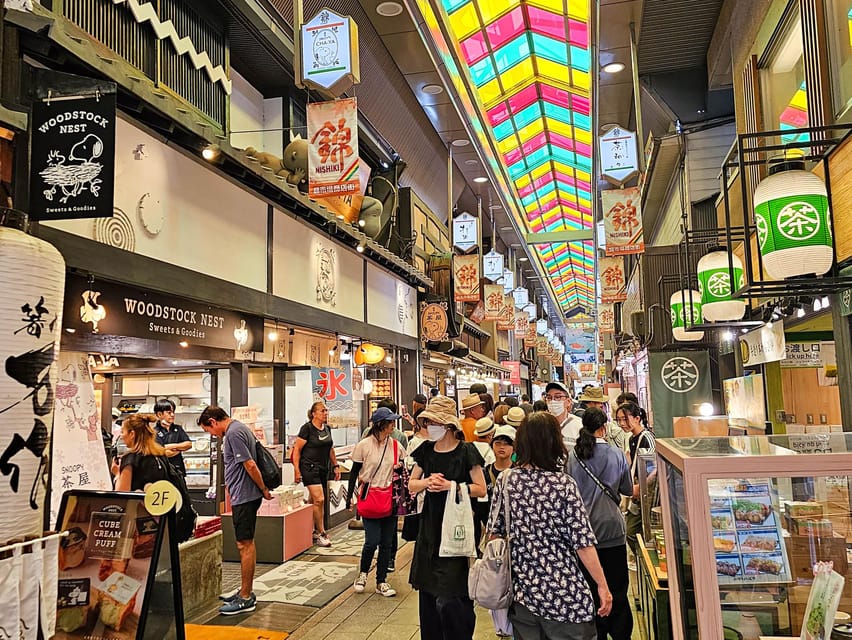
This is not a sit-down meal. It is a guided walk with selected tastings, short explanations, and time to look around. That distinction matters. You get a useful introduction to Kyoto food, but you should not arrive expecting to be full after four small samples.
The tour begins at Apple Kyoto and moves first to Daimaru Kyoto. From there, you continue to Nishiki Market and finish at Nishiki-Kawaramachi Station, with a stop at Nishiki-Tenmangu Shrine along the way. Since the route is central, it works well as a morning activity, a midday plan, or a way to get oriented soon after arriving in Kyoto.
The advertised duration is two hours, although the listed stop times add up to longer than that. Treat the schedule as an approximate outline rather than a minute-by-minute plan. Your guide may adjust the pace based on the group, the market crowd, and how much time people spend tasting or shopping.
More Food Tours with Locals in Japan
- Kyoto: Nishiki Market Tour with a Local Foodie & Tastings
★ 4.5 · 67 reviews - Hungry Osaka Street Food Tour:15 Tastings & 3 Drinks with a Local
★ 5.0 · 1,727 reviews - Eat and Drink Like a Local: Tokyo Ueno Food Tour-Taverns&Ramen
★ 5.0 · 957 reviews
Meeting your guide at Apple Kyoto
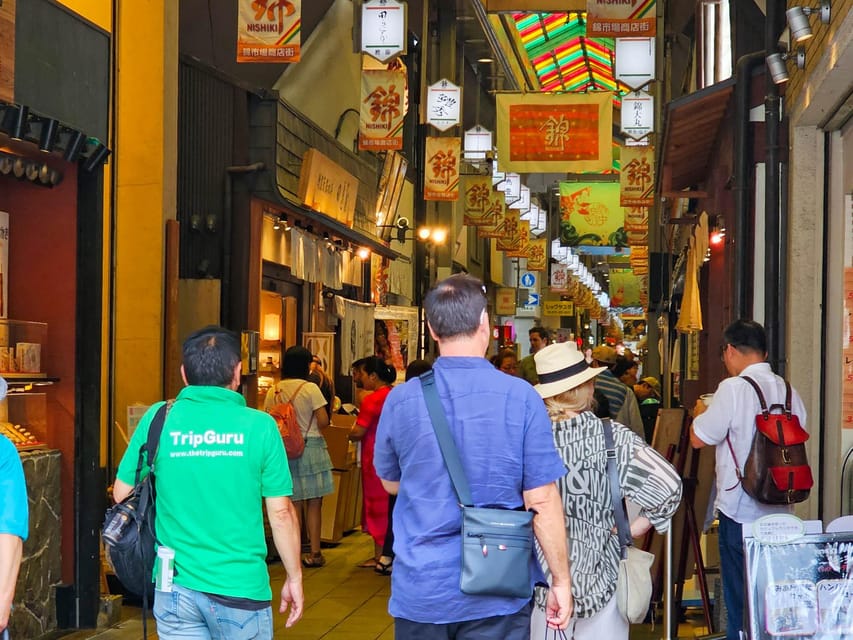
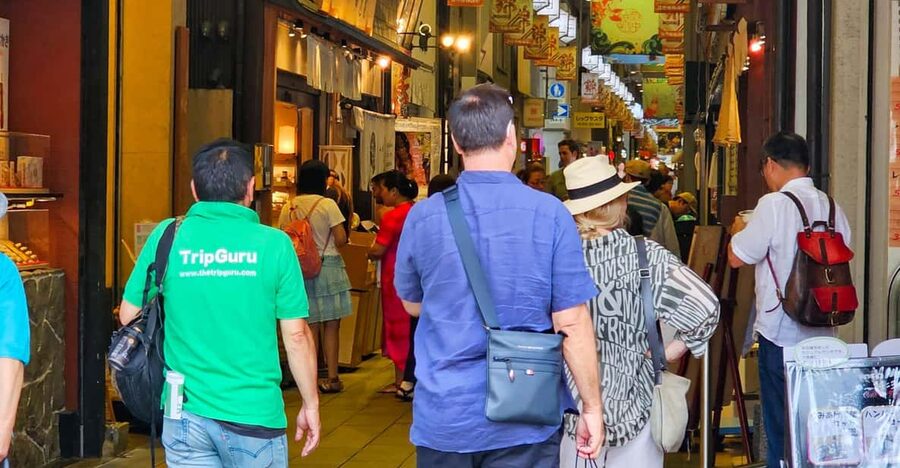
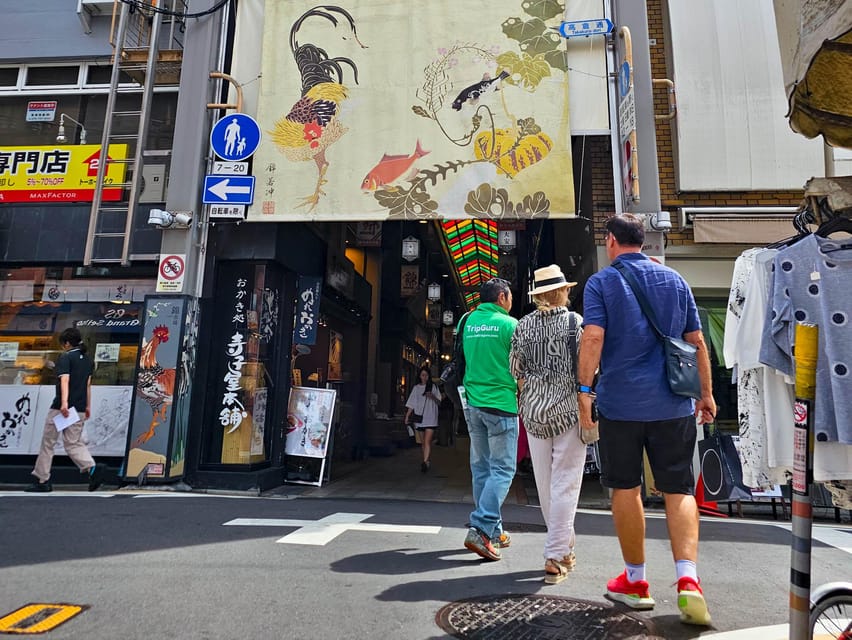
You meet at Apple Kyoto, where the guide waits in a TripGuru shirt or holds a TripGuru sign. Arrive at least 10 minutes early. The guide waits for a maximum of 10 minutes, and central Kyoto traffic can be slower than navigation apps suggest.
There is no hotel pickup, so you need to reach the meeting point yourself. Comfortable shoes are a smart choice. This is a walking tour through food halls, market lanes, and a shrine, not a bus excursion, and crowded floors can make stopping and starting more tiring than the distance suggests.
The English-speaking guide is a key part of the value. Several guides have been praised for making unfamiliar foods easier to understand. Mao has explained both cuisine and Shinto customs clearly, while Boris has handled questions about food, culture, and history in detail. Ai, Kats, Jasmine, Richard, Vincent, and others have also led groups, so your exact guide will vary.
A good guide here does more than point at a stall. You need someone who can explain what an ingredient is, how it is normally eaten, and why it belongs in Kyoto’s food culture. That is especially useful if you do not read Japanese or have little experience with tofu products, fish preparations, sweets, and regional specialties.
Daimaru’s depachika: Kyoto food under one roof
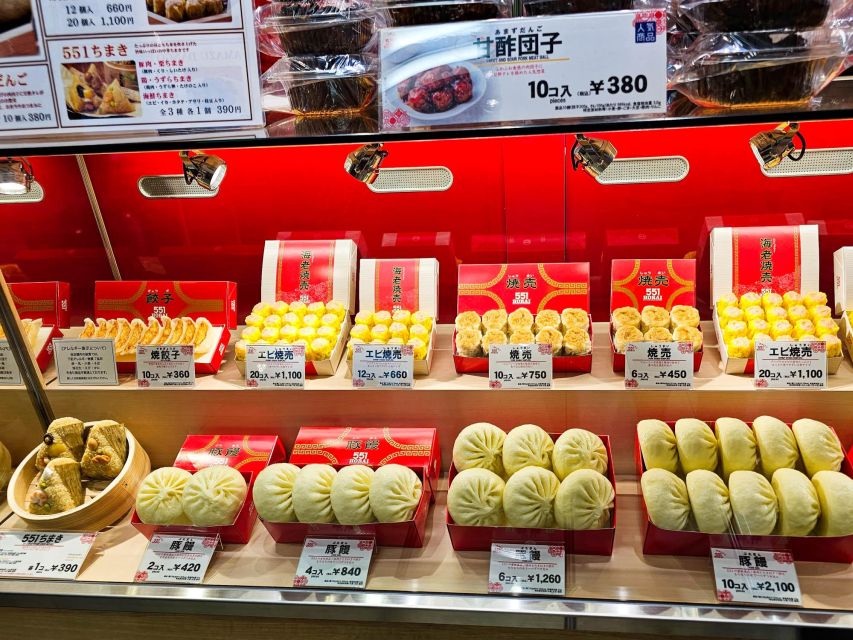
The first major stop is the basement food hall at Daimaru Kyoto. In Japan, these department-store food floors are often called depachika. They bring together prepared dishes, sweets, produce, gift foods, and higher-end specialties in a clean, orderly setting.
This stop gives you a gentle introduction before you tackle Nishiki Market. You can look at neatly arranged foods and ask questions while your guide explains what is worth trying and what may not suit your taste or budget. One guide even helped a family understand which items were better buys and which were overpriced.
The food hall also shows a different side of Japanese food shopping. Nishiki Market feels old-fashioned and informal, while Daimaru presents food as carefully prepared, packaged, and displayed. Seeing both in one short tour helps you understand that Kyoto’s food scene is not one single style.
The included tasting here is yuba sashimi and a soy milk donut. Yuba is the thin skin that forms when soy milk is heated. Its texture is delicate and slightly unusual if you have only eaten tofu in firmer forms. The soy milk donut gives you a sweeter, more familiar contrast.
Do not confuse the tastings with a full meal. Depending on the guide and the pace of the group, there may be chances to buy extra items, but additional food and drinks are not included. Bring cash for personal purchases, and leave room in your budget if you see something you want to take away.
Nishiki Market, Kyoto’s food corridor
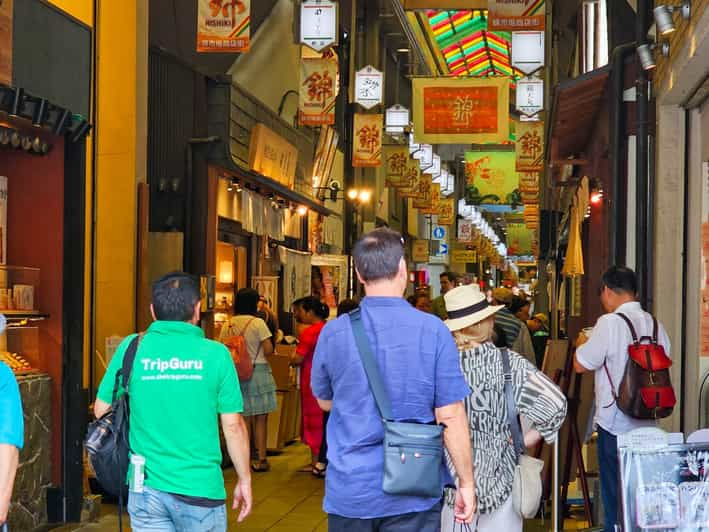
Nishiki Market is the heart of the walk. The covered market stretches through a narrow pedestrian passage lined with shops selling seasonal foods, Kyoto specialties, produce, knives, cookware, sweets, and ready-to-eat items.
It can be crowded, and you will often need to walk at the pace of the people in front of you. That is part of the setting, but it can also make the market tiring for anyone who has mobility limits, breathing problems, or trouble coping with crowds. The tour provider does not recommend this activity for people with mobility impairments, heart problems, respiratory issues, or pregnancy.
The market has a long family tradition. Some businesses have been operated by the same families for generations, and that continuity helps explain why the market feels more like a working food street than a collection of tourist displays. Your guide can point out how particular ingredients fit into Kyoto cooking and which foods are seasonal.
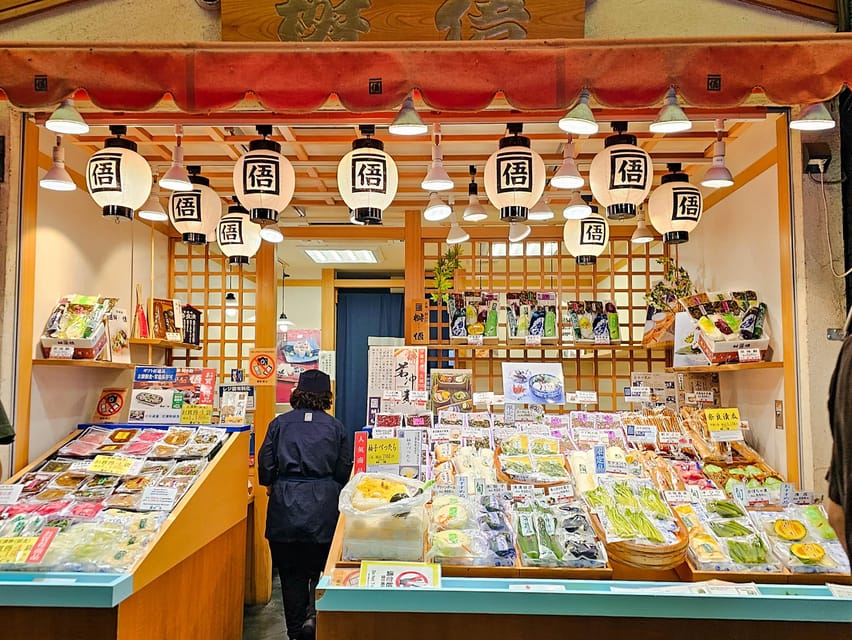
The included Nishiki gyoza and hamo tempura give you two very different bites. Gyoza is familiar to many visitors, but the local setting and preparation make it a useful comparison with what you may have eaten elsewhere. Hamo, or pike conger, is a fish associated with Kyoto cuisine and is often prepared with fine cuts because of its many small bones. The tempura version offers a crisp, easy introduction.
One of the best parts of having a guide is knowing what is safe and suitable to sample in a crowded market. You do not need to guess which stall sells a true local specialty or worry about ordering from a menu you cannot read. The guide selects the tasting stops and explains what you are eating.
Still, keep your expectations practical. The exact flow can change. One participant expected the guide to announce each planned tasting but found there was some confusion about when to ask for food. The tour works best when you speak up. If you want to try something, ask directly. If you have allergies, dietary restrictions, or strong dislikes, explain them at the start.
More Market Food Tours in Japan
- Nishiki Market Brunch Walking Tour (7 Tastings + Brunch)
★ 5.0 · 1,355 reviews - Kyoto Nishiki Market Food and Culture Walking Tour
★ 5.0 · 412 reviews - Kyoto: Local Food Tasting Tour at the Nishiki Market
★ 4.7 · 135 reviews - Nishiki Market Food Tour with Cooking Class
★ 4.9 · 42 reviews
Nishiki-Tenmangu Shrine provides a quiet pause
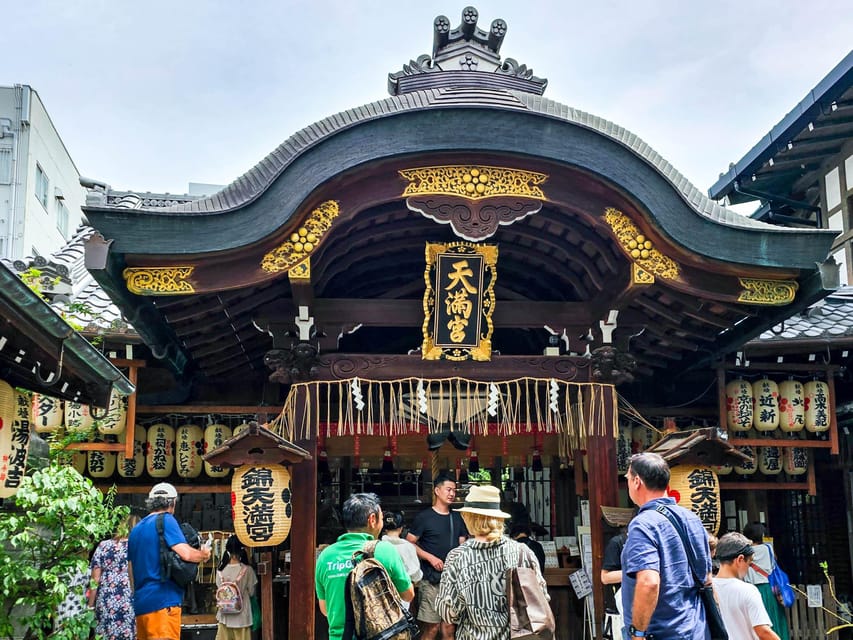
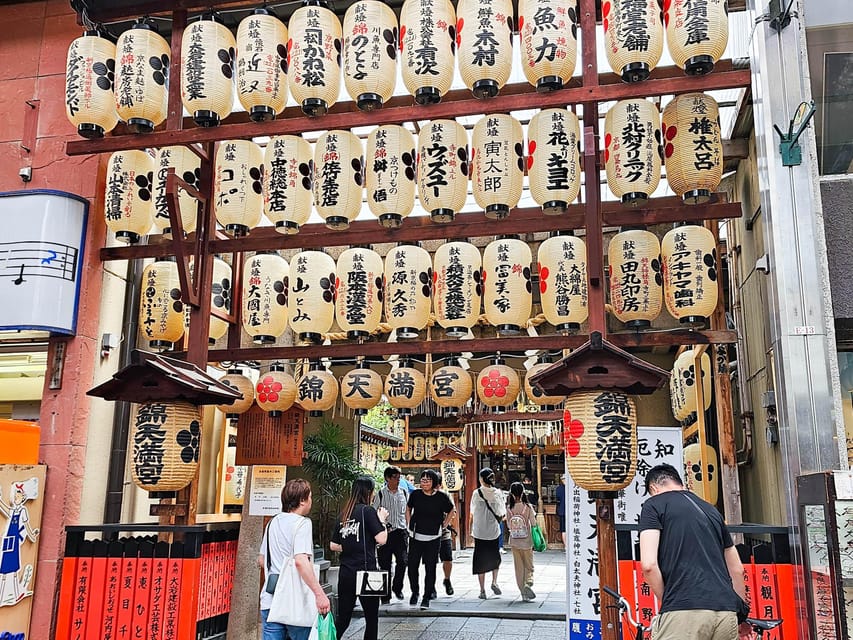
After the food stops, the route includes Nishiki-Tenmangu Shrine. This Shinto shrine is dedicated to the deity of learning and offers a quieter setting beside the market area.
You will have time to look at the architecture, learn a little about the shrine, and cleanse your hands at the sacred water fountain. The visit is short, but it changes the rhythm of the tour. After the tight market lane and constant food displays, a few moments of calm help put Kyoto’s food traditions in a broader cultural setting.
This is not a full shrine tour, and it should not be treated as a substitute for Kyoto’s larger temple and shrine visits. Its value is that it fits naturally into the route and gives your guide a chance to explain basic Shinto customs. If you have never used a purification fountain, this is a useful place to learn the respectful steps.
The tour ends at Kyoto-Kawaramachi Station. That makes it easy to continue shopping, find lunch, or explore the surrounding downtown area after the guide leaves.
What the guides add to the food
The strongest part of this tour is the human explanation. Japanese food can be visually appealing but hard to decode. A guide can tell you whether a dish is sweet, salty, raw, fried, seasonal, or meant as a gift, then explain the local custom behind it.
Several guides have been praised for answering a large number of questions without rushing the group. Boris has been especially good at explaining the cultural background of food, while Richard has offered recommendations for food and drinks beyond the tour. Kats, a Kyoto native who has also studied in the United States, has been able to explain local customs in clear English.
Guides have also adapted to different appetites. Boris helped accommodate a child with selective tastes while still offering more adventurous choices to the adults. That flexibility matters in a food tour, especially if you are traveling with family members who do not share your enthusiasm for unfamiliar ingredients.
The small group helps here. With no more than nine participants, you can usually hear the guide and ask questions. It also gives the group a more personal feel than a large walking tour. On the other hand, your experience will depend on the guide’s pace and the mix of people in your group.
What is included, and what will cost extra
The $42 price includes the English-speaking guide and the four stated food tastings:
- Yuba sashimi
- Soy milk donut
- Nishiki gyoza
- Hamo fish tempura
You pay separately for anything else you eat or drink, along with shopping and personal expenses. That price is reasonable if you value help choosing food and want cultural context, rather than simply wandering through the market on your own.
The value is strongest for first-time visitors to Kyoto, cautious eaters, and people with only a short gap in their schedule. You are paying for selection, explanation, and efficiency. If you already know Nishiki Market well or prefer to sample freely at your own pace, the cost may feel less attractive.
The tour also offers free cancellation up to 24 hours before the start time and a reserve-now, pay-later option. Multiple starting times make it easier to fit into a busy Kyoto plan, though you still need to allow enough time to reach Apple Kyoto.
Who should book this food walk?
I would recommend it to you if you want a compact introduction to Kyoto’s local foods and do not know where to begin. It is also a good first activity in Kyoto because it gives you ideas for later meals, snacks, and purchases.
Families can benefit from the guide’s ability to offer different levels of adventure. Food-focused couples and solo visitors should also find the small group easy to join. The shrine stop adds a bit of culture without turning the outing into a formal history tour.
You should think twice if you need a fully accessible route, dislike walking through tight crowds, or want a large meal. Pregnant people and those with heart or respiratory conditions are specifically advised not to book. Anyone with food allergies should ask about suitability before committing, since the listed tastings contain different kinds of fish, soy, wheat, and other ingredients.
This is also not the right choice if you want a private tour. The group is small, but it is still a shared experience, and the exact guide and group dynamic can vary.
Practical tips for getting more from the two hours
Arrive early and wear shoes you can walk in comfortably. Keep your camera ready, but do not let photography slow the group in the narrow market passage.
Bring cash. You may want to purchase something at Daimaru or Nishiki Market, and personal shopping is not included. It is also sensible to eat lightly beforehand, since the tour includes several samples but not a complete lunch.
Tell the guide at the start what you like, what you avoid, and how adventurous you feel. If you want more structure, ask what foods are planned. If you are keen to buy ingredients or gifts, ask the guide for suggestions before the tour ends.
Finally, leave your schedule slightly open after the tour. The published stop descriptions suggest more time at each location than the advertised two hours allow, and market crowds can affect the pace. You do not want to book a train or timed attraction immediately afterward.
Should you book the Nishiki Market and Depachika food tour?
Book it if you want a guided first look at Kyoto food in a small group, with four included tastings and a shrine visit added to the route. The combination of Daimaru and Nishiki Market is useful because you see both refined department-store food shopping and a traditional market street.
Skip it if you want a long, meal-sized food tour, a private guide, or complete freedom to choose every bite. For most first-time visitors with two hours to spare, the $42 cost is fair, especially when guides such as Mao, Ai, Boris, Kats, and Richard bring clear explanations and practical recommendations to the walk.
FAQ
Where does the tour start?
The meeting point is Apple Kyoto. Your guide will be wearing a TripGuru shirt or holding a TripGuru sign.
Where does the tour finish?
The tour finishes at Kyoto-Kawaramachi Station.
What food tastings are included?
The listed tastings are yuba sashimi, a soy milk donut, Nishiki gyoza, and hamo fish tempura.
Is the tour conducted in English?
Yes. The tour includes a live English-speaking guide.
How large is the group?
The group is limited to nine participants.
Can I cancel the booking?
You can cancel up to 24 hours in advance for a full refund. The tour also offers a reserve-now, pay-later option.
More Food Tours with Locals in Kyoto
- Naples: Street Food Walking Tour with Local Guide
★ 4.9 · 4,976 reviews - Rome: Street Food Tour with Local Guide
★ 4.8 · 4,077 reviews - Eat Like a Local: Venice 3-Hour Small-Group Food Tasting Tour
★ 5.0 · 3,137 reviews - Marrakech: Street Food Tour with a Local Guide
★ 4.9 · 3,119 reviews
More Market Food Tours in Kyoto
- Kyoto: Nishiki Market Food Tour
★ 4.9 · 21 reviews
New food tours we have reviewed in Kyoto
- Kyoto: Sushi Making Class with Sushi Chef★ 4.8 · 64 reviews
- Nishiki Market Food Tour with Cooking Class★ 4.9 · 42 reviews
- Kyoto: Small-Group Authentic Sushi Making Workshop★ 5.0 · 137 reviews
- Kyoto: Sake Brewery and Tasting Tour in Fushimi★ 4.8 · 55 reviews
- Kyoto: Foodie Night Tour in Gion with 9 dishes + 6 Sake★ 4.4 · 26 reviews
- Kyoto Evening Gion Food Tour★ 4.9 · 35 reviews
- Kyoto: Nishiki Market Tour with a Local Foodie & Tastings★ 4.5 · 67 reviews
- Kyoto: Nishiki Market Food Tour★ 4.9 · 21 reviews
Market Food Tours, compared.
Tokyo Tsukiji Fish Market Food and Culture Walking Tour
Read our review →
London Bridge & Borough Market Food Tour with 7 Authentic Dishes
Read our review →
Small Group Cooking Class & Market Food Tour in Florence
Read our review →
Nishiki Market Brunch Walking Tour (7 Tastings + Brunch)
Read our review →
Bologna Food & Market Tour with 6 Tastings, Pasta, Wines & More
Read our review →