
Review · EVENING AND NIGHT FOOD TOURS
Tokyo After 5: Authentic Japanese Food & Drink Night Tour
Tokyo After 5 takes you from polished Ginza department stores to a sizzling monjayaki grill and finally into the close quarters of Yurakucho’s yakitori alleys. I like the small group of no more than eight and the chance to eat in local-run places that can feel hard to approach on your own. I also like the two subway rides, which turn dinner into a quick look at several very different parts of Tokyo.
The main caution is that this is a light food walk, not a full progressive dinner. The advertised three food stops can feel like two substantial restaurant visits, with wagashi as a sweet sample, and some people find the pace of walking brisk.
Key points at a glance
- Three Japanese tastes: Try wagashi, cook monjayaki at the table, and eat yakitori or related skewers.
- Two drinks included: Choose from sake, beer, or a soft drink, with extra drinks available to buy.
- Ginza after dark: Begin at the Mitsukoshi Lion and walk past major shops, with a possible stop at Itoya stationery store.
- A local subway lesson: Two subway tickets are included, useful if Tokyo’s rail system feels daunting.
- Small-group format: The maximum group size is eight, giving you a better chance to ask questions and keep up.
- Food limits matter: Vegetarian, vegan, and gluten-free options are not available, and skewers may include less familiar cuts.
What the 3.5-hour evening really offers
This experience is best understood as a guided introduction to Tokyo food customs and nightlife, not a serious restaurant crawl. Over about three and a half hours, you move through Ginza, Tsukishima, and Yurakucho, sampling a few local specialties along the way.
I like that the route does not stay in one polished tourist quarter. Ginza gives you Tokyo’s upscale face, Tsukishima brings you to a neighborhood known for monjayaki, and Yurakucho finishes the night in a much tighter, more informal setting. The transitions also give you a taste of Tokyo’s subway system without asking you to plan the route yourself.
The tour costs $122.33 per person. That is a substantial price for the amount of food alone. The value rests in the guide, translation help, transport, neighborhood changes, and the ease of entering small Japanese restaurants with someone who can explain what is happening. If you want a large meal or several drinks, you may find the cost hard to justify. If you want a structured first evening with local food and a friendly guide, the price makes more sense.
More Evening Food Tours in Tokyo:
- Winner 2025 Florence Sunset Food & Wine Tour by Eating Europe
★ 5.0 · 5,015 reviews - Saigon By Night and Street Food By Motorbike | Opt: Ao Dai Riders
★ 5.0 · 4,066 reviews - Marrakech: Street Food Tour by Night
★ 4.8 · 2,838 reviews
Meeting the guide at Mitsukoshi Ginza
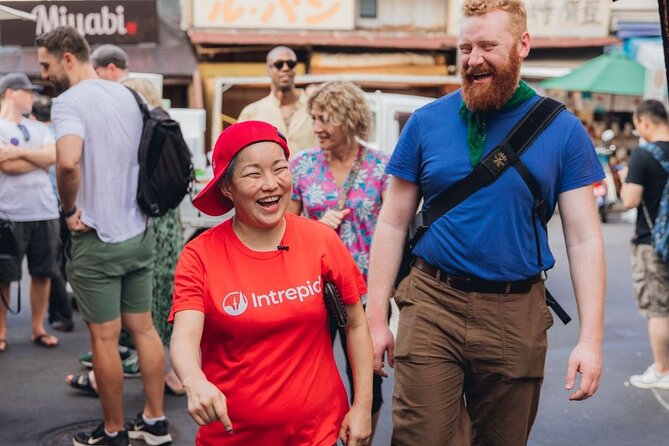
The tour starts at 5 pm in front of the Lion statue outside Mitsukoshi Ginza, at 4-chōme-6-16 Ginza. Be on time. The meeting point is central and easy to connect with by public transport, but the group moves on promptly.
The first moments can include a look around Mitsukoshi’s food department and a serving of wagashi, traditional Japanese sweets. Depending on the guide and the evening, you may also see an unusual department-store feature such as small lettuce plants grown under artificial light. A stop at the famous Itoya stationery shop may also be part of the Ginza walk.
This part is interesting if you enjoy seeing how food and shopping fit into daily Tokyo life. It is not a major meal, though. The wagashi may be handed out as a sample or something to take along, so do not arrive hungry and expect dessert to carry you through the night.
Ginza itself is worth seeing after the offices begin to empty. The streets are bright and polished, and the area gives you a useful contrast with the small bars later in the evening. Guides such as Yuko have also helped people find their way through the subway system, which can be a real benefit on a first Tokyo visit.
Monja Street and the joy of cooking your own dinner
From Ginza, you take the subway toward Tsukishima Monja Street. Two subway tickets are included, so you do not need to work out this part of the fare system yourself.
Monjayaki is a Tokyo specialty made from a loose batter, usually mixed with cabbage and other ingredients, then cooked on a hot griddle at the table. It is not the neat, firm pancake many people expect from the word pancake. The mixture stays soft and almost creamy, and you scrape up small portions with a little spatula as it cooks.
That texture is part of the fun. Your guide can explain the ingredients and customs, while the sizzling grill gives the meal a hands-on quality. Some meals include seafood such as shrimp and mussels. If you are accustomed to Japanese food, you may still find monjayaki a new experience.
This is the most distinctive food stop of the evening. You are not simply handed a plate and sent along. You take part in cooking the dish, which makes the meal easier to remember and gives you something to discuss with the chef and the rest of the group.
There are two practical points to keep in mind. First, monjayaki can be modest in quantity. It helps take the edge off your hunger, but you should not expect a large serving. Second, cabbage is a major part of the dish, and seafood may appear. If those ingredients do not suit you, this tour is not a good match.
Yurakucho’s yakitori alley after work
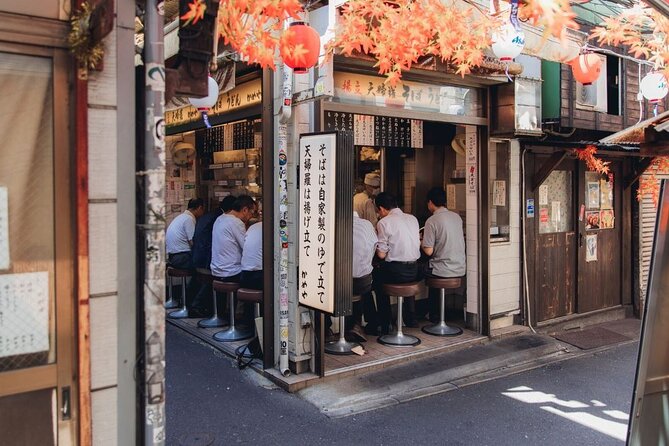
The final major stop is Yurakucho Sanchoku Inshokugai, also called Yurakucho Farm to Table Dining Alley. This is the kind of place many first-time visitors would walk past without knowing how to enter. Small eateries sit close together, and the atmosphere becomes more relaxed as office workers stop for food and drinks after work.
Here you are served yakitori or related grilled skewers with one of the restaurant’s tare sauces. Yakitori commonly means grilled chicken skewers, but the exact cuts can vary. One meal may include familiar meat, while another may feature chicken cartilage or a less expected part. If you have a strong preference, ask the guide before ordering.
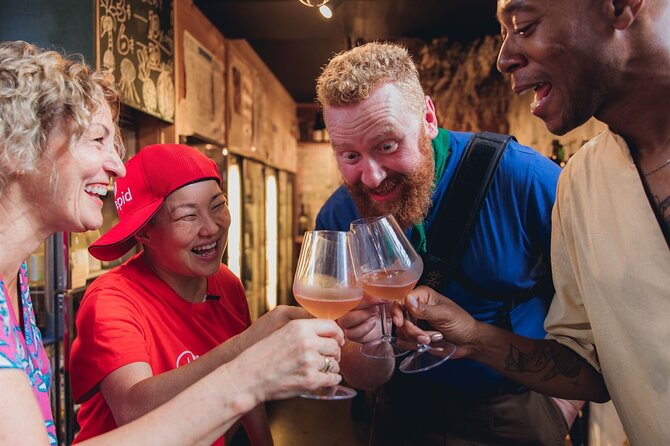
You also receive one of the two included drinks, such as beer, sake, or a soft drink. Sake can be a particularly enjoyable part of the experience. A traditional pour may place the drinking glass inside a small wooden box and fill it until the sake overflows into the box. It is a simple custom, but a memorable one.
The alley is likely to be the night’s most atmospheric stop. It feels more intimate and local than Ginza, though the close seating and casual setting will not suit everyone. Some people may find the grilled meat underdone for their taste, so speak up if you need it cooked longer.
The tour ends near Ginza Station at 4-chōme-1-2 Ginza. You can leave with the guide and group, or remain at the bar after the formal tour ends if the venue allows and you want another drink. Extra drinks are not included.
More after-dark experiences in Tokyo:
- Tokyo Night Foodie Tour in Shinjuku – Seasonal Sushi, Wagyu Beef
★ 5.0 · 1,161 reviews - Tokyo: 3-Hour Food Tour of Shinbashi at Night
★ 4.9 · 45 reviews - Private Street Food Evening Walking Tour in Ho Chi Minh City
★ 5.0 · 3,175 reviews - Kyoto Night Foodie Tour in Gion (9+ dishes + 6 Sake tastings)
★ 5.0 · 1,762 reviews
How good is the guiding?
The guide can make or break this experience. The strongest outings have been led by guides such as Yuko, Yuki, Mizuki, Shohei, and Rocky. A good guide here does more than point out restaurants. They explain how to order, translate menus, keep the subway transfers moving, and help you understand why the food is prepared in a particular way.
Yuko has been especially good at helping people use the Tokyo underground system while keeping the route clear. Mizuki has been praised for a warm sense of humor and polite explanations. Shohei has also led an enjoyable food-focused evening. These names do not guarantee who you will get, but they show what the tour can be like when the guide is engaged and comfortable with the group.
There is a real risk of uneven communication. Some guides may speak English less clearly or give fewer explanations than you expect. One poor experience involved a rushed pace, a guide who was difficult to understand, and little context about Tokyo or the food. Since the group may move quickly through stations and busy streets, stay close and speak up if you need the guide to slow down.
The small maximum of eight is helpful here. It is easier to ask about an ingredient, request clarification, or tell the guide about a food concern than it would be in a busload of people. Still, the tour is not private, and your guide’s style will shape the evening.
Walking, subway rides, and the pace
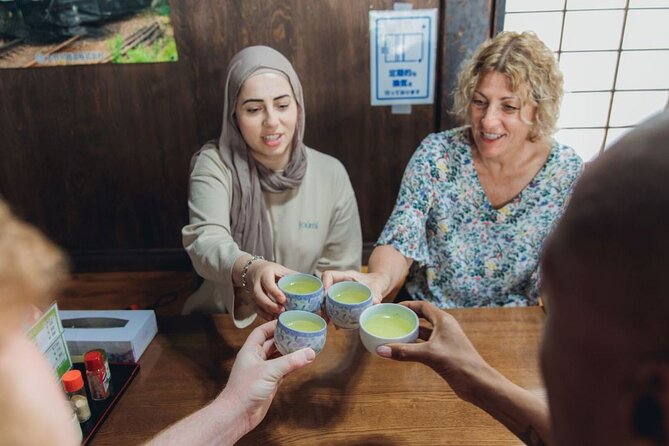
The tour includes a moderate amount of walking, plus station stairs and subway transfers. Wear comfortable shoes. One part of the route involves a long walk to the first substantial food stop, and the pace can feel fast when the guide is trying to keep the schedule.
The subway rides are useful rather than decorative. Tokyo can be confusing during a first visit, especially when several lines and station exits serve the same district. Having the guide lead the way takes away much of the stress, and you get a practical lesson in moving around the city at night.
That said, this is not a slow stroll. You may spend time waiting for elevators or moving through busy stations. If stairs are difficult for you, or if you prefer to linger at each venue, ask yourself if this route will be comfortable. Most people can participate, but the tour is not designed around very limited mobility.
The experience also requires good weather. If poor weather causes cancellation, you are offered another date or a full refund.
Food restrictions and what to expect on the plate
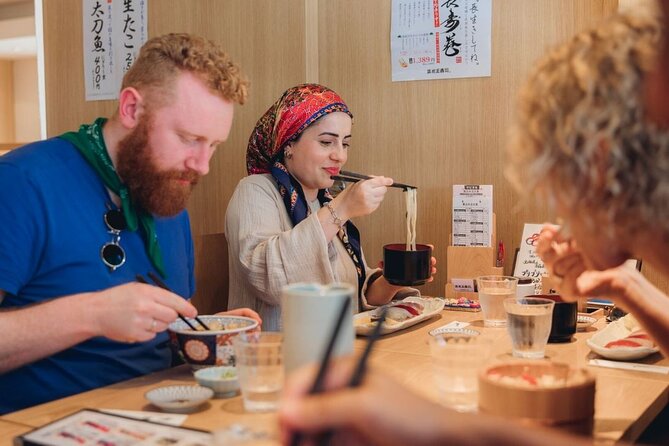
This tour does not provide vegetarian, vegan, or gluten-free options. The restaurants are local establishments, and they cannot handle every dietary requirement. Anyone with a serious allergy or strict food restriction should choose a different food tour.
You should also expect traditional dishes that may not match the wording you have in mind. Yakitori may include cartilage or other cuts rather than only familiar chicken meat. Monjayaki can contain seafood, cabbage, and a soft texture that some diners love and others find difficult. Wagashi is usually the gentlest introduction, but it is a small tasting rather than a full course.
The two included drinks are flexible enough for some groups. Adults aged 20 and older may receive sake or beer, while anyone under 20 receives only non-alcoholic drinks. The minimum age for the tour is 12.
Who will enjoy this Tokyo food walk?
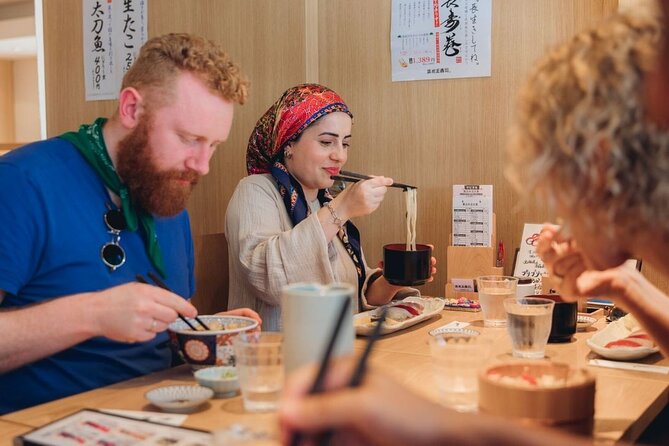
I would recommend it most to first-time visitors who want a guided start to Tokyo’s food culture without spending an evening decoding menus and subway maps. It is also a good fit if you enjoy trying unfamiliar foods and prefer small neighborhood venues to formal restaurants.
You will get the most from it if you arrive curious and reasonably open-minded. This is not the place to demand only standard chicken skewers or a large Western-style dinner. It works better as a tasting route with explanations, movement, and a few surprises.
Families with children aged 12 and older can join, but remember that the drinking portion is limited by age. The tour also suits solo visitors and couples who want company for their first night out. The maximum of eight keeps the group manageable and can make it easier to meet people from other countries.
I would skip it if you need vegetarian, vegan, or gluten-free food, dislike seafood or unusual cuts, or want a long sit-down meal. I would also think twice if the $122.33 price needs to cover dinner rather than a guided food experience.
Should you book Tokyo After 5?
Book this tour if you want local food, subway guidance, and a gentle push into Tokyo nightlife. The strongest parts are the table-cooked monjayaki, the small Yurakucho eateries, the included transport, and a guide who explains the customs rather than simply handing you food.
Go in with sensible expectations. You receive three local tastes, two drinks, and access to places that may feel intimidating alone, but the food portions can be light and the exact number of substantial venues may vary. For an authentic introduction to Tokyo after dark, it can be a very good first-evening choice. For a filling dinner or tightly controlled dietary menu, spend your money elsewhere.
Free cancellation is available until 24 hours before the start time. Changes or cancellations inside that window are not refunded.
FAQ
Where does the Tokyo After 5 tour start?
It starts at Mitsukoshi Ginza, 4-chōme-6-16 Ginza, Chuo City, in front of the Lion statue facing Chuo Street.
Where does the tour finish?
The tour ends near Tokyo Metro Ginza Station at 4-chōme-1-2 Ginza, Chuo City.
How long does the experience last?
The tour lasts approximately 3 hours and 30 minutes.
How many people can join the tour?
The maximum group size is eight travelers.
What food is included?
The experience includes wagashi, monjayaki cooked on a table grill, and yakitori or related local skewers.
How many drinks are included?
Two local drinks are included. Options can include sake, beer, or a soft drink. Additional drinks cost extra.
Can children join the tour?
The minimum age is 12. Participants under 20 are served non-alcoholic drinks only, since the legal drinking age in Tokyo is 20.
Are vegetarian, vegan, or gluten-free meals available?
No. The venues cannot cater to vegetarian, vegan, or gluten-free requirements on this tour.
New food tours we have reviewed in Tokyo
- Tokyo: West-Side Cycling and Food Tour with Guide★ 5.0 · 37 reviews
- Tokyo: Wagyu and Sushi Gastronomic Journey★ 4.3 · 24 reviews
- Tokyo Tsukiji Food & Culture Private Tour Licensed Guide★ 4.9 · 28 reviews
- Tokyo: Allstar Food Tour★ 4.7 · 29 reviews
- Tokyo: Togoshi Ginza Street Food Tour★ 5.0 · 34 reviews
- Tokyo: Sushi Making Class★ 4.9 · 390 reviews
- Tokyo: Sushi and Ramen Cooking Class with Sake Pairing Set★ 5.0 · 81 reviews
- Tokyo: Shibuya Food Tour (13 dishes and 4 Eateries)★ 5.0 · 178 reviews
Evening and Night Food Tours, compared.
Winner 2025 Florence Sunset Food & Wine Tour by Eating Europe
Read our review →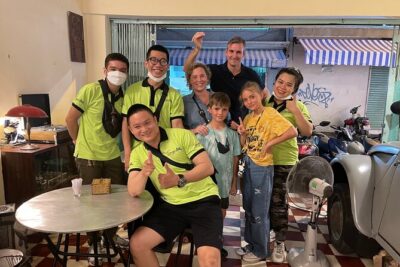
Saigon By Night and Street Food By Motorbike | Opt: Ao Dai Riders
Read our review →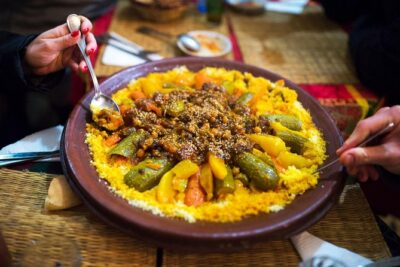
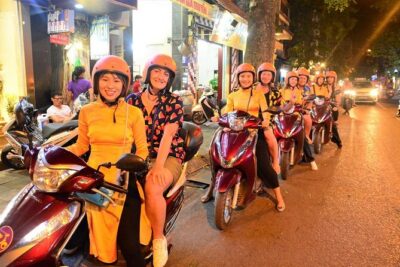
Hanoi Motorbike Tours Led By Women: Hanoi By Night Foodie Motorbike Tours
Read our review →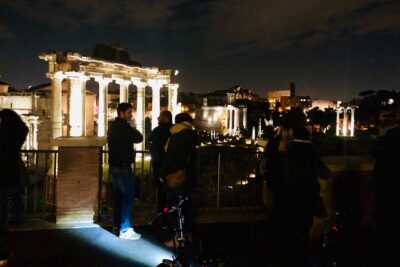
Rome by Night – Ebike Small Group Tour – Food and Wine (Option)
Read our review →
Small Group: Singapore Street Food & Night Tour with 9 tastings
Read our review →
Rome by Night: E-bike Small Group Tour -Food & Wine (Option)
Read our review →
Browse the lists this tour appears in