
Review · SUSHI AND RAMEN TOURS
Made from flour in 30min! Ramen-noodle Making Experience!
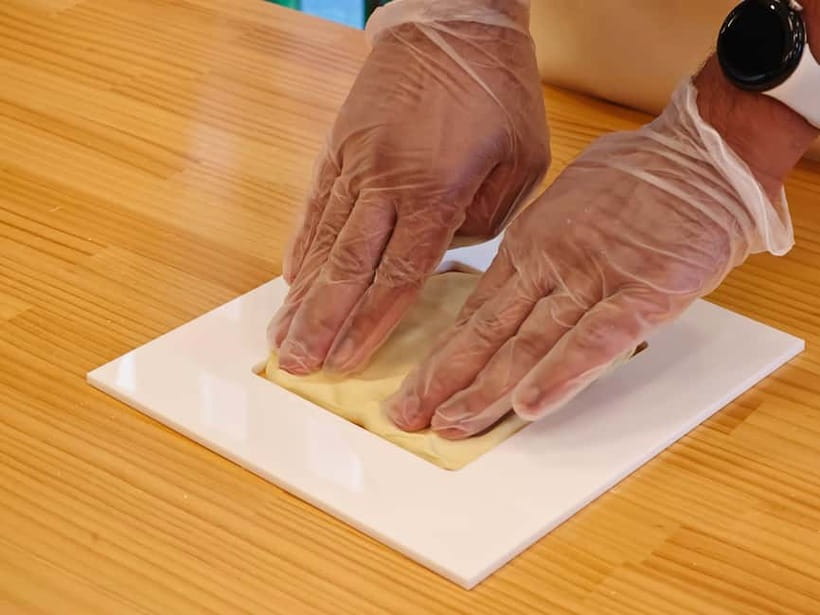
Making ramen by hand in 30 minutes is the clever part of this Asakusa experience. At SOBAGIRI-RAKUJYO, you knead flour, stretch the dough, and cut each noodle with a large knife instead of feeding the dough through a pasta machine. Staff then cook your noodles for lunch.
I like the short format, which fits neatly between Sensoji Temple and Kappabashi shopping. I also like the broad menu: soy sauce, miso, shio, vegan, and vegan curry ramen give you more choice than the usual single-bowl cooking class. The main caution is that the knife is large and heavy, so young children need close help from a parent.
Key points
- Cut every noodle by hand: You learn a traditional noodle-cutting method rather than using a machine.
- Thirty minutes of hands-on work: The lesson is brief enough for children and easy to fit into a sightseeing day.
- Several ramen flavors: Soy sauce, miso, shio, vegan, and vegan curry options are available.
- One drink and Japanese snacks included: Beer, highballs, lemon sours, juice, and non-alcoholic beer are among the choices.
- Bright, spacious setting: The open first-floor studio can accommodate up to 30 people, though this activity is limited to six participants.
- A practical Kappabashi stop: The venue is about 25 minutes from Sensoji Temple and close to Japan’s famous kitchenware shops.
Cutting fresh noodles in Kappabashi
Kappabashi is Tokyo’s kitchen-tool district, a useful stop for anyone interested in Japanese cooking. The street is lined with shops selling knives, pans, ceramics, restaurant equipment, and the plastic food displays seen outside Japanese restaurants.
SOBAGIRI-RAKUJYO sits on the first floor, diagonally across from a food-sample shop marked by a large beetle object. That landmark matters because Kappabashi can feel like a long row of similar storefronts. Arrive 10 minutes early, look for the beetle, and you should have little trouble finding the meeting point.
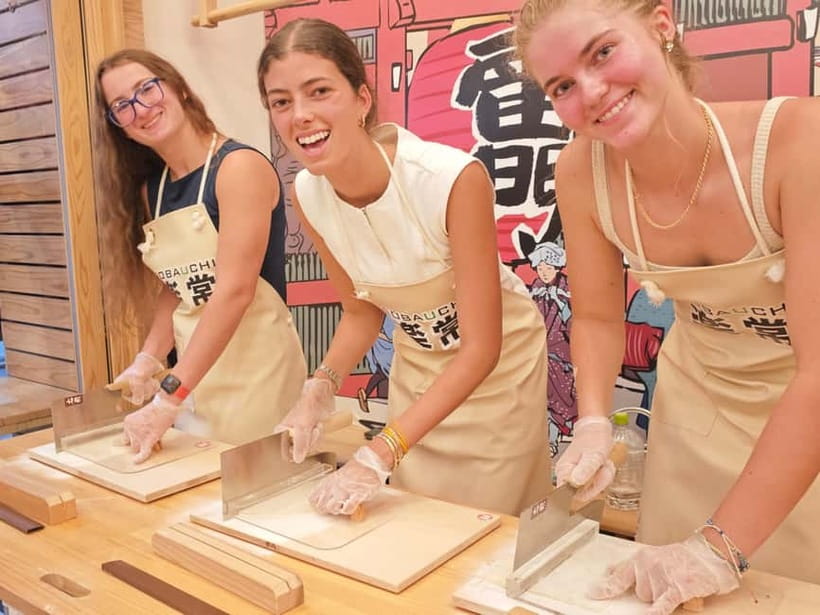
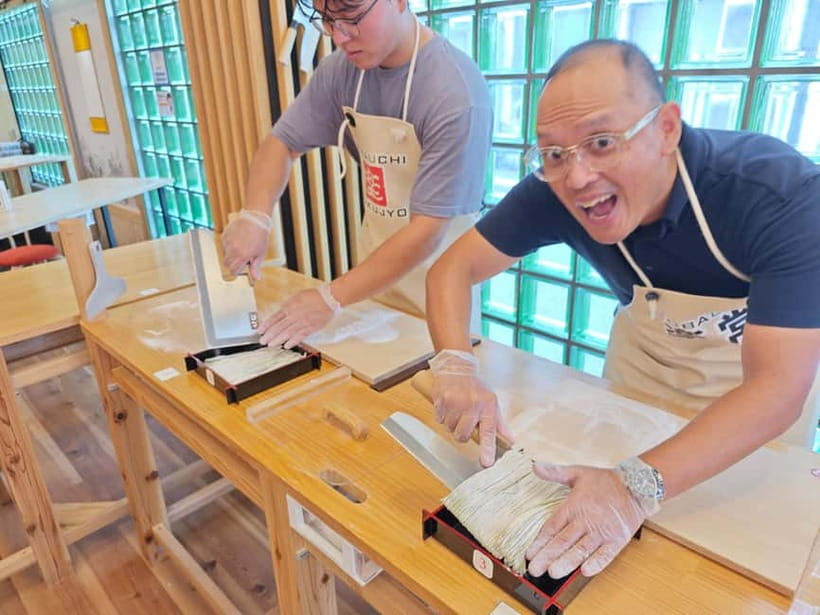
The venue is designed as an open kitchen studio rather than a cramped private cooking room. The space is bright, clean, and arranged around proper worktables. That makes a real difference when you are handling flour and a heavy cutting knife. You can see the tools, the instructors, and the other workstations instead of working in a dark room with little elbow space.
The activity is limited to six participants, even though the wider ground-floor restaurant can hold up to 30 people. The small group size should give you room to work and makes it easier to follow instructions in English or Japanese.
More Sushi and Ramen Tours in Japan:
- Sushi Making Tokyo Roll and Authentic Japanese Sushi Class
★ 5.0 · 3,971 reviews - Tokyo: Roll and Authentic Sushi Making Class in Asakusa
★ 4.9 · 1,957 reviews - Ramen Cooking Class at Ramen Factory in Kyoto
★ 5.0 · 1,937 reviews
What happens during the 30-minute lesson
The class begins with hand washing and preparation. The instructors then take you through the dough process in a compressed format: mixing flour and water, kneading, flattening, and cutting.
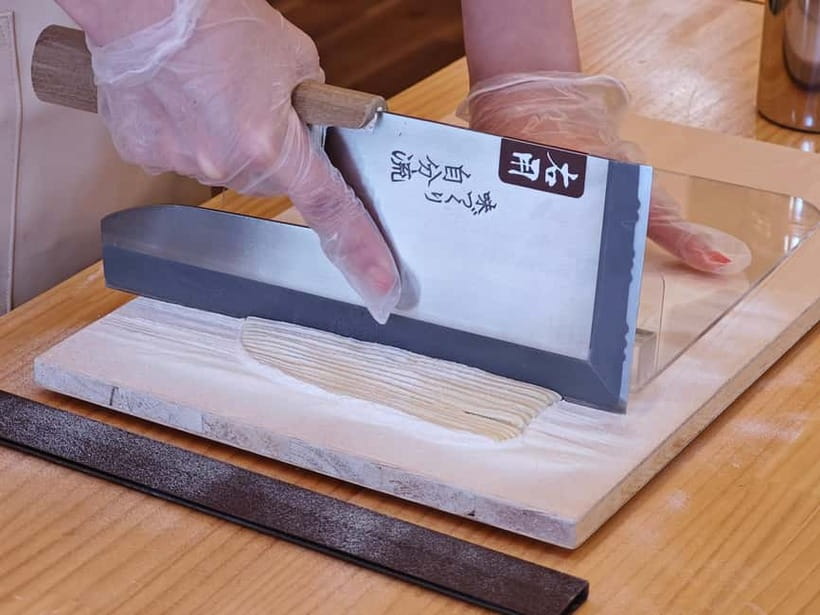
The unusual part is the cutting. Many noodle-making demonstrations use a pasta machine, which produces even strands quickly but leaves you watching more than doing. Here, you use a large knife made for noodle cutting and slice the flattened dough by hand, one strip at a time.
This technique is connected to Japanese noodle-making methods passed down from the Edo period. You are not signing up for a long professional cooking course, and you will not master every part of noodle production in half an hour. You will, however, get a clear sense of how pressure, spacing, and knife control affect the finished noodles.
The instructors teach the method carefully, with safety instructions and a light touch. That tone is useful because the knife can look intimidating at first. Pay attention to where your hands are placed, keep your movements controlled, and do not rush to match anyone else at the table.
The dough work is simplified so the full process fits into the session. That is a strength for families and busy sightseers, though anyone seeking a detailed culinary apprenticeship may find the lesson too short. The point is participation, not a long technical workshop.
Children can join, but age alone is not the only issue. A child taking part alone must be able to knead and handle the large, heavy knife independently. If that seems unsafe or too difficult, the child is paired with a parent. One adult must accompany each child in a parent-child pairing, and three participants at one table are not allowed.
Your noodles become your lunch
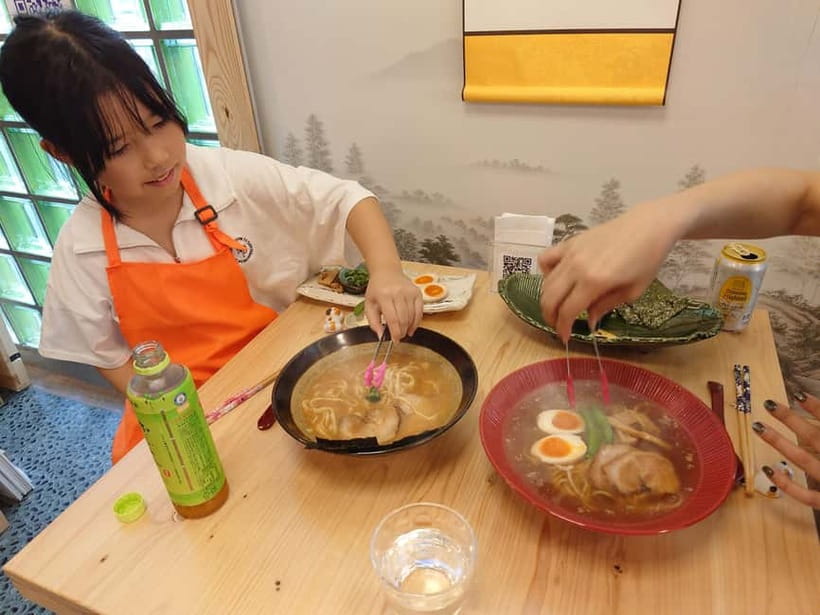
Once you finish cutting, staff cook the noodles for you. This is where the activity becomes more satisfying than a simple craft demonstration. You do not take home a bag of dough or watch someone else prepare a separate meal. Your noodles are used in your own bowl of ramen.
The menu includes familiar soy sauce ramen as well as miso and shio, or salt ramen. Vegan ramen and vegan soup curry ramen are also available, giving plant-based diners a genuine choice rather than a token side dish.
The supplied experience details do not specify that every flavor is available at every session, so check the choices when you arrive. If you already know you want vegan ramen or curry ramen, it is sensible to confirm the option with the staff before the cooking begins.
You can expect the bowl to include more than noodles and broth. One diner specifically praised the soy sauce ramen with egg and pork, while another noted that the staff carefully kept each person’s handmade noodles in their own bowl. That separation is important. It lets you taste the result of your own work instead of receiving a generic bowl prepared from a common batch.
The noodles may not look perfectly uniform, and that is part of the fun. Hand-cut noodles can vary slightly in width. Rather than treating this as a flaw, use it as a reminder that the meal came from your own hands.
Drinks and snacks add value
The $57 price is easier to judge when you count the meal and extras, not just the 30-minute lesson. Your booking includes the ramen made from your noodles, one drink, and all-you-can-eat snacks from Japanese manufacturers.
The drink selection is broad. Depending on your preference, you can choose beer, a highball, lemon sour, juice, or non-alcoholic beer. That makes the experience work for mixed groups, since one person can have a beer while another chooses juice or a non-alcoholic option.
Refills cost extra, so the included drink is a single serving rather than an open bar. The snacks are available in the eating area and give you something to try while you finish your meal or talk through the session.
For a family, the snacks and drink choice help make the price feel less one-dimensional. For a couple or solo visitor, the value depends on how much you want the hands-on lesson. If you only want a cheap bowl of ramen, you can find less expensive meals in Tokyo. If you want a short activity that produces your lunch and includes refreshments, the package is more competitive.
The meal also gives the experience a useful ending. Some cooking classes finish with a rushed tasting or leave you to find food afterward. Here, the cooking staff handle the final preparation, so you can sit down and eat without extending the appointment far beyond the lesson.
More food tours in Japan:
- Tokyo: Shinjuku Food Tour (13 Dishes at 4 Local Eateries)
★ 5.0 · 6,603 reviews - Tokyo Tsukiji Fish Market Food and Culture Walking Tour
★ 5.0 · 3,184 reviews - Osaka: Shinsekai Food Tour with 13-15 Dishes at 5 Eateries
★ 4.8 · 2,204 reviews - Osaka Food Tour: 13 Dishes at 5 Local Eateries
★ 5.0 · 2,149 reviews
A good fit between Sensoji and kitchenware shopping
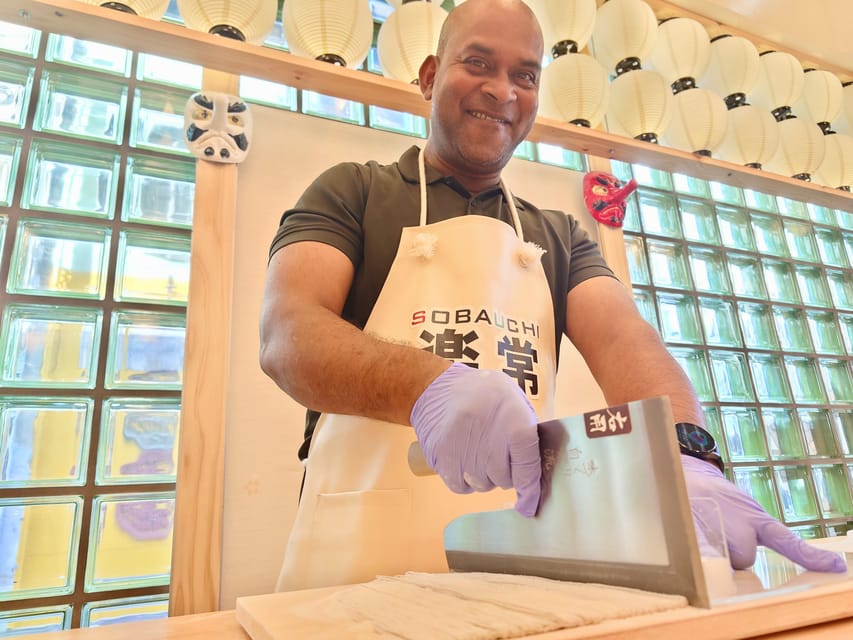
The location makes this easy to add to a day in eastern Tokyo. Sensoji Temple is about 25 minutes away, and Kappabashi itself deserves time for browsing. You can visit the temple, walk toward the kitchenware district, make noodles, and then continue shopping for knives, ceramics, chopsticks, or restaurant tools.
The 50-minute activity is designed for a quick stop, with about 30 minutes spent making noodles and time afterward for dining. The supplied schedule also describes roughly 30 minutes for the meal, so the exact total at the venue may feel longer than the advertised 50 minutes. Leave a little breathing room if you have a timed museum visit or a train reservation afterward.
This short format is one of the strongest reasons to choose it. A one- or two-hour cooking class can become tiring, especially for children or companions who are less interested in the subject. Here, the central task arrives quickly, ends before it drags, and leads directly to lunch.
The experience is also a pleasant alternative to simply photographing food in Kappabashi. You get to handle ingredients, use a traditional tool, and learn a small part of Japanese noodle culture before walking back into the shopping district.
Photos without flour on your phone
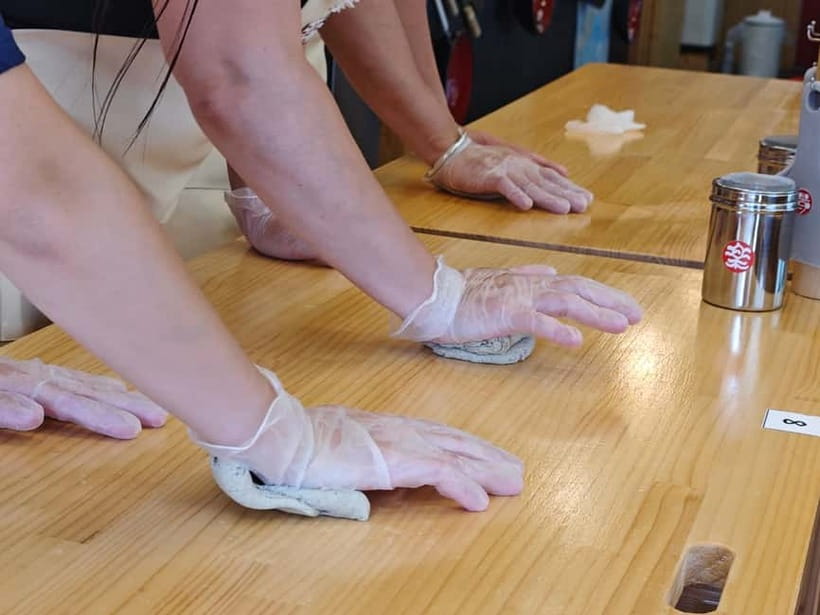
The staff may take professional-style photos during the workshop and share them by QR code afterward. This is a practical touch, since flour-covered hands and phones do not mix well. The photos can include edited images, giving you a record of the activity without interrupting the cutting process to take pictures yourself.
You should still follow the staff’s instructions about photography. The knife work needs attention, and trying to film every step can distract from safe hand placement. Let the staff handle some of the pictures, then use your phone once the cooking portion is over.
The photo service is not the main reason to book, but it adds something to a short activity. You leave with both a meal and a visual reminder of the process, rather than a recipe sheet alone.
Who will enjoy this ramen class
I would recommend this to families with children who can follow safety instructions, couples seeking a compact food activity, and friends who want something more hands-on than a restaurant meal. It also suits visitors with limited time in Asakusa because the lesson does not take over half a day.
The activity is offered in Japanese and English, with an English audio guide included. That should help international visitors follow the steps, though knife technique always depends on watching closely as well as listening.
Wheelchair users can take part, and the ground-floor layout is helpful. The small group limit should also make the room easier to manage than a large public cooking demonstration.
It is not suitable for children under three, babies under one, people with colds, people with gluten intolerance, or anyone with a buckwheat allergy. The restrictions are especially important here because you will work directly with flour and eat the noodles you make.
Do not book this as an observation-only visit. The restaurant does not generally allow people to enter simply to watch, and participants are expected to order the meal. Attendants who do not take part may also need to pay for their own meal.
The practical details that matter
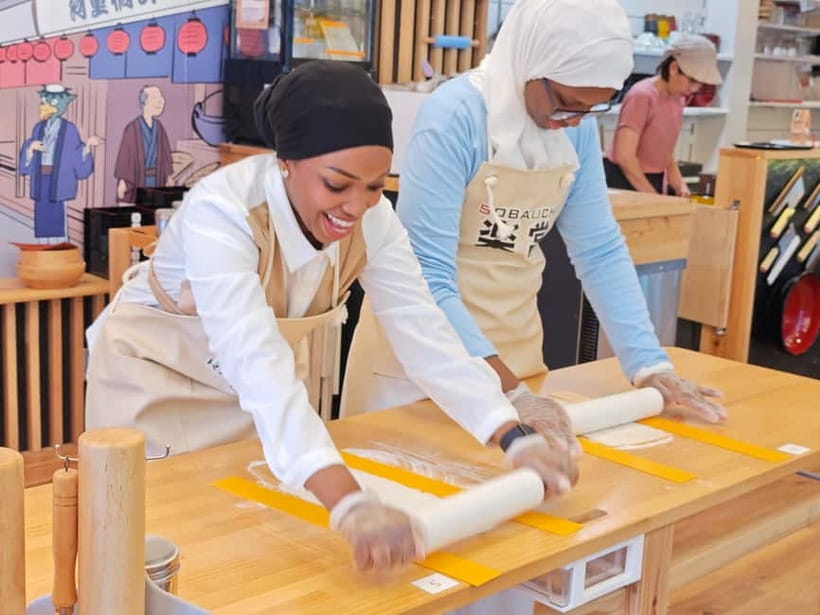
Arrive 10 minutes before your reserved start time. That gives you time to find the shop, wash your hands, and settle in before the knife lesson begins.
The activity allows free cancellation up to 24 hours before the start time, and you can reserve without paying immediately. One booking account describes an unexpected cancellation on arrival, so I would keep your confirmation available and check the appointment before setting out, especially if you are fitting this into a tightly planned day.
Safety responsibility rests with the participant, and parents are responsible for their children. This is not a reason to avoid the class, but it is a reason to treat the knife as a real kitchen tool rather than a souvenir prop.
The published price is $57 per person. At that rate, I would choose the activity for the combination of instruction, a meal, one drink, snacks, and the convenient location. I would skip it if your priority is only the lowest-cost ramen lunch or if you dislike guided hands-on activities.
Should you book SOBAGIRI-RAKUJYO?
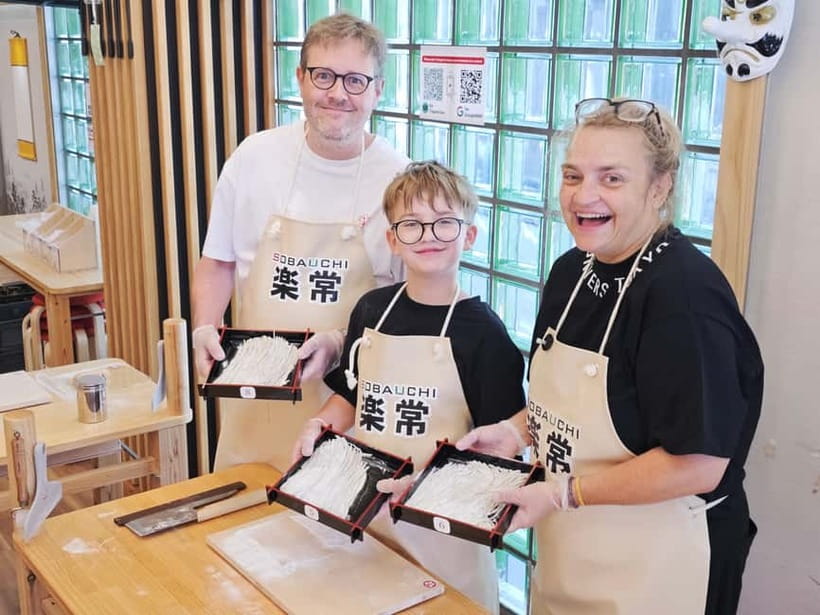
Book it if you want a short, friendly introduction to Japanese noodle-making that fits naturally into a Kappabashi and Asakusa day. The strongest points are the hands-on knife work, the choice of ramen flavors, the clean open studio, and the fact that your noodles become your actual meal.
Families should judge the knife requirement carefully, and diners with gluten or buckwheat concerns should not book. Also allow a little extra time beyond the stated 50 minutes if you want to eat slowly and enjoy the included drink and snacks.
For most visitors, this is best viewed as a compact cultural activity with lunch attached. It will not replace a full cooking course, but it gives you a genuine task, a warm bowl of ramen, and a useful reason to explore Kappabashi.
FAQ
How long does the ramen-making experience take?
The advertised duration is 50 minutes. About 30 minutes is spent making the noodles, followed by dining time.
Where is SOBAGIRI-RAKUJYO located?
It is on the first floor in Kappabashi, Asakusa, in Tokyo’s kitchenware district. The meeting point is diagonally across from a food-sample specialty store with a large beetle object.
How far is the venue from Sensoji Temple?
The restaurant is about 25 minutes from Sensoji Temple.
What ramen flavors are available?
The stated choices include miso ramen, soy sauce ramen, shio ramen, vegan ramen, and vegan soup curry ramen.
Is a drink included?
Yes. One drink is included, with choices such as beer, highball, lemon sour, juice, and non-alcoholic beer. Refills cost extra.
Are snacks included?
Yes. All-you-can-eat snacks from Japanese manufacturers are available in the eating area.
Can children participate?
Children can participate, but children taking the class alone must be able to knead and use a large, heavy knife independently. If that is difficult, a parent must join the child. Children under three are not suitable for the activity.
Is the experience offered in English?
Yes. The activity is offered in Japanese and English, and an English audio guide is included.
New food tours we have reviewed in Japan
- Tokyo : Asakusa Food Tour – 12 Dishes & 3 Drinks★ 5.0 · 44 reviews
- Asakusa Highlights: Street Food Crawl Tour (7+ Local Bites)★ 5.0 · 206 reviews
- Tokyo: West-Side Cycling and Food Tour with Guide★ 5.0 · 37 reviews
- Tokyo: Wagyu and Sushi Gastronomic Journey★ 4.3 · 24 reviews
- Tokyo Tsukiji Food & Culture Private Tour Licensed Guide★ 4.9 · 28 reviews
- Tokyo: Allstar Food Tour★ 4.7 · 29 reviews
- Tokyo: Togoshi Ginza Street Food Tour★ 5.0 · 34 reviews
- Tokyo: Sushi Making Class★ 4.9 · 390 reviews
Sushi and Ramen Tours, compared.
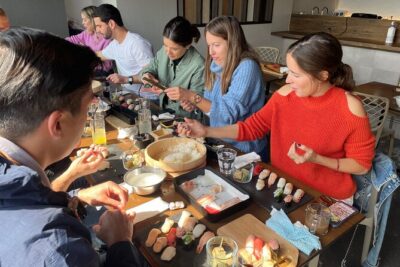
Sushi Making Tokyo Roll and Authentic Japanese Sushi Class
Read our review →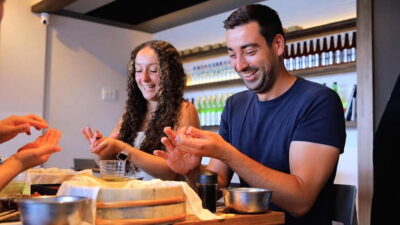
Tokyo: Roll and Authentic Sushi Making Class in Asakusa
Read our review →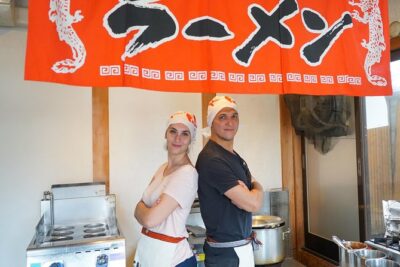
Ramen Cooking Class at Ramen Factory in Kyoto
Read our review →
Best of Shinjuku: Izakaya Food Tour (4 Stops, 14+ Tastings)
Read our review →
Tokyo: Sushi Making Class in a Happi Coat near a Famous Spot
Read our review →
Sushi Making Tokyo! Popular Maki Sushi & Japanese Sushi(+Recipe!)
Read our review →
Sushi Making Osaka Roll and Authentic Japanese Sushi Class
Read our review →
Tokyo Sushi Making Class in Tsukiji with Professional Chef
Read our review →Browse the lists this tour appears in