
Review · SUSHI AND RAMEN TOURS
Tokyo: Ramen Tasting Tour with 6 Mini Bowls of Ramen
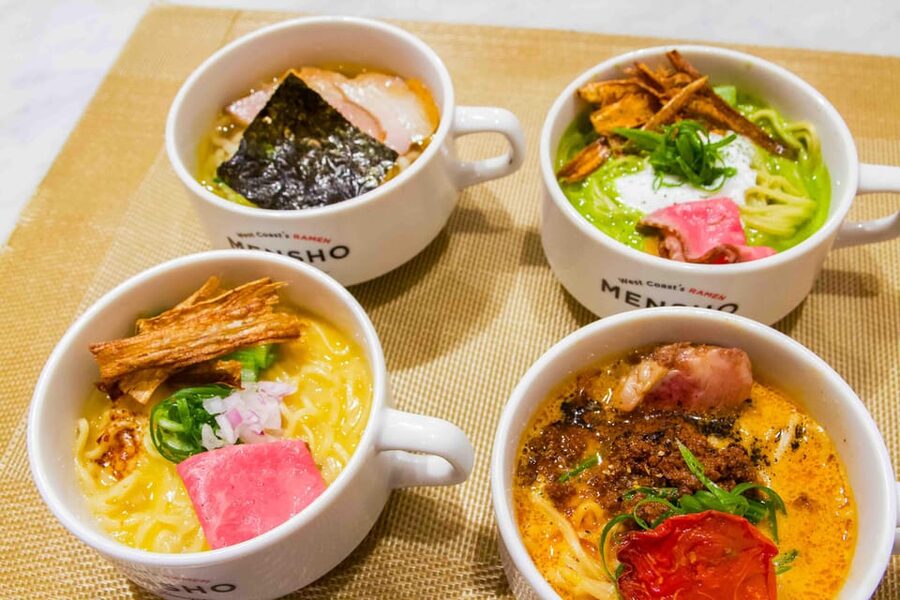
Tokyo ramen is not one dish. It is a whole family of broths, noodles, toppings, and regional habits, and this tour lets you taste six versions without committing to six full bowls. I especially like the quarter-size servings and the freedom to choose from 11 or 12 options, since you can compare styles instead of filling up on one familiar tonkotsu bowl.
I also like the way the food is tied to Tokyo neighborhoods. You visit three shops in places such as Shibuya, Shinjuku, Ebisu, or Ueno, with an English-speaking guide such as Sahori, Bunga, Makayla, or Daisy explaining what is in front of you. The main drawback is the price: at $122 per person, it costs far more than ordering ramen on your own, and the roughly 3 kilometers of walking may feel like work between meals.
Key points to know before booking
- Six quarter-size bowls: You taste six separate ramen servings, each about one-fourth the size of a normal bowl.
- A choice of 11 or 12 styles: The selection can include Hokkaido, Tokyo, Kyushu, tonkotsu, curry, chicken, fish, and dipping ramen.
- Three different shops: Each stop has its own approach, so the meal becomes a comparison rather than one long restaurant visit.
- Three Tokyo neighborhoods: The route may include Shibuya, Shinjuku, or Ueno, and the Shibuya route ends in Ebisu.
- Small English-speaking group: The group is limited to eight, leaving room for questions and personal food advice.
- A serious amount of food: Six samples can add up quickly. I would keep your earlier meal light, or skip lunch if your tour begins later.
Six bowls turn ramen into a tasting course
The clever idea here is portion size. A full bowl of ramen is satisfying but heavy, especially when the broth is rich and the noodles are plentiful. Six full bowls would be absurd. These mini bowls are about one-quarter the normal size, making it possible to compare several styles in one afternoon or evening.
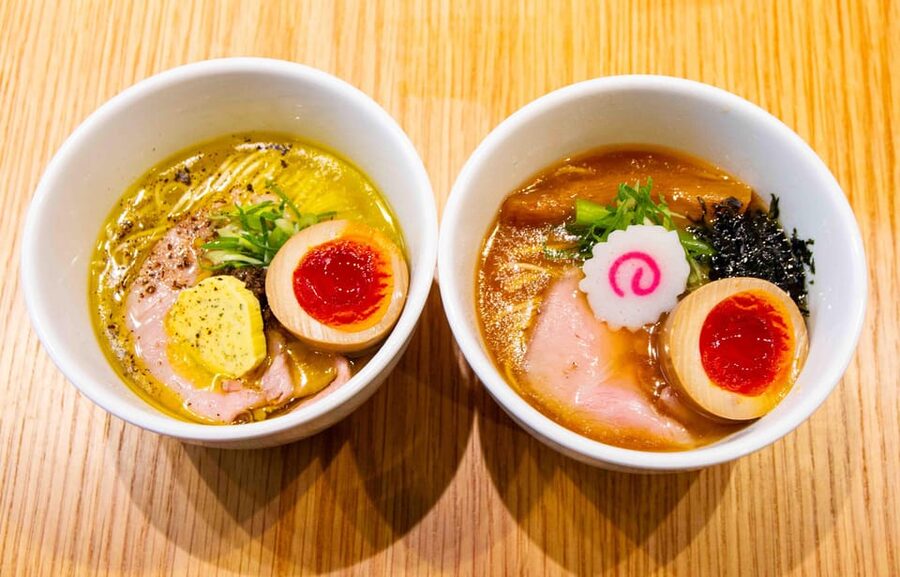
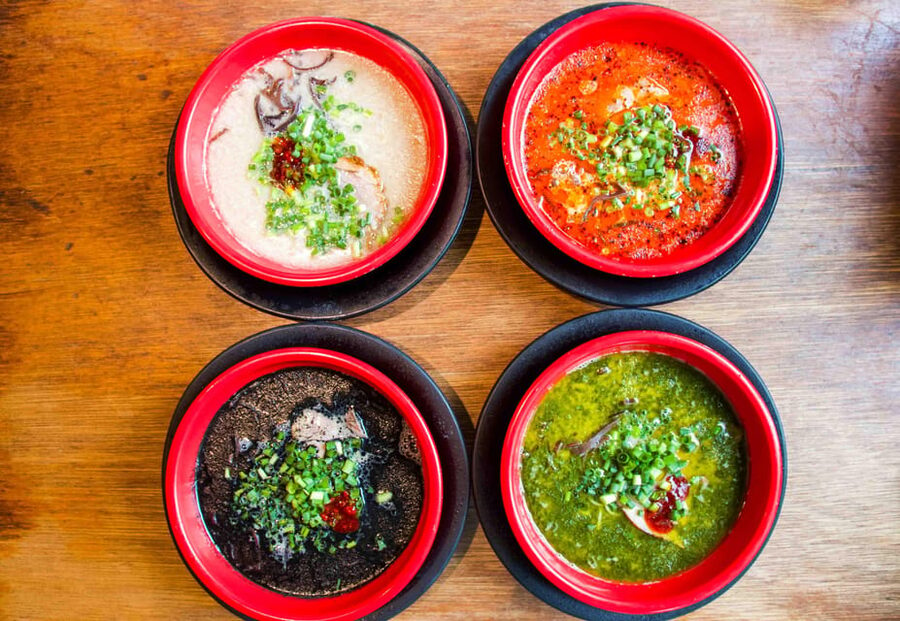
You choose six bowls from a list of 11 or 12. The exact choices depend on the route and what each shop is serving, so do not expect every style on every departure. The selection can include familiar classics and less common combinations, such as squid ink, pesto, curry, salty miso, and different chicken or fish broths.
I like this format for a first visit to Japan because it teaches you how broad ramen can be. You may arrive thinking ramen means noodles in a pork broth. You leave with a working vocabulary: miso, shoyu-style Tokyo ramen, tonkotsu, tori paitan, tsukemen, curry ramen, and more.
The portions are small, but do not mistake the tour for a light snack. Six servings, plus a drink, can make a full meal. Walking between the shops helps, yet one person still found the final bowl difficult to finish. Plan your day around that fact.
More Sushi and Ramen Tours in Tokyo
- Sushi Making Tokyo Roll and Authentic Japanese Sushi Class
★ 5.0 · 3,971 reviews - Tokyo: Roll and Authentic Sushi Making Class in Asakusa
★ 4.9 · 1,957 reviews - Best of Shinjuku: Izakaya Food Tour (4 Stops, 14+ Tastings)
★ 5.0 · 1,863 reviews
What happens at the three ramen shops
The tour visits three award-winning ramen shops, with two small bowls at each stop. That rhythm works well. You eat, hear an explanation, walk through a Tokyo neighborhood, then reset your appetite before the next style.
The shops are not simply chosen because they sit near one another. The routes involve walking and, when needed, train travel, so the restaurants can represent different approaches to ramen. That adds time and effort, but it also helps explain why the tour costs more than a self-guided meal.
At each shop, your guide helps you understand the broth, noodle style, seasoning, and preparation. You can ask questions as you go instead of trying to decode a Japanese menu while hungry and unsure. The guide also explains how to eat each type, which matters most with dipping ramen and strongly seasoned bowls.
You receive one beverage as part of the tour. Train fare is not included, so carry an IC card or budget separately for local transport if your route requires it.
Shibuya route: Hokkaido, tonkotsu, and curry
The Shibuya route begins with classic Hokkaido ramen. Hokkaido is strongly associated with miso ramen, and this first stop gives you a useful example of a hearty northern style. The point is not only to taste the bowl, but to notice how its seasoning and noodle choice differ from Tokyo or Kyushu versions.
The second stop features fusion tonkotsu, made with a pork-bone base. Tonkotsu is often the style people picture when they think of creamy ramen broth, but a fusion version can add other flavors and techniques. This is a good place to compare texture and intensity with the first bowl.
The final Shibuya stop serves savory curry ramen. Curry and ramen make an unexpectedly convincing pair, and this bowl shows how modern ramen shops borrow from other Japanese comfort foods. If you only order standard soy ramen on your own, this is the sort of combination you might miss.
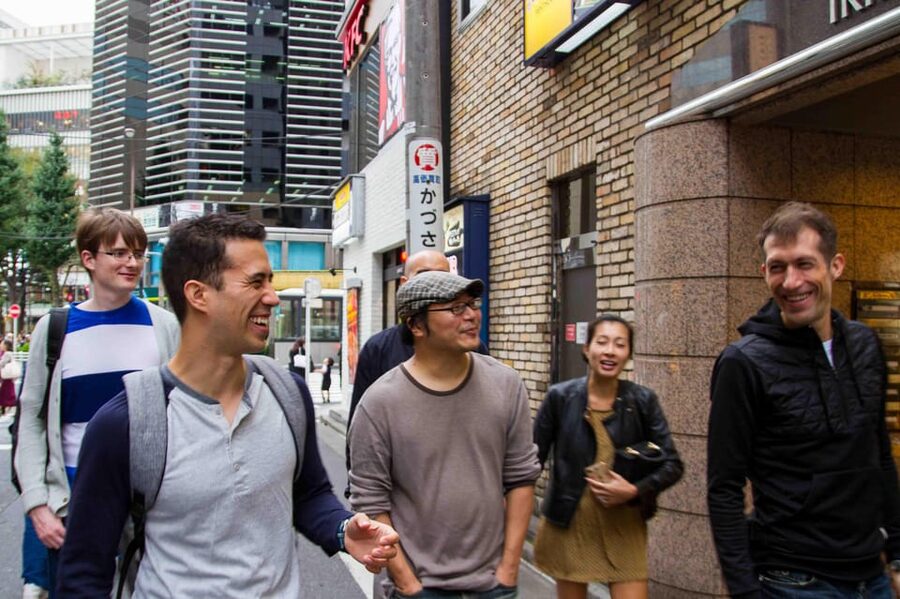
The walk through Shibuya adds value beyond the food. One guide used the route as a small walking tour of the area, giving the meal a stronger sense of place. The exact ending is listed as Ebisu for this route, though the route can vary by day.
Shinjuku route: Tokyo, chicken, and a luxurious finish
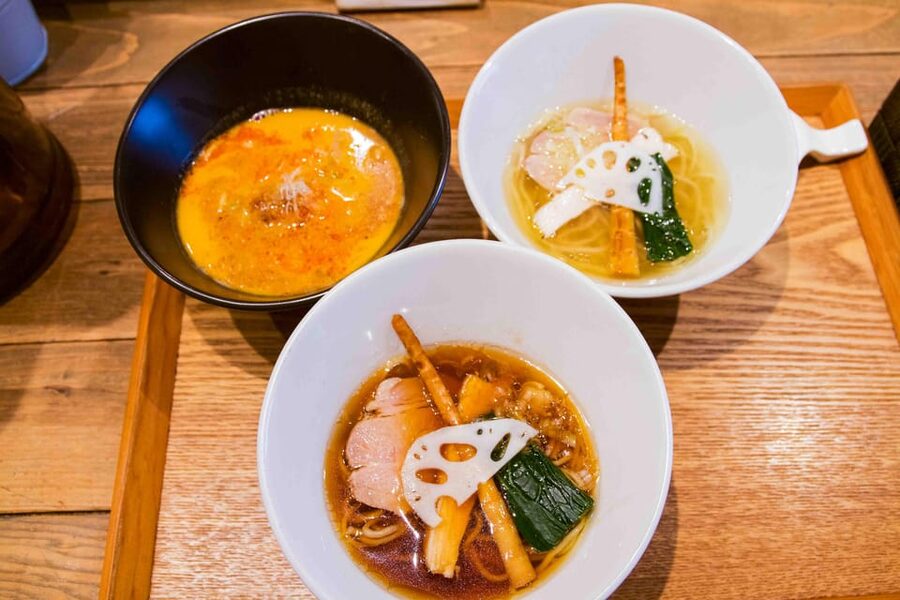
The Shinjuku route starts with classic Tokyo ramen. This gives you a baseline: a more traditional Tokyo profile before the tour moves into newer or more specialized styles.
The second shop serves modern tori paitan, a thick chicken ramen. It has the creamy feel associated with tonkotsu, but the base is chicken rather than pork. That distinction is worth tasting side by side with the other broths, especially if you are trying to understand how chefs create body and depth without using the same ingredients.
The final stop offers luxurious chicken or fish ramen. The word luxurious here describes the style presented by the tour, not a promise of a particular topping or fixed bowl. The exact bowl can depend on the day and restaurant choice, so treat it as a chance to try a more polished modern interpretation.
Shinjuku is a useful setting for this route because it lets you combine a major Tokyo district with a food lesson. Your guide can also answer broader questions about Japan, restaurants, and local customs. Several guides, including Bunga and Sahori, are praised for giving practical Tokyo advice along with ramen information.
Same appetite, a different neighbourhood:
- Tokyo: Shinjuku Food Tour (13 Dishes at 4 Local Eateries)
★ 5.0 · 6,603 reviews - Tokyo Tsukiji Fish Market Food and Culture Walking Tour
★ 5.0 · 3,184 reviews - Tokyo: Shinjuku Food Tour (15 Dishes and 4 Eateries)
★ 4.9 · 2,033 reviews - Tokyo: Sushi Making Class in a Happi Coat near a Famous Spot
★ 4.9 · 1,377 reviews
Ueno route: Kyushu, tsukemen, and modern Tokyo
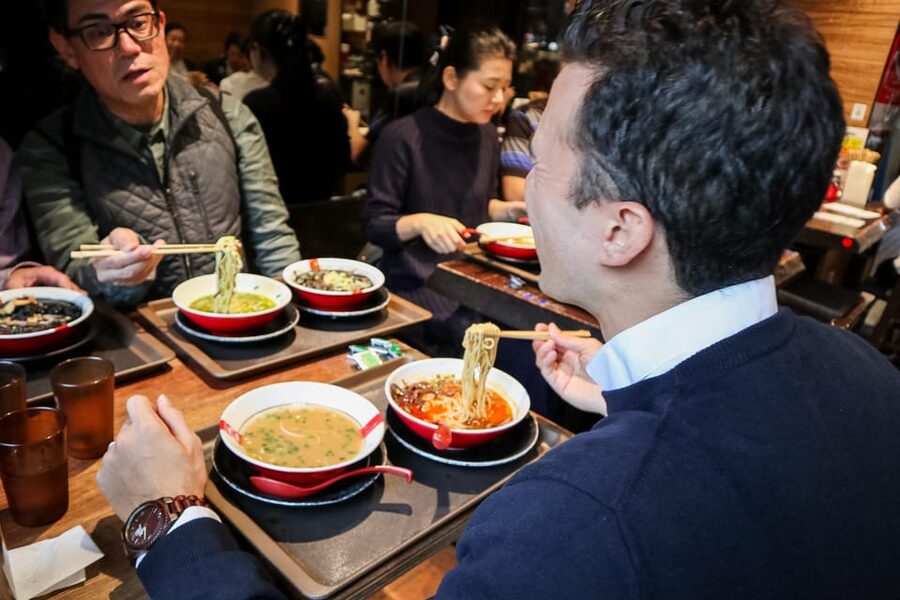
The Ueno route opens with classic Kyushu ramen. Kyushu is closely linked with tonkotsu ramen, and this bowl gives you another regional point of comparison. Tasting it after Hokkaido or Tokyo styles helps you notice that the word ramen covers very different broths and noodle textures.
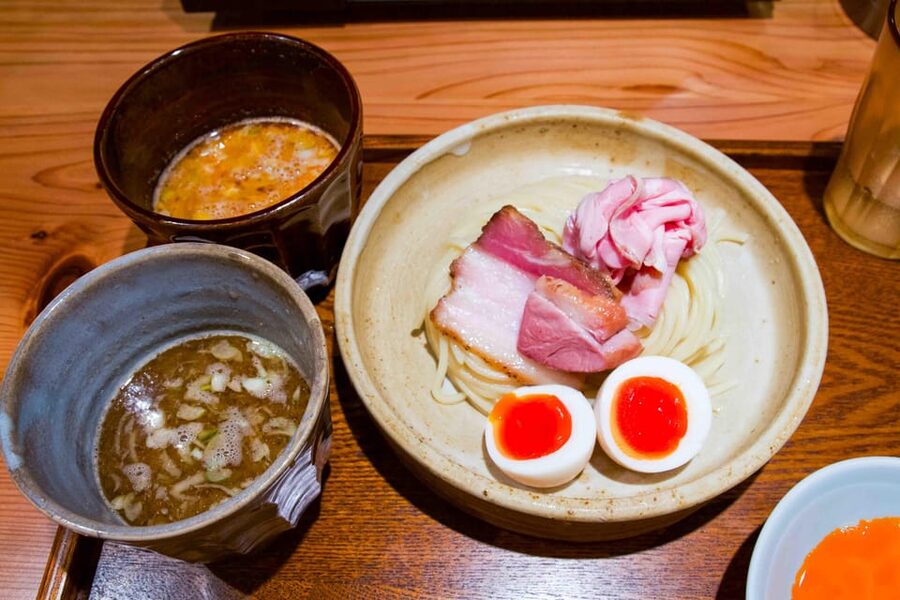
The second stop is contemporary tsukemen, or dipping ramen. Here, the noodles and dipping broth are served separately. You dip each mouthful, controlling how much broth reaches the noodles. It is a different eating pattern from standard ramen, and the guide’s explanation is useful because the format may be unfamiliar.
The final Ueno stop is modern Tokyo ramen. This gives the route a present-day ending, showing how chefs continue to alter classic formulas. The Ueno option is especially appealing if you want the tour to cover regional ramen and newer Tokyo interpretations in the same three-hour outing.
Because the meeting point varies by booked option, check the exact route before you set your day around it. The general plan includes three neighborhoods and about 3 kilometers of walking, but the specific sequence is not identical on every departure.
The guide makes the difference
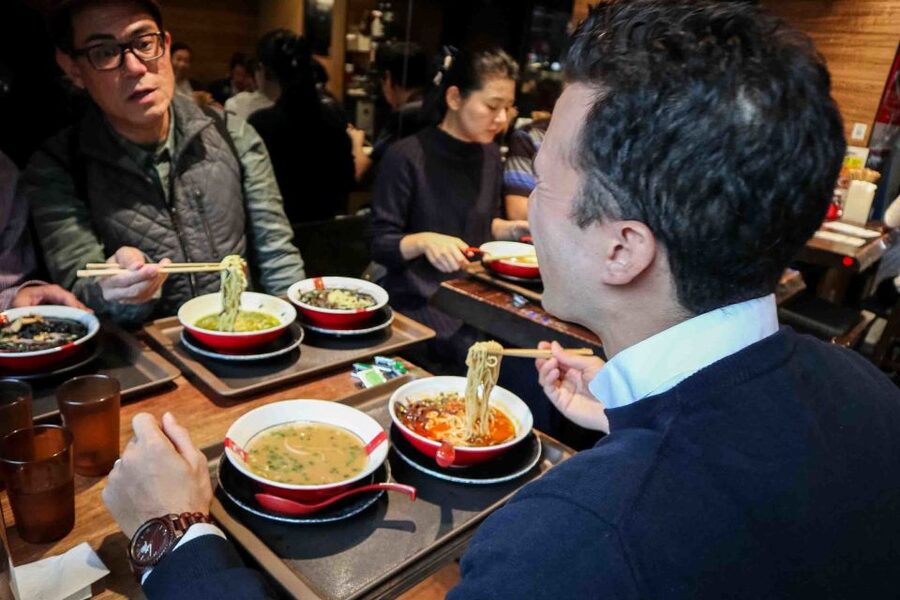
The food is the main attraction, but the guide shapes how much you get from it. The tour uses colorful slides and handouts to explain ramen’s origins, regional types, ingredients, and preparation. Several guides also use a tablet, which makes the lesson easier to follow while standing outside a shop or walking between stops.
Sahori is repeatedly praised for clear English, warmth, and strong ramen knowledge. Bunga brings enthusiasm and explains regional styles with energy. Makayla is described as friendly, patient, and passionate, while Daisy combines ramen instruction with broader Tokyo help. Other named guides include Michaela, Manny, Brian, and Sayori.
Guide assignments can change, so you cannot book a specific teaching style with certainty. Still, the structure gives every guide useful material to work with. You are not left with a plate of noodles and a quick label. You learn why one bowl is called tori paitan, how tsukemen differs from ordinary ramen, and how ramen has developed in Japan over the past century.
The small group helps. With a maximum of eight people, you can ask about ingredients, restaurant etiquette, or dishes you see later in your trip. One family even received help with an anime-themed reservation, though that kind of extra assistance should be treated as a pleasant possibility, not a promised part of the tour.
The walking and train travel are part of the cost
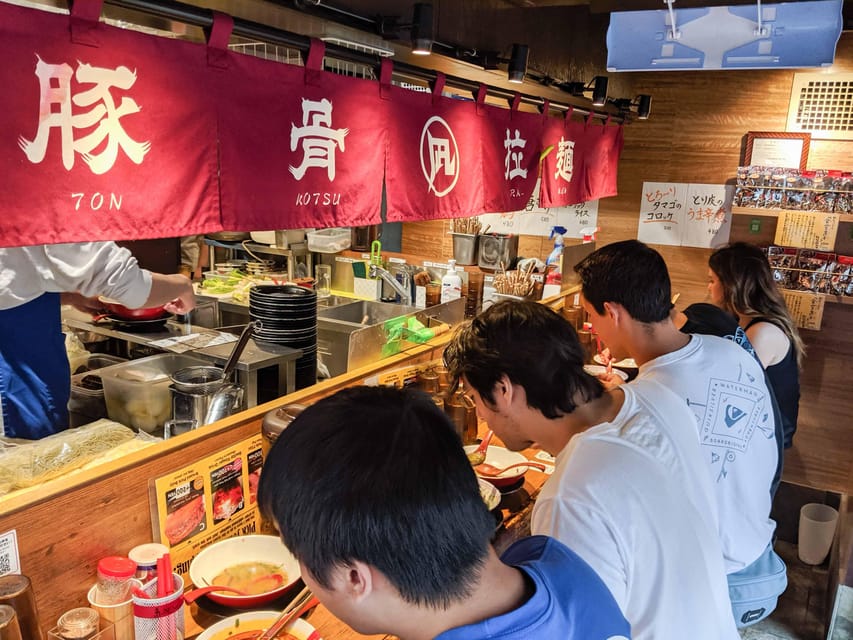
Expect about 3 kilometers of walking, plus a train ride if your route needs one. This is not a seated food tour where you move from door to door by taxi. You walk through city streets, digest between bowls, and see how the districts connect.
That movement is helpful after the first few servings. It also explains why some of the chosen shops are not simply the closest places to the meeting point. Still, Tokyo weather matters. Rain made one route harder, and a guide arranged a taxi for the final stop. Do not count on that every time, but wear comfortable shoes and carry weather protection.
The tour starts in Shibuya and ends in Ebisu or Shinjuku depending on the day and route information. Since the meeting point can change with the option booked, read the confirmation carefully and avoid booking a tight attraction immediately afterward.
People with a low level of fitness may find the walking tiring. Families can manage it, and one nine-year-old enjoyed the outing, but the combination of walking, stairs or stations, and six bowls requires a reasonable amount of energy.
Is $122 a fair price for a ramen tour?
At $122, this is expensive if you judge it only by the amount of food. You could order a full bowl of ramen for much less, and even six small meals would not normally reach this price.
The value comes from the access and structure. You get six specially portioned bowls, one drink, three restaurants, a small English-speaking group, neighborhood walking, and a guided lesson that helps you understand what you are tasting. The mini bowls are not simply leftovers or half portions. They are designed for this tasting format and are not normally available as a standard restaurant order.
I would call the tour worthwhile for serious ramen fans, first-time Japan visitors who want a clear introduction, and people who would rather have someone handle the restaurant choices. It is harder to justify if you already know Tokyo ramen well, prefer independent food exploration, or are watching every dollar.
The strongest value comes from the range. You are not paying for one famous bowl. You are paying to compare six styles in one outing and learn which ones deserve another meal later.
Who should book this ramen experience?
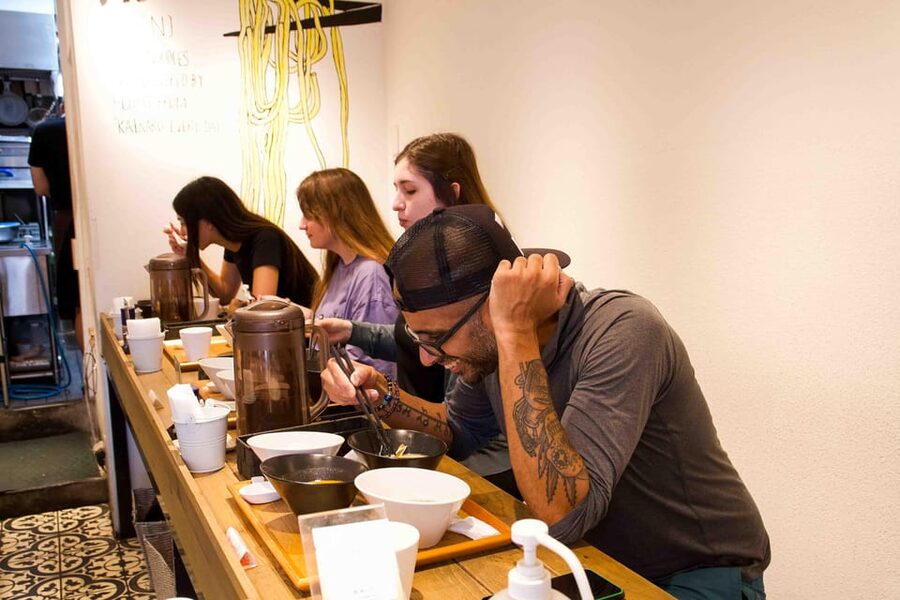
I would book it early in a Tokyo trip, not on your final day. The food advice can guide later meals, and several of the styles may be new enough to change what you order elsewhere.
It suits curious eaters who like tasting menus, food history, and walking through city neighborhoods. It also works for families with older children who can handle the pace. The guide can answer questions in English, and the small group makes the experience more personal than a large bus outing.
You should think twice if you need vegetarian or vegan food. All the standard broths contain chicken, pork, and fish. There is a separate vegan and vegetarian ramen tasting tour, which is the correct choice for those diets.
You should also eat lightly beforehand. Six bowls sound small on paper, but the total is substantial, particularly if you choose several creamy or heavily seasoned styles.
Final verdict: a strong choice for ramen fans
I recommend this tour if your goal is to understand Tokyo ramen, not merely eat one bowl. The combination of six mini servings, three distinct shops, neighborhood walking, and clear explanations gives you a useful framework for the rest of your Japan trip.
Book it if you want help finding styles you would not choose alone, such as curry, squid ink, pesto, modern chicken ramen, or tsukemen. Skip it if $122 feels too high for a food outing or if you would rather spend three hours choosing inexpensive bowls on your own.
For most ramen lovers, the tour earns its price through comparison and guidance. Just arrive hungry, wear good shoes, and confirm the route and meeting point before you go.
FAQ
How many bowls of ramen are included?
You receive six mini bowls of ramen. Each is about one-quarter the size of a full bowl, and you choose the six from a selection of 11 or 12 options.
How long does the tour last?
The tour lasts three hours. Starting times vary, so check availability for the date you want.
How many people are in the group?
The group is limited to eight participants, making it a small-group experience.
Is the tour conducted in English?
Yes. The tour includes a live English-speaking guide.
Which Tokyo neighborhoods does the tour visit?
The route may include Shibuya, Shinjuku, or Ueno. The Shibuya route starts in Shibuya and ends in Ebisu, while the ending point can be Shinjuku on another route or day.
Are train tickets included?
No. A train ticket, if required for the route, is not included in the price.
Is the tour suitable for vegetarians or vegans?
No. The standard ramen broths contain chicken, pork, and fish. Vegans and vegetarians should book the separate vegan and vegetarian ramen tasting tour.
New food tours we have reviewed in Tokyo
- Tokyo: West-Side Cycling and Food Tour with Guide★ 5.0 · 37 reviews
- Tokyo: Wagyu and Sushi Gastronomic Journey★ 4.3 · 24 reviews
- Tokyo Tsukiji Food & Culture Private Tour Licensed Guide★ 4.9 · 28 reviews
- Tokyo: Allstar Food Tour★ 4.7 · 29 reviews
- Tokyo: Togoshi Ginza Street Food Tour★ 5.0 · 34 reviews
- Tokyo: Sushi Making Class★ 4.9 · 390 reviews
- Tokyo: Shibuya Food Tour (13 dishes and 4 Eateries)★ 5.0 · 178 reviews
- Tokyo: Best of Shibuya Food Tour★ 4.7 · 119 reviews
Sushi and Ramen Tours, compared.
Sushi Making Tokyo Roll and Authentic Japanese Sushi Class
Read our review →
Tokyo: Roll and Authentic Sushi Making Class in Asakusa
Read our review →
Ramen Cooking Class at Ramen Factory in Kyoto
Read our review →
Best of Shinjuku: Izakaya Food Tour (4 Stops, 14+ Tastings)
Read our review →
Tokyo: Sushi Making Class in a Happi Coat near a Famous Spot
Read our review →
Sushi Making Tokyo! Popular Maki Sushi & Japanese Sushi(+Recipe!)
Read our review →
Sushi Making Osaka Roll and Authentic Japanese Sushi Class
Read our review →
Tokyo Sushi Making Class in Tsukiji with Professional Chef
Read our review →Browse the lists this tour appears in