Review · MARKET FOOD TOURS
Tokyo Tsukiji Fish Market Food and Culture Walking Tour
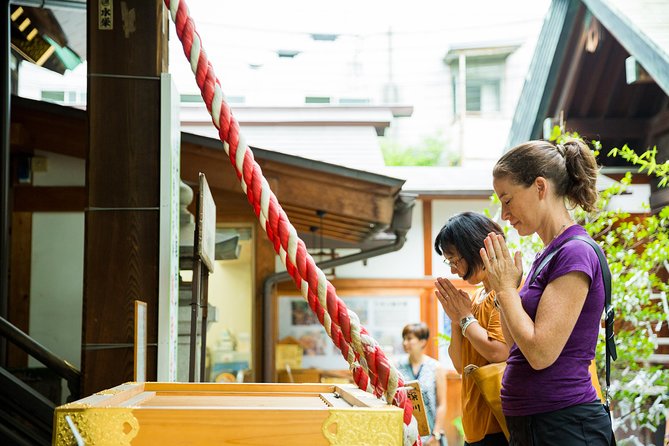
Tokyo’s Tsukiji outer market is less about one grand sight than about hundreds of small discoveries: a box of sea urchin, a vendor cutting tuna, a hot fish cake, or a sushi counter tucked beside a shop selling kitchen knives. This three-hour walk gives you a local guide to help make sense of it all.
I like the mix of food and cultural context, especially the visit beginning at Tsukiji Honganji Temple. I also like that guides such as Kiyo, Naz, Shoko, Masa, and Mieko have helped visitors find foods and shops they might have missed alone. The main caution is that this is not an all-you-can-eat tour, and the exact tastings vary by day.
Key points to know
- Start at Tsukiji Honganji Temple: Meet at the main gate, not the back side of the temple.
- Taste more than seafood: Samples can include dashi, green tea, fish cakes, Japanese omelette, Wagyu skewers, seasonal fruit, tuna, sushi, or a seafood bowl.
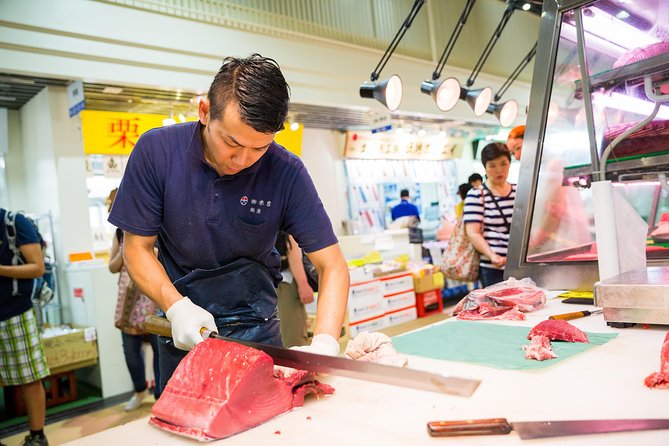
- See the working market: You may encounter uni, pufferfish, tanks of seafood, and vendors handling large Bluefin tuna.
- The final meal varies: Depending on the day, you receive sushi or a seafood bowl.
- Expect a fish-centered menu: Vegetarian, halal, gluten-free, allergy-related, and fish-free requests are not accommodated.
- Market days matter: The Uogashi wholesale section is closed on Wednesdays, Sundays, and other market holidays.
What Tsukiji Market is like now
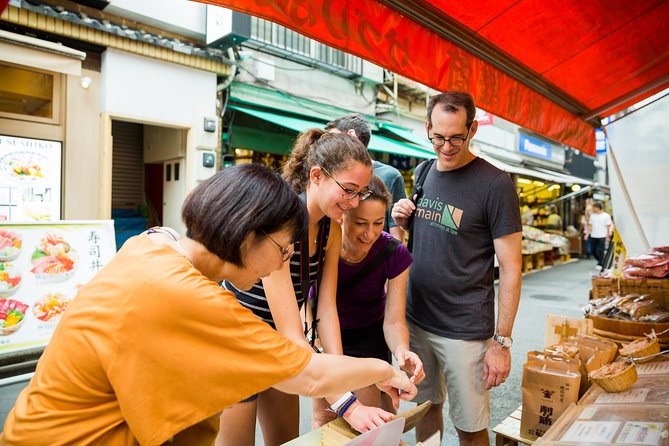
Tsukiji is often called Tokyo’s fish market, but the name can create a false picture. The famous wholesale market moved elsewhere, while Tsukiji’s outer market remains a busy district of food stalls, small shops, restaurants, and specialty sellers.
That distinction matters. If you expect to enter the old wholesale auction area, this tour may disappoint you. The experience takes place around the outer market and Tsukiji Uogashi, a smaller wholesale section that is closed on Wednesdays, Sundays, and holidays.
I still think the outer market is the better setting for many visitors. You can walk, taste, shop, and ask questions without treating the place like a museum. The area shows how Japanese food is bought, prepared, and sold in everyday life. Your guide can explain what you are seeing instead of leaving you to guess at a shop sign or unfamiliar ingredient.
The market has an approximately 80-year history as one of Japan’s major seafood centers. Michelin-starred chefs may shop here for ingredients, though you should treat that as a possibility, not a promised encounter.
More Market Food Tours in Japan
- Tsukiji Fish Market Guided Tour and Sushi Making with Pro Chef
★ 5.0 · 775 reviews - Tokyo: Tsukiji Fish Market Food and Culture Walking Tour
★ 4.7 · 757 reviews - Tsukiji Fish Market: Street Food & Culture Walking Tour
★ 5.0 · 669 reviews
Meeting at Tsukiji Honganji Temple
The tour begins at the main gate of Tsukiji Honganji Temple, at 3-chome-15-1 Tsukiji, Chuo City. This is a useful meeting point because the temple is easy to identify, and the tour adds a cultural stop before the food begins.
Pay close attention to the instructions. The meeting point is at the front side of the temple, and Google Maps may direct you to the back. The group leaves at the scheduled start time, so late arrivals cannot be accommodated and the tour will not be extended.
The temple itself gives the morning a better opening than simply meeting beside a food stall. You can see the unusual building and hear about its design and background before entering the market streets. Guides have also included local history and customs in their introductions, which helps the food feel connected to Japanese daily life.
Wear comfortable walking shoes. You will spend most of the three hours on your feet, and the market can be crowded enough that easy movement matters.
Tsukiji Jogai Market, the main food walk
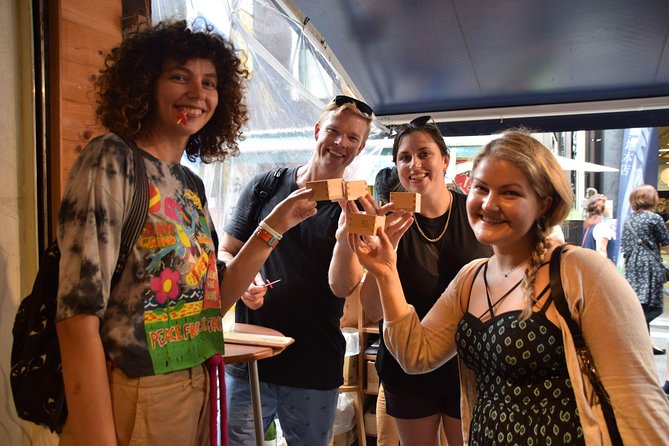
The longest portion takes place in Tsukiji Jogai Market. Plan on about 90 minutes here, moving through narrow lanes lined with seafood sellers, snack counters, ingredient shops, and kitchen stores.
This is where a guide earns the fee. The market can feel like a maze, especially when several shops are selling similar-looking products. A guide can point out what is worth trying, explain how an ingredient is used, and help you move through the crowd without wasting time.
Possible sights include neatly stacked boxes of sea urchin, tanks holding pufferfish, piles of shellfish, and vendors working with large tuna. You may also see the kind of specialist shops that are easy to pass without noticing. One guide helped a group choose cooking ingredients to take home, while another adjusted the route for a sake tasting request.
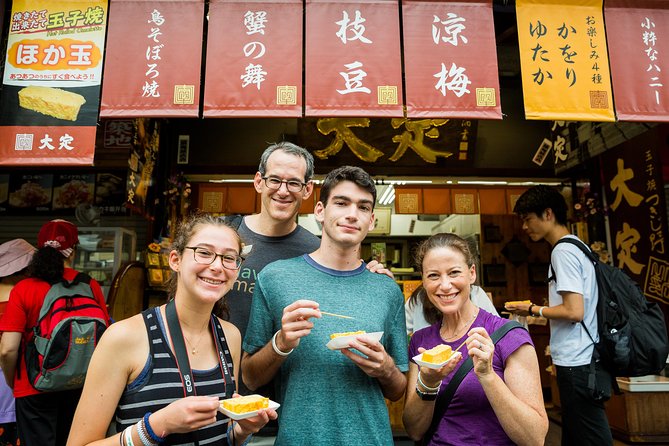
The food stops are the heart of the experience. You may receive dashi soup and green tea, along with Japanese fish cakes, omelette, seaweed, tuna, Wagyu beef skewers, seasonal fruit, and other samples. The exact selection is not fixed, so you should think of this as a guided series of tastings rather than a set menu.
This variety is a real strength. Seafood is central, but Wagyu, fruit, tea, and prepared foods keep the morning from becoming one long parade of raw fish. The tastings also give your guide plenty to explain, from ingredients and preparation to the way Japanese shoppers use particular foods at home.
The portion sizes are another matter. Some people will find the food satisfying, especially with the final sushi or seafood bowl. Others may feel the tour is more about sampling and explanation than eating a full meal. I would not arrive expecting a large breakfast substitute, particularly if you have a strong appetite.
The old market area and the kitchen shops
The itinerary sets aside about 30 minutes for the old Tsukiji market area and food stops. This section is less about one major attraction and more about seeing how the district operates as a food neighborhood.
A guide can make the difference between a quick walk past storefronts and a useful introduction to Japanese ingredients. You might learn how a food is prepared, where it fits into home cooking, or what makes one shop worth your attention.
There may also be time to stop at a kitchen tool shop. This is valuable if you want a practical souvenir rather than another decorative item. Shoko, one guide praised for her cooking tips, also helped visitors select foods and products to take home. Group size can affect this part of the walk. A smaller group makes it easier to pause, browse, and hear the guide in the market noise.
Do not count on unlimited shopping time. The activity has a three-hour schedule, and the guide must keep the group moving through several areas. If you already know you want a particular knife, utensil, or pantry item, mention it early.
More Market Food Tours in Tokyo
- Tsukiji Fish Market Small-Group Food Walking Tour
★ 5.0 · 621 reviews - Tokyo: Tsukiji Fish Market Sushi Making Class with Pro Chef
★ 4.9 · 506 reviews - Tsukiji Fish Market: Street Food & Culture Walking Tour
★ 4.8 · 259 reviews - Tokyo: Toyosu Tuna Auction &Tsukiji Market Gourmet Adventure
★ 4.8 · 187 reviews
Tsukiji Uogashi and the question of wholesale access
The tour also passes through Tsukiji Uogashi, described as a small wholesale market with many kinds of fresh fish. This stop takes about 30 minutes when the area is open.
It is important to check the day before booking. Uogashi is closed on Wednesdays, Sundays, holidays, and other market closure days. On those days, the fish market portion changes, and some foods, including Japanese omelette, fish cake, and fruit, may not be available because the shops are closed.
This is one of the tour’s practical limitations, but it is not necessarily a reason to skip the experience. The outer market remains the main focus, and the guide can still introduce you to food stalls and local shops. Still, if seeing the wholesale section is your main reason for booking, choose an operating day and confirm the date carefully.
The distinction between the outer market and the old wholesale market should also be clear in your expectations. You are not entering the former wholesale auction facility. You are seeing the current Tsukiji market district and, on open days, the Uogashi wholesale area.
The final sushi or seafood bowl
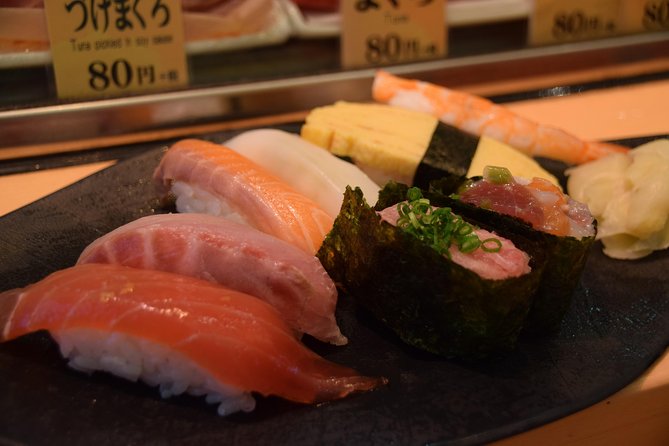
The tour finishes with a meal lasting about 30 minutes. Depending on the day and time, you receive either sushi or a seafood bowl.
This ending gives the tour a proper finish. The earlier tastings are scattered across the market, while the final meal lets you sit down and eat a more complete seafood dish. A sushi-cutting demonstration and a chance to watch fish being prepared have been part of some guide-led experiences, although the exact format can vary.
The quality of the seafood is a clear reason to consider the tour. Guides such as Nick and Yuki have directed groups to meals where the preparation and fish quality were memorable. At the same time, one dissatisfied participant felt the final restaurant was too tourist-oriented and disliked having little choice at the last stop.
That criticism is worth keeping in mind. The final restaurant is part of the arranged tour, not a free choice among every Tsukiji dining room. If you are particular about sushi style, restaurant atmosphere, or portion size, a self-guided visit gives you more control.
Lunch and snacks are included. Extra food and drinks are not, and the day’s selections can change. The minimum drinking age is 20, with another drink offered to anyone younger than that.
The guides shape the experience
The itinerary is simple. The guide is what makes it work.
Several guides have received especially warm praise for clear explanations, friendly manners, and an ability to find good stops. Kiyo combined the temple visit with tastings such as matcha, seaweed, fish cake, and Japanese omelette. Naz introduced foods that were difficult to find without local help. Mieko was praised for a calm pace that worked well for an older parent.
Shoko added cooking advice and helped with shopping. Take explained food customs while encouraging first-time sushi eaters to try unfamiliar items. Masa was described as patient, mellow, and funny, with a useful blend of cultural background and food information. Nick connected the tastings with nearby city sights and finished at a well-regarded sashimi restaurant.
Those details tell you what a strong guide can do here. You are not just being led from one snack to another. You can ask what an ingredient is, how it is used, when to visit the market, and where to return later.
Guide quality can vary, however. Some experiences have felt slow, with waiting and limited energy. Another guide was difficult for one participant to understand. A busy market rewards a guide who speaks clearly and keeps the group moving, so this is a real variable rather than a minor detail.
The maximum group size is 20, but some departures may be much smaller. Small groups are easier to hear in crowded lanes and allow more room for shopping or questions. A very small group may even feel nearly private, though you should not book expecting that every time.
Is $99.49 a fair price?
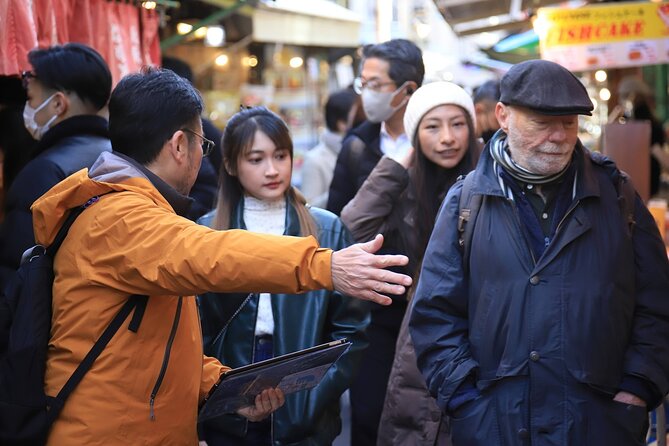
At $99.49 per person, the tour costs more than walking through Tsukiji and buying snacks on your own. The price pays for three hours of local guidance, a planned route, included tastings, lunch, and help navigating a market where menu signs and ingredients may be unfamiliar.
I think the value is strongest for a first visit to Tokyo, a first visit to Tsukiji, or anyone who wants food explained rather than simply purchased. The guide can help you avoid wandering without a plan and may introduce foods you would not choose alone.
The value is weaker if you are confident navigating Tokyo, speak Japanese, or mainly want a large meal. You can spend less by visiting independently, choosing your own restaurants, and deciding how much to eat. The tour also limits dietary flexibility, so the price does not solve the problem for people with significant food restrictions.
A useful approach is to see this as a food and culture walk with lunch, not as a three-hour feast. That expectation makes the cost easier to judge.
Who should book this Tsukiji walk?
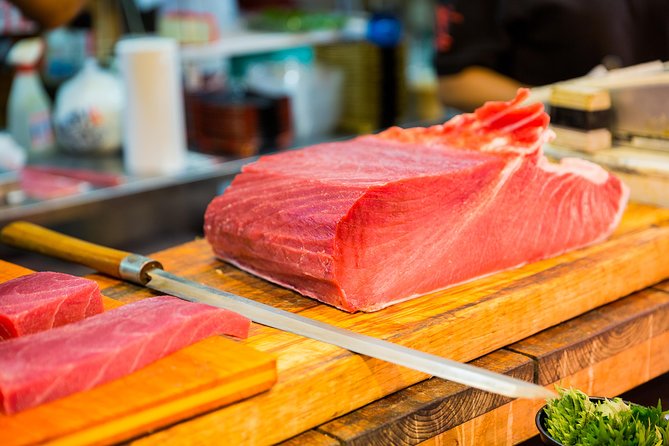
I would recommend it to people who want a guided introduction to Japanese food culture, especially first-time visitors. It suits adventurous eaters who are willing to try squid, eel, fish cakes, sea urchin, Wagyu, and other foods they may not recognize.
It is also a good choice for couples and families who want someone else to handle the route. The tour provides a social way to see the market, and a smaller departure can make the crowded streets much easier to manage.
I would hesitate if you cannot eat fish or seafood. The provider says the tour cannot accommodate fish-free participants, vegetarians, halal diets, gluten-free requests, or allergy-related requests. This is not the place to hope that substitutions will appear.
Plan your visit around the market calendar. If Uogashi and the surrounding shops are important to you, avoid Wednesdays, Sundays, and holidays. Even on an open day, expect the food selection to change and wear shoes made for steady walking.
Free cancellation is available up to 24 hours before the start time. Cancellations or changes made later are not accepted for a refund, and late arrival on the day is not refundable.
Should you book it?
Book this tour if you want Tsukiji explained by a local guide and you value discovery over control. The best moments are likely to come from small finds: a new fish, a cooking ingredient, a well-handled sushi lunch, or a guide who notices what interests you.
Skip it if you want the old wholesale auction, a fully customizable menu, or a big meal for the price. For everyone else, the combination of temple, market lanes, tastings, kitchen shops, and a final seafood dish makes this a useful first step into Tokyo’s food culture.
FAQ
Where does the tour meet?
Meet at the main gate of Tsukiji Honganji Temple at 3-chome-15-1 Tsukiji, Chuo City, Tokyo. Use the front side of the temple because map directions may lead to the back.
How long does the tour last?
The tour lasts approximately three hours and ends back at the meeting point.
What food is included?
Lunch and snacks are included. Tastings may include dashi soup, green tea, fish cakes, Japanese omelette, seaweed, Wagyu beef skewers, seasonal fruit, tuna, sushi, and a seafood bowl. The exact selection varies.
Is the final meal sushi or a seafood bowl?
Depending on the day and time, the final meal is either sushi or a seafood bowl.
Can I join if I do not eat fish?
No. The tour does not accommodate people who cannot eat fish. Vegetarian, halal, gluten-free, and allergy-related requests are also not accommodated.
Which days is the Uogashi wholesale market closed?
Tsukiji Uogashi is closed on Wednesdays, Sundays, holidays, and other scheduled market closure days. Some tastings may not be available on those days.
What should I wear?
Wear comfortable walking shoes because the activity is mainly a walking tour.
More Seafood Tours in Tokyo
- Seafood trail
★ 5.0 · 766 reviews - From Santiago: Rías Baixas Galicia Seafood & Wine Day Tour
★ 4.6 · 209 reviews - Boston Seafood Lovers Food and History Walking Tour
★ 5.0 · 208 reviews - New Orleans: Food Tour with Seafood Boil in French Quarter
★ 4.6 · 146 reviews
More Seafood Tours in Japan
- Tokyo: Sushi Making with Pro Chef & Tsukiji Fish Market Tour
★ 4.6 · 49 reviews - Osaka: Wakayama Cat Train, Seafood market, Hot Springs Tour
★ 4.6 · 24 reviews
New food tours we have reviewed in Tokyo
- Tokyo: West-Side Cycling and Food Tour with Guide★ 5.0 · 37 reviews
- Tokyo: Wagyu and Sushi Gastronomic Journey★ 4.3 · 24 reviews
- Tokyo Tsukiji Food & Culture Private Tour Licensed Guide★ 4.9 · 28 reviews
- Tokyo: Allstar Food Tour★ 4.7 · 29 reviews
- Tokyo: Togoshi Ginza Street Food Tour★ 5.0 · 34 reviews
- Tokyo: Sushi Making Class★ 4.9 · 390 reviews
- Tokyo: Shibuya Food Tour (13 dishes and 4 Eateries)★ 5.0 · 178 reviews
- Tokyo: Best of Shibuya Food Tour★ 4.7 · 119 reviews
Market Food Tours, compared.
London Bridge & Borough Market Food Tour with 7 Authentic Dishes
Read our review →
Small Group Cooking Class & Market Food Tour in Florence
Read our review →
Nishiki Market Brunch Walking Tour (7 Tastings + Brunch)
Read our review →
Bologna Food & Market Tour with 6 Tastings, Pasta, Wines & More
Read our review →