Review · MARKET FOOD TOURS
Tsukiji Fish Market Guided Tour and Sushi Making with Pro Chef
Tsukiji’s best lesson is not simply how to eat sushi, but how seafood moves from the ocean to a Japanese table. This four-hour experience starts at Tsukiji Honganji Temple, wanders through the outer market, and ends with a hands-on sushi class in a traditional building.
I like two things here: the market context before lunch, which gives meaning to the ingredients, and the patient, practical sushi instruction. Guides such as Monami, Ko, Mari, Yuki, Tad, and Sachi-san have been singled out for clear explanations and warm hospitality.
The main catch is that this is not a tour of the old inner wholesale market. That business moved to Toyosu in 2018. You visit the outer market and a small wholesale area, and you buy your own snacks if you want tastings. The classroom may also move to Asakusa or Yotsuya.
Key points to know before booking
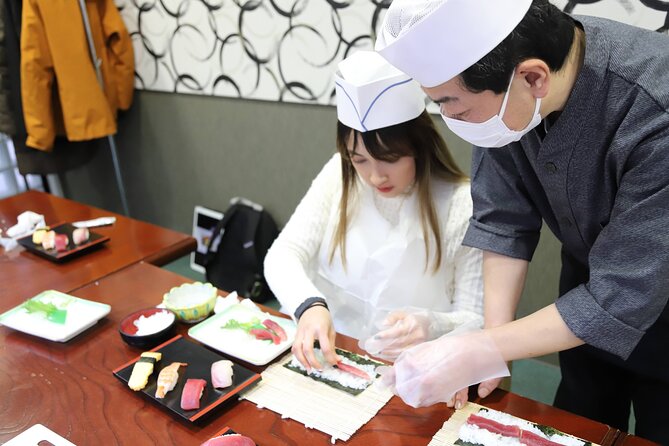
- Six sushi styles to make: Learn five kinds of nigiri and one rolled sushi, then eat your creations for lunch.
- Tsukiji’s outer market only: See food stalls, shops, utensils, and a mini wholesale area rather than the former inner market.
- Temple and food culture together: The visit begins at Tsukiji Honganji Temple and may include instruction on Buddhist customs and local history.
- A small-group format: The maximum is 22 people, so the experience can feel social rather than private.
- Plan for stairs and walking: The classroom is on the third floor with no elevator, and comfortable shoes are essential.
- Market days matter: The fish market is closed Wednesdays, Sundays, and some other market holidays.
Tsukiji begins at a temple, not a fish stall
Meet at the main gate of Tsukiji Honganji Temple, at 3-chōme-15-1 Tsukiji. This detail matters. The meeting point is on the front side of the temple, while map apps may send you around to the back.
Your guide carries a Japan Wonder Travel board and leaves sharply at the scheduled time. Arrive early. Late arrivals do not extend the tour, and same-day lateness does not qualify for a refund.
The temple gives the morning a useful cultural opening. Tsukiji Honganji is a Buddhist temple, and guides may explain how to approach the site and pray properly. Sachi-san, Ko, and other guides have been praised for explaining Japanese customs in a friendly, easy-to-follow way.
I like this beginning because it prevents the market from becoming just a photo stop. You get a little context about the neighborhood, local practice, and the connection between food and daily life before entering the shopping streets.
Still, set your expectations correctly. Some of the four hours are spent on temple and cultural material, not only at seafood counters. If you want a nonstop market crawl, this may feel slower than expected.
More Market Food Tours in Japan
- Tokyo Tsukiji Fish Market Food and Culture Walking Tour
★ 5.0 · 3,184 reviews - Tokyo: Tsukiji Fish Market Food and Culture Walking Tour
★ 4.7 · 757 reviews - Tsukiji Fish Market: Street Food & Culture Walking Tour
★ 5.0 · 669 reviews
Walking through Tsukiji’s outer market
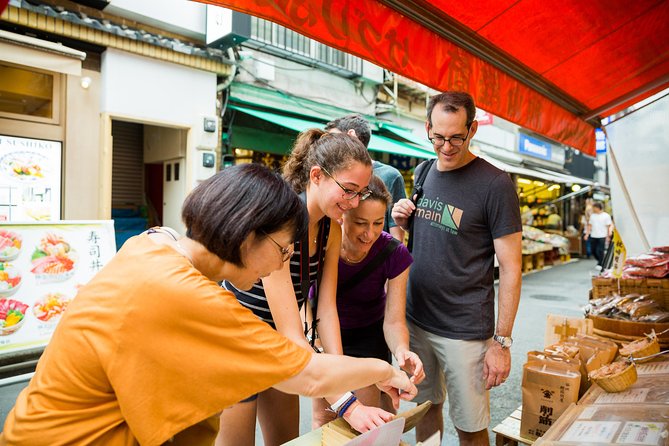
The tour then moves into Tsukiji’s outer market, known locally as Tsukiji Jogai Market. This is the public-facing part of the district, with food stalls, specialty shops, cooking ingredients, seafood, and Japanese kitchen tools.
Your guide points out the useful areas and explains how products are caught, distributed, prepared, and sold. You may see ingredients that are unfamiliar, along with snacks and utensils that are easy to miss when you walk alone.
The tour also includes Tsukiji Nippon Fish Port Market and a mini wholesale area. These stops help show the market as a working food district rather than a single building. Guides often explain the difference between the market’s retail side and the professional trade that supports restaurants.
Names such as Monami, Ko, Mari, Yuki, and Tad appear in praise for clear English, patience, and good local suggestions. The guide can help you understand what you are looking at and point out places to return to after the tour.
There is an important limit: food tastings are not included. You can buy street food or other items from stalls, but bring cash and allow extra spending if sampling is part of your plan. One person may find the group limiting when trying to stop at many vendors, since the tour must keep moving.
This is also not the former inner market. The wholesale business area moved to Toyosu after October 6, 2018. Tsukiji’s outer market remains a worthwhile place to shop and eat, but the title can give you an overly grand idea of what you will see.
What makes the market portion worthwhile
I find the market walk most useful for first-time visitors who want help reading the place. You learn what different stalls sell, how Japanese food shops are arranged, and how seafood fits into local cooking.
It is less useful if your only goal is to purchase a long list of snacks at your own speed. You can return after the tour, but the scheduled group walk is not built around extended tasting stops.
Several guides have added temple visits and shrine customs to the route. That broader view helps explain why this experience is more than a food-shopping trip. You get a short lesson in manners, religion, neighborhood history, and ingredients before sitting down to cook.
The pace appears to vary by guide and group. Some participants have appreciated not being rushed, while others have found the market section too long compared with the sushi class. If you want the class to receive most of the attention, tell the operator in advance, though the exact timing can change.
Learning sushi in a traditional classroom
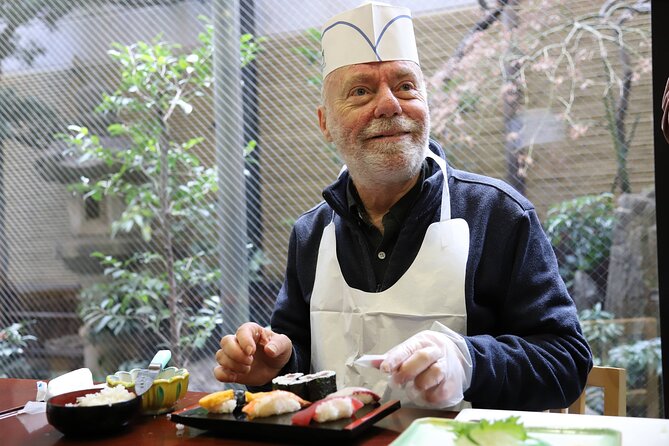
After the market, you go to a Japanese-style classroom in a local building. The room is on the third floor and can be reached only by stairs, so this is not a good choice if stairs are difficult.
The venue may be in the center of Tsukiji, but it can also be in Asakusa or Yotsuya depending on availability. The operator may not confirm the final venue until the day of the experience. In that case, the ending point changes too.
The class is designed as an introduction, not professional culinary training. A sushi chef demonstrates the basic techniques and helps you step by step. You make five types of nigiri sushi and one rolled type, then eat the results for lunch.
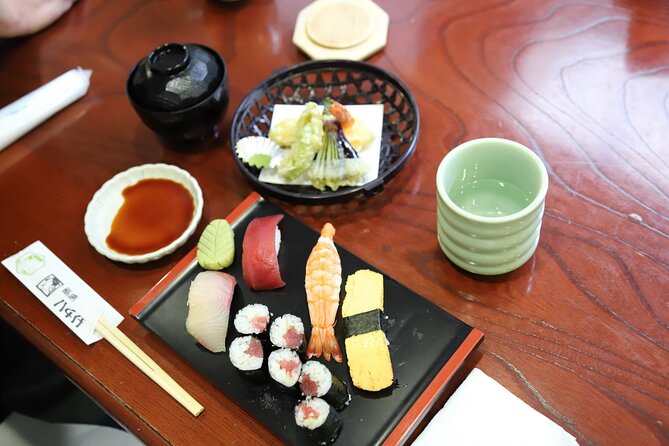
You also receive sushi prepared by the chef, fresh wasabi, traditional dashi soup, and green tea. That extra serving matters because it lets you compare your own work with sushi shaped by someone who does it every day.
The class can include a presentation and demonstrations. One chef has shown how to debone fish, a detail that adds real value because it reveals the precision behind a seemingly simple piece of nigiri. A useful improvement would be a fuller lesson in slicing fish, since cutting affects the texture and appearance of sushi.
The atmosphere is generally friendly and suitable for families. Children and teenagers have taken part, and the format gives everyone a clear task. At the same time, a group class means you may not receive constant one-to-one attention.
More Market Food Tours in Tokyo
- Tsukiji Fish Market Small-Group Food Walking Tour
★ 5.0 · 621 reviews - Tokyo: Tsukiji Fish Market Sushi Making Class with Pro Chef
★ 4.9 · 506 reviews - Tsukiji Fish Market: Street Food & Culture Walking Tour
★ 4.8 · 259 reviews - Tokyo: Toyosu Tuna Auction &Tsukiji Market Gourmet Adventure
★ 4.8 · 187 reviews
What you actually learn at the table
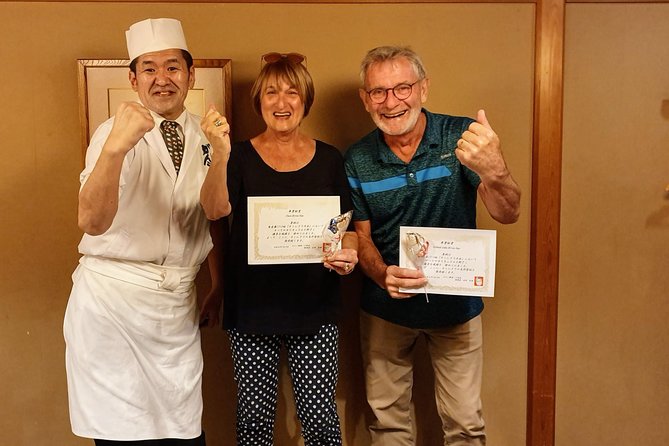
The great surprise for many beginners is how much care goes into sushi that looks simple. Rice texture, portion size, shaping, fish preparation, wasabi, and rolling all require more control than most home cooks expect.
The focus here is on making and understanding basic sushi rather than preparing every ingredient from scratch. You should not book it expecting a full professional lesson in fish cutting or a long course on knife skills.
You will have a chance to work with fresh ingredients and practice several forms. The hands-on part is the strongest reason to pay for this experience. A market walk can be done independently with enough preparation, but learning directly from a sushi chef is harder to arrange on your own.
The setting is basic rather than luxurious. One person found the classroom small and plain for the price, while others appreciated the clean tables, fresh seafood, and enough room to work. That difference is important: the value comes from instruction, access, and lunch, not polished decor.
Is $104.13 a fair price?
At $104.13 per person, this is not a cheap market outing. You are paying for roughly four hours, a guide, the market walk, the chef-led lesson, ingredients, your sushi lunch, chef-prepared sushi, dashi soup, and green tea.
I consider the price reasonable if you want both cultural orientation and a structured cooking class. The experience gives you a clear morning plan and combines two activities that many visitors book separately.
The value is weaker if you mainly want to browse stalls and eat. The market portion does not include tastings, and your extra snacks are your own expense. Add some cash to the budget if you want to try seafood, tamagoyaki, sweets, or other market foods.
The maximum group size is 22. That is manageable for a guided walk, but it is not an intimate private tour. The sushi class can feel social and relaxed, yet you should not expect the chef to coach only you or your family.
For families, the price can make sense because the children receive an activity rather than simply watching adults shop. For serious sushi fans, the class may feel basic, but the market background adds useful context.
Timing, transport, and changing end points
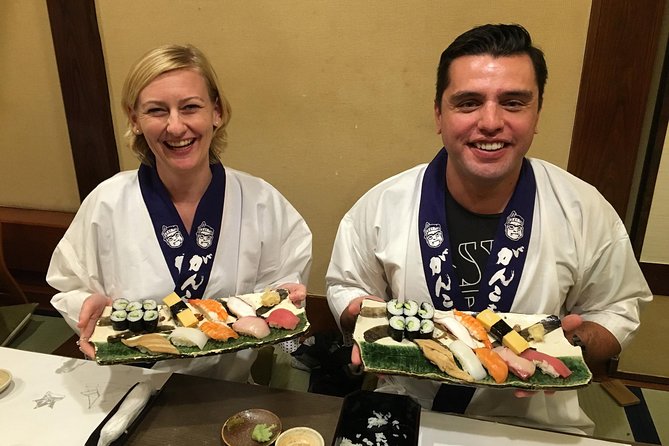
The tour starts and finishes around the meeting area in the standard arrangement, but the final location can vary. Depending on the date and classroom availability, you may finish in Tsukiji, Shinjuku, Asakusa, or Yotsuya.
Do not schedule a tight appointment immediately afterward. Delays are possible, and the operator asks you to mention any important plans in advance. You are responsible for getting to the meeting point and for transport connected with the attractions.
Wear comfortable walking shoes. The route combines temple grounds, market streets, and stairs, and this is not a sit-down food tour from start to finish.
Check the date carefully. The fish market is closed on Wednesdays, Sundays, and other market holidays. The activity has a mobile ticket, and booking confirmation is issued at the time of booking.
You can cancel for a full refund up to 24 hours before the start time. Cancellations or changes inside that window are not accepted, and same-day lateness does not receive a refund.
Food restrictions need careful checking
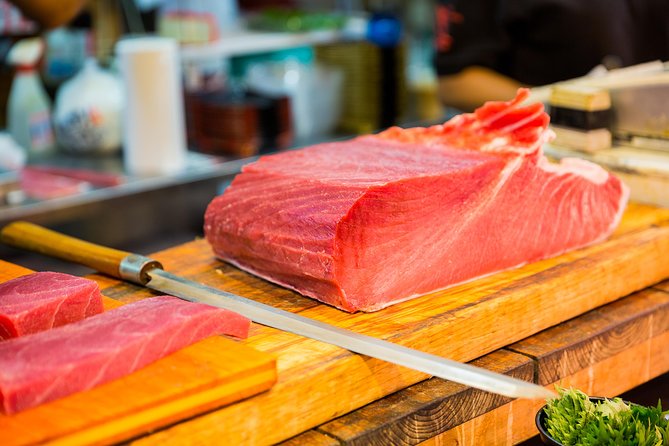
The food policy needs attention before you reserve. The information provided says to list allergies and dietary needs during booking, but it also says vegetarian, halal, gluten-free, kosher, and some allergy-related requests may not be accommodated.
Treat notification as a request, not a guarantee. If you have a serious allergy or strict dietary rule, contact the operator before paying and get a clear answer. The menu centers on seafood, sushi rice, wasabi, dashi, and green tea, so this is not an easy fit for every diet.
The dashi soup may also matter to people avoiding particular ingredients. Ask before booking rather than relying on substitutions at the classroom.
Who will enjoy this Tsukiji experience?
I would choose this for a first visit to Tokyo, especially if you want a guided introduction to Japanese food customs rather than a restaurant meal alone.
It suits:
- Families with children or teenagers who enjoy hands-on activities
- First-time visitors who want help understanding Tsukiji
- People curious about sushi but nervous about making it alone
- Food-focused visitors who also want temple and neighborhood context
- Anyone who values instruction more than a fancy cooking studio
I would think twice if you want a private tour, a large number of included tastings, a visit to the former inner market, or advanced sushi training.
The best fit is someone who sees sushi as part of a wider food culture. You learn where ingredients are sold, how the market works, how to behave at a temple, and how a chef shapes the final meal.
Should you book it?
Book this experience if you want a well-organized introduction to Tsukiji followed by a relaxed sushi lesson. The strongest parts are the guides, the market explanations, the chance to make six sushi styles, and the meal that follows your work.
Do not book it expecting the old inner market, unlimited food samples, or a luxury classroom. Bring cash for optional snacks, arrive early at the front temple gate, wear shoes for walking and stairs, and leave room in your schedule after the four-hour estimate.
For most first-time Tokyo visitors, the combination offers solid value. For repeat visitors who already know Tsukiji and want advanced sushi technique, a smaller specialist cooking class may be a better match.
FAQ
Where does the tour begin?
It begins at the main gate of Tsukiji Honganji Temple, 3-chōme-15-1 Tsukiji, Chuo City, Tokyo 104-8435. Meet on the front side of the temple because map services may direct you to the back.
How long does the experience last?
The experience lasts approximately four hours. Delays are possible, so avoid booking a tight appointment immediately afterward.
What parts of Tsukiji will I visit?
You visit Tsukiji Honganji Temple, the outer Tsukiji Fish Market, Tsukiji Jogai Market, and Tsukiji Nippon Fish Port Market. The tour also includes a mini wholesale area.
Does the tour visit the old inner fish market?
No. The inner market business area moved to Toyosu after October 6, 2018. This experience visits the outer market and mini wholesale area.
Is food included during the market walk?
Market tastings are not included. You may buy food from stalls at your own expense. The sushi class includes your prepared sushi, sushi made by the chef, dashi soup, and green tea.
How many kinds of sushi will I make?
You will learn to make five types of nigiri sushi and one rolled type.
Where does the sushi class take place?
The class is held in a Japanese-style classroom. Depending on venue availability, it may take place in Tsukiji, Asakusa, or Yotsuya, and the final venue may not be announced until the day of the tour.
Are dietary restrictions accepted?
You should list allergies and dietary requirements when booking and contact the operator with questions. Vegetarian, halal, gluten-free, kosher, and some allergy-related requests may not be accommodated.
Is the experience suitable for people who have trouble with stairs?
The classroom is on the third floor in a traditional building with stairs only. The tour also involves considerable walking, so comfortable shoes and the ability to use stairs are required.
More Sushi and Ramen Tours in Tokyo
- Sushi Making Tokyo Roll and Authentic Japanese Sushi Class
★ 5.0 · 3,971 reviews - Tokyo: Roll and Authentic Sushi Making Class in Asakusa
★ 4.9 · 1,957 reviews - Best of Shinjuku: Izakaya Food Tour (4 Stops, 14+ Tastings)
★ 5.0 · 1,863 reviews - Tokyo: Sushi Making Class in a Happi Coat near a Famous Spot
★ 4.9 · 1,377 reviews
More Seafood Tours in Japan
- Tokyo: Sushi Making with Pro Chef & Tsukiji Fish Market Tour
★ 4.6 · 49 reviews - Osaka: Wakayama Cat Train, Seafood market, Hot Springs Tour
★ 4.6 · 24 reviews
New food tours we have reviewed in Tokyo
- Tokyo: West-Side Cycling and Food Tour with Guide★ 5.0 · 37 reviews
- Tokyo: Wagyu and Sushi Gastronomic Journey★ 4.3 · 24 reviews
- Tokyo Tsukiji Food & Culture Private Tour Licensed Guide★ 4.9 · 28 reviews
- Tokyo: Allstar Food Tour★ 4.7 · 29 reviews
- Tokyo: Togoshi Ginza Street Food Tour★ 5.0 · 34 reviews
- Tokyo: Sushi Making Class★ 4.9 · 390 reviews
- Tokyo: Shibuya Food Tour (13 dishes and 4 Eateries)★ 5.0 · 178 reviews
- Tokyo: Best of Shibuya Food Tour★ 4.7 · 119 reviews
Market Food Tours, compared.
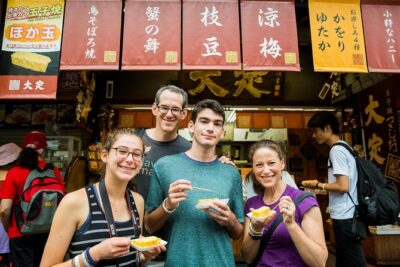
Tokyo Tsukiji Fish Market Food and Culture Walking Tour
Read our review →
London Bridge & Borough Market Food Tour with 7 Authentic Dishes
Read our review →
Small Group Cooking Class & Market Food Tour in Florence
Read our review →
Nishiki Market Brunch Walking Tour (7 Tastings + Brunch)
Read our review →
Bologna Food & Market Tour with 6 Tastings, Pasta, Wines & More
Read our review →