Review · COOKING CLASSES
The Original Small-Group Sushi Making Class in Kyoto
The best thing about this Kyoto sushi class is its scale. With no more than eight people, you get real time with Kana and her assistants instead of watching a chef work from the back of a crowded room. You season rice, shape nigiri, roll maki, and eat what you make.
I like the historic townhouse setting near Kiyomizu-dera and Gion, and I like the generous meal. The class also works well for families, couples, and solo visitors. The main catch is simple: there is no vegetarian or vegan option, so this is not the right pick for every diet.
Why this Kyoto sushi class is worth your time
- Only eight participants: A small class means more personal correction and room for questions.
- Kana leads in English: She teaches technique while sharing Japanese culture, Kyoto tips, and her own story.
- You make several sushi styles: The lesson covers seasoned rice, nigiri, and maki rolls.
- Fresh fish and local ingredients: The meal gives you a practical sense of how good ingredients affect simple sushi.
- A full meal, not a token tasting: Come hungry, since you prepare and eat a substantial amount.
- A traditional Kyoto setting: The restored townhouse gives the class a calm sense of place near two major sightseeing areas.
A sushi lesson in a restored Kyoto townhouse
Atelier SUSHI sits at 311-1 Kitatōryōchō in Higashiyama Ward, close to the Kiyomizu-dera and Gion areas. That location matters. You can pair the 90-minute workshop with a day of eastern Kyoto sightseeing, though you should allow enough time to reach the address without rushing.
The setting is part of the appeal. You are not simply entering a modern cooking studio with stainless steel tables and a clock on the wall. The class takes place in a beautifully restored traditional townhouse, giving the lesson a more local feel and a quieter mood.
I would place this activity early in a Kyoto stay if you enjoy food and practical experiences. You may get useful neighborhood suggestions from Kana and her team, and you can use the rest of your visit to look at sushi with a more trained eye.
The exact class time determines whether the food functions as lunch or dinner. The activity ends where it begins, so you do not need to arrange a separate ride between the lesson and your meal.
More Cooking Classes in Japan
- Ramen Cooking Class at Ramen Factory in Kyoto
★ 5.0 · 1,937 reviews - Kyoto: Ramen Cooking Class at a Ramen Factory with Souvenir
★ 4.9 · 532 reviews - Kyoto: Ramen, Gyoza, and Onigiri Cooking Class
★ 5.0 · 445 reviews
What happens during the 90-minute class
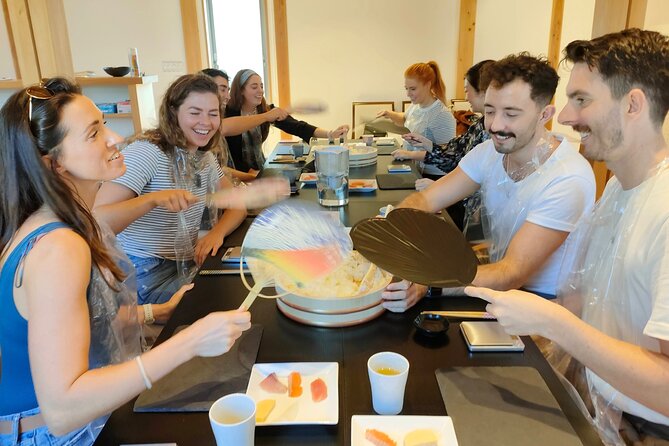
The workshop moves at a friendly, hands-on pace. It is short enough to fit into a busy Kyoto day, but long enough to cover more than a quick demonstration.
The first important lesson is the rice. Good sushi begins with rice that has the right texture and seasoning. You learn how the rice is prepared and seasoned before using it to make sushi. This may sound basic, but it is the part many home cooks skip, and it makes a large difference to the final result.
Next comes nigiri. You work with rice and fish to form individual pieces by hand. This takes more control than it looks. Too much pressure makes the rice dense, while too little leaves the piece unstable. A small class gives Kana time to watch your technique and help you adjust it.
You also prepare maki, the rolled style of sushi. Rolling is easy to understand but harder to do neatly on your first try. The class gives you a useful method rather than asking you to copy a finished roll without explanation.
The lesson is conducted in English, and the teaching is aimed at beginners. You do not need prior sushi-making experience. One useful feature is that the process is simplified without making it feel fake or overly basic. Even someone who already makes sushi at home can find the interactive work enjoyable.
Some preparation is done before you arrive, which is sensible for a short class. You spend your time learning and shaping sushi rather than waiting for every ingredient to be washed, cut, or cooked. That also helps keep the pace smooth.
Fresh fish, local ingredients, and a proper meal
The ingredients are described as premium fresh fish and carefully selected local products. The class uses these ingredients to show a central sushi lesson: when the fish and rice are good, the preparation does not need to be complicated.
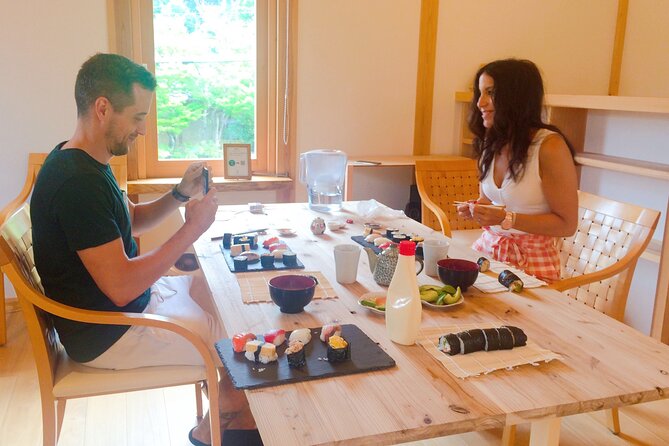
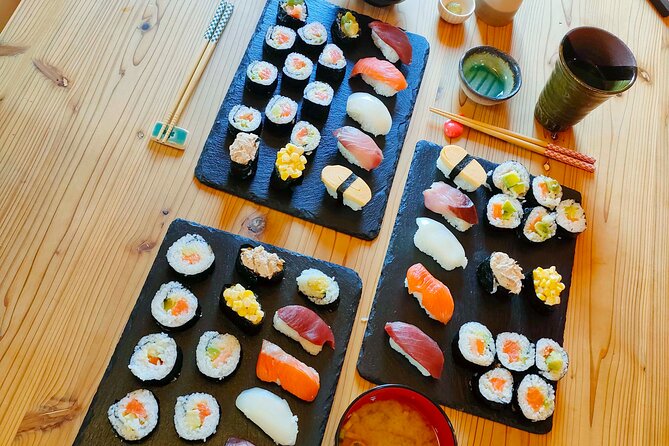
You eat the sushi you make at the end of the class. This is more satisfying than a cooking activity where the finished food disappears into a kitchen and you receive a small sample. Here, your work becomes the meal.
Plan to arrive hungry. Participants have made several pieces of nigiri and a maki roll, and the amount of food can be substantial. The class is not just a snack between temple visits. Depending on the start time, it can serve as lunch or dinner.
The food also makes this class useful for people who are uncertain about raw fish. Freshness and simple preparation can make sushi more approachable. Still, the experience is centered on sushi and fish, so it is not a good match if you dislike seafood or want a fully cooked meal.
Coffee, tea, and Japanese tea are included. The drink service adds a comfortable finish, especially if you want to sit and talk after making the food rather than rushing straight back into Kyoto’s streets.
Kana’s teaching style and the cultural side
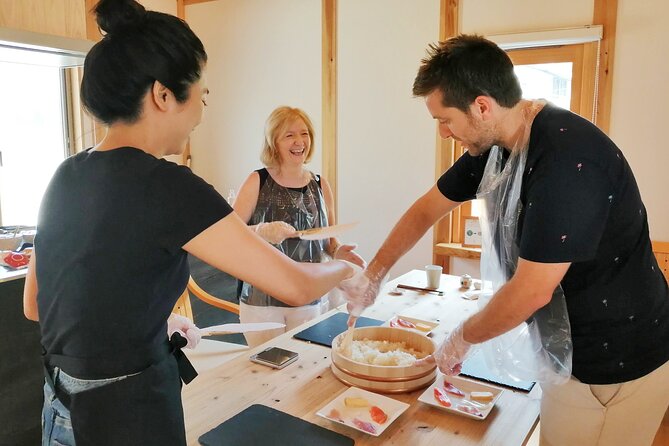
Kana is the central teacher, and her English makes the technical parts easy to follow. Her husband, Kerim, has also assisted with classes, and other staff may help create the relaxed, family-run atmosphere.
The instruction goes beyond hand movements. You learn about sushi while also hearing about Japanese culture, Kyoto, and Kana’s personal journey. The cultural conversation is informal rather than a separate lecture, which keeps it connected to the food in front of you.
I especially like this kind of exchange because it gives the activity a human center. You are not only learning how to shape rice. You are also meeting people who can talk about daily life in Japan and offer ideas for the rest of your stay.
The hosts have helped with local recommendations and travel questions. Treat that as a bonus, not the main product, since the quality of the advice will depend on your questions and the time available. If you want suggestions, arrive with a few specific things in mind.
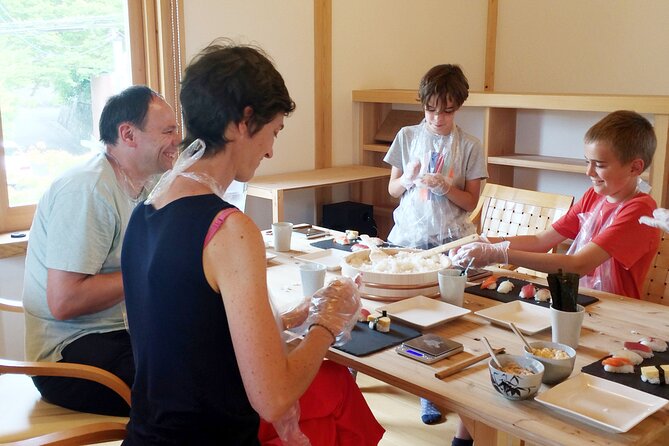
The atmosphere suits people who enjoy conversation. Couples can work together, families can share the task, and solo participants have a natural way to meet others. A 12-year-old sushi fan has enjoyed the class, but younger children may need help with the food preparation and tools.
More Cooking Classes in Kyoto
- Gyoza Cooking Class in Kyoto: Traditional Japanese Dumplings
★ 5.0 · 210 reviews - Kyoto: Ramen Bowl Painting and Michelin Cooking Class
★ 4.9 · 96 reviews - Kyoto: Sushi Making Class with Sushi Chef
★ 4.8 · 64 reviews - Nishiki Market Food Tour with Cooking Class
★ 4.9 · 42 reviews
Why the small group matters
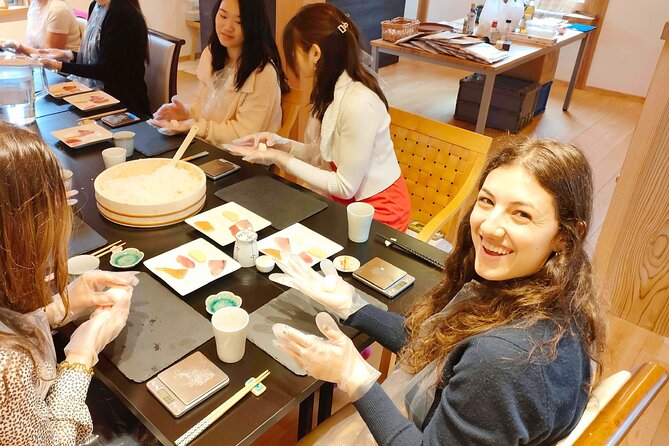
The maximum of eight participants is one of the strongest reasons to choose this class. Sushi is a tactile skill. You need to see how the rice sits in your hand, how much pressure to use, and how to place the filling before rolling.
In a large group, you can easily spend half the class trying to catch the instructor’s attention. Here, there is more room for questions and individual feedback. The pace can also feel less hurried, especially if you are making sushi for the first time.
A small class does not mean private instruction. You will still share the space and the teacher with other people. If every person has many questions, some waiting may occur. Still, eight is a practical upper limit for this kind of lesson.
The close format also supports conversation. The class has a warm, family-friendly feel rather than a formal culinary-school mood. That is helpful if you want an enjoyable Kyoto activity, but less suitable if you prefer silent, highly technical instruction.
What you take home beyond the sushi
The main souvenir is the skill. You leave knowing how to season rice and how to approach both nigiri and maki at home.
The workshop has also included a small gift bag with class notes, recipes, chopsticks, and a sushi mat. These items make the class more useful after your trip. A mat is inexpensive, but having one ready removes a common barrier when you try your first roll at home.
You should treat these take-home items as a pleasant extra rather than the reason to book. The important value is the demonstration and practice. A recipe cannot show you how rice should feel in your hand, while the class can.
The practical lesson is also easy to share. You can recreate sushi for family or friends, which gives the experience a longer life than a meal eaten once in Kyoto.
Price, timing, and practical value
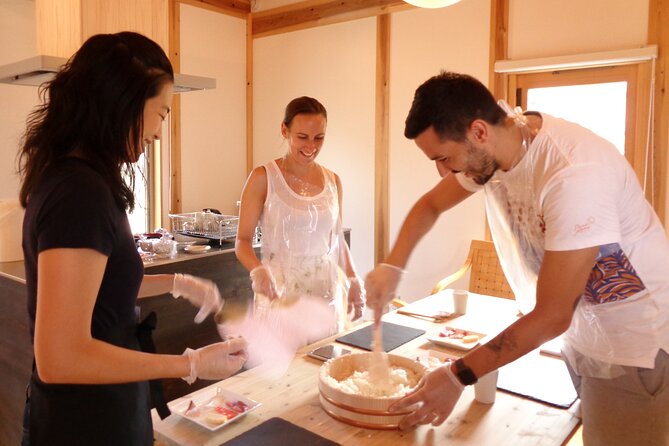
The listed price is $69.64 per person. For a 90-minute class, that is not the cheapest food activity in Kyoto, but the comparison should include what you receive: an English-speaking instructor, a small group capped at eight, fresh fish, a complete sushi meal, tea, an apron, and gloves.
The price makes better sense if you value instruction and atmosphere, not just the amount of food. You are paying for close guidance in a traditional townhouse, with the chance to ask questions and practice several techniques.
If you only want to eat excellent sushi, a restaurant may be a better use of your money. If you want to understand how sushi is made and enjoy an active meal, this class offers stronger value.
The workshop lasts about one hour and 30 minutes. Add time for walking and finding the address, especially if you are coming from Kiyomizu-dera or Gion. The meeting point is Atelier SUSHI, and the activity returns there at the end.
A mobile ticket is provided, and confirmation comes when you book. Public transportation is nearby. You can cancel for a full refund up to 24 hours before the start time, but cancellations or changes inside that window are not accepted.
Food restrictions and who should think twice
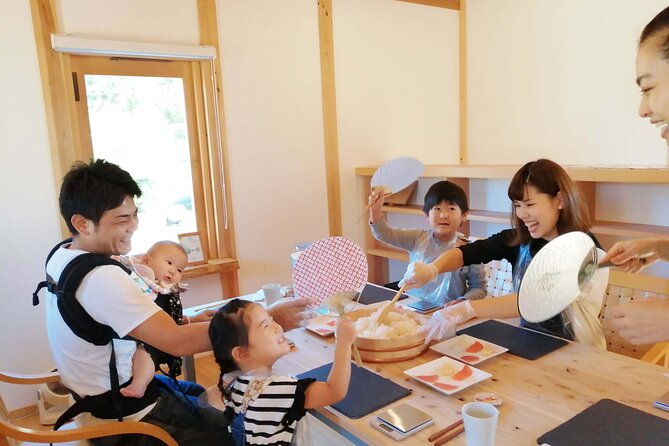
The stated offering does not include a vegetarian or vegan option. If that describes you, skip this class unless the provider confirms a suitable arrangement before booking.
Specific participants with gluten and shellfish allergies have been accommodated in past classes. That is encouraging, but you should contact Atelier SUSHI in advance with clear details. Do not assume that an accommodation mentioned for one session will apply automatically to yours.
This is a good choice for:
- Couples who want a shared activity rather than another restaurant meal
- Families with children interested in sushi and hands-on cooking
- Solo visitors who enjoy small groups and conversation
- First-time sushi makers
- Home cooks who want better technique and a few tools for later
It is less suitable for vegans, vegetarians, people who strongly dislike seafood, or anyone seeking a private class with no other participants.
Where it fits in a Kyoto itinerary
The eastern Kyoto location makes this easy to combine with Kiyomizu-dera, Gion, and nearby Higashiyama sights. You could schedule it after temple visits, but watch your timing. Kyoto streets around these areas can be slow to cross, and you do not want to arrive late with food preparation already underway.
Booking it near the start of your stay has another advantage. The hosts can offer local suggestions, and you may leave with a better sense of how to approach Japanese food during the rest of your trip.
A later session can work well after sightseeing, particularly if the class becomes dinner. Either way, avoid planning a rushed attraction immediately afterward. The class is only 90 minutes, but conversation and the meal can make you want a few unhurried minutes at the end.
Should you book the Atelier SUSHI class?
I would book this class if you want more than a meal and prefer a personal, friendly introduction to sushi. The small group, English instruction, fresh ingredients, historic townhouse, and full serving of food give it a clear purpose.
I would not book it for a vegetarian or vegan meal, or if your only goal is to find the lowest-cost sushi in Kyoto. For everyone else, especially couples, families, and solo visitors who like making things, this is a useful and memorable way to spend 90 minutes near Kiyomizu-dera and Gion.
Come hungry, tell the hosts about allergies before you arrive, and consider taking the class early in your Kyoto visit. The sushi you make is the immediate reward. The confidence to try it again at home is the lasting one.
FAQ
Where does the sushi-making class take place?
The class takes place at Atelier SUSHI, 311-1 Kitatōryōchō, Higashiyama Ward, Kyoto, 605-0918, Japan.
How long does the experience last?
The workshop lasts approximately one hour and 30 minutes.
How many people can join the class?
The class has a maximum of eight participants.
Is the class taught in English?
Yes. An English-speaking instructor leads the workshop.
What types of sushi will I learn to make?
You learn how to season sushi rice and make nigiri and maki rolls.
Is food included?
Yes. You eat the sushi you prepare, and the class includes a meal served as lunch or dinner depending on the workshop time. Coffee or tea and Japanese tea are also included.
Are vegetarian or vegan options available?
No vegetarian or vegan option is included in the stated experience.
What is the cancellation policy?
You can cancel at least 24 hours before the start time for a full refund. Cancellations or changes made less than 24 hours before the experience are not accepted.
More hands-on workshops in Kyoto
- Sushi Making Tokyo Roll and Authentic Japanese Sushi Class
★ 5.0 · 3,971 reviews - Authentic Pizza Making Class in Naples with Appetizers and Drink
★ 5.0 · 3,178 reviews - Tokyo: Roll and Authentic Sushi Making Class in Asakusa
★ 4.9 · 1,957 reviews - Small Group Cooking Class & Market Food Tour in Florence
★ 5.0 · 1,574 reviews
More Sushi and Ramen Tours in Kyoto
- Sushi Making in Kyoto! Same-day bookings welcome!
★ 5.0 · 713 reviews - Kyoto: Small-Group Authentic Sushi Making Workshop
★ 5.0 · 137 reviews - Kyoto Michelin Ramen Workshop or Painting Ramen Essentials
★ 4.9 · 100 reviews
New food tours we have reviewed in Kyoto
- Kyoto: Sushi Making Class with Sushi Chef★ 4.8 · 64 reviews
- Nishiki Market Food Tour with Cooking Class★ 4.9 · 42 reviews
- Kyoto: Small-Group Authentic Sushi Making Workshop★ 5.0 · 137 reviews
- Kyoto: Sake Brewery and Tasting Tour in Fushimi★ 4.8 · 55 reviews
- Kyoto: Foodie Night Tour in Gion with 9 dishes + 6 Sake★ 4.4 · 26 reviews
- Kyoto Evening Gion Food Tour★ 4.9 · 35 reviews
- Kyoto: Nishiki Market Tour with a Local Foodie & Tastings★ 4.5 · 67 reviews
- Kyoto: Nishiki Market Food Tour★ 4.9 · 21 reviews
Cooking Classes, compared.
Authentic Pizza Making Class in Naples with Appetizers and Drink
Read our review →
Tokyo: Roll and Authentic Sushi Making Class in Asakusa
Read our review →
Ramen Cooking Class at Ramen Factory in Kyoto
Read our review →
Small Group Cooking Class & Market Food Tour in Florence
Read our review →
Tokyo: Sushi Making Class in a Happi Coat near a Famous Spot
Read our review →
Tokyo Sushi Making Class in Tsukiji with Professional Chef
Read our review →
Food Market Visit and Cooking Class with Wine
Read our review →